You set up your station, the stencil is on, your client is ready. Ten minutes into the session, the voltage starts to dip, the machine feels soft, and you keep glancing at the power pack. It is a small thing, but it breaks your focus. When this happens a few times a day, it is not “just a power issue” anymore, it is a workflow problem.
Many artists now look at a tattoo wireless pen as a way to stop fighting with power packs and cables. Not just to follow a trend, but to get steady power, a cleaner station, and fewer breaks in the middle of a big piece.
The Real Problem With Power Packs
On paper, a solid power pack should hold a stable output all day. In real studios things are different. Old cables, hot rooms, shared sockets and long sessions all add small risks. Put together, they explain why so many artists feel their machines change halfway through a tattoo.
Voltage Drops During Long Sessions
Traditional power supplies and cables build heat over time. As components warm up, output can drift and the voltage at the machine can fall a little. You feel it as softer hits and less clean lines. Some artists turn the dial up and keep going, but that only hides the root cause and puts more stress on parts.
Cable Fatigue and Loose Connections
Clip cords, RCA leads and foot pedals bend all day. Metal inside breaks down slowly. A connection that looks fine on the outside can still create tiny drops or momentary cuts in power. That is when a machine suddenly stutters for a second, or the buzz changes for no clear reason. It is annoying, and it makes long straight lines harder than they need to be.
Unstable Power In the Building
Studios in older buildings can have shared or noisy mains power. When lights, heaters or other devices switch on, the power supply has to smooth out those bumps. Some packs do this better than others. If yours is basic or very old, little spikes and dips can pass through and show up in the way your machine runs.
How It Affects Clients And Workflow
Each time you pause to jiggle a cable, tap a foot pedal or reset voltage, the client feels it. The pain does not stop, but the rhythm does. A big back piece or leg sleeve already takes patience. Power troubles make it longer, and over a week they add up to lost time and extra stress.
How A Wireless Pen Fixes Daily Power Issues
A good wireless tattoo machine does more than cut the cord. It removes several weak links from the chain. No wall power, no clip cord, no separate pack. You work directly off a battery that you can control and predict.
Stable Power From A Dedicated Battery
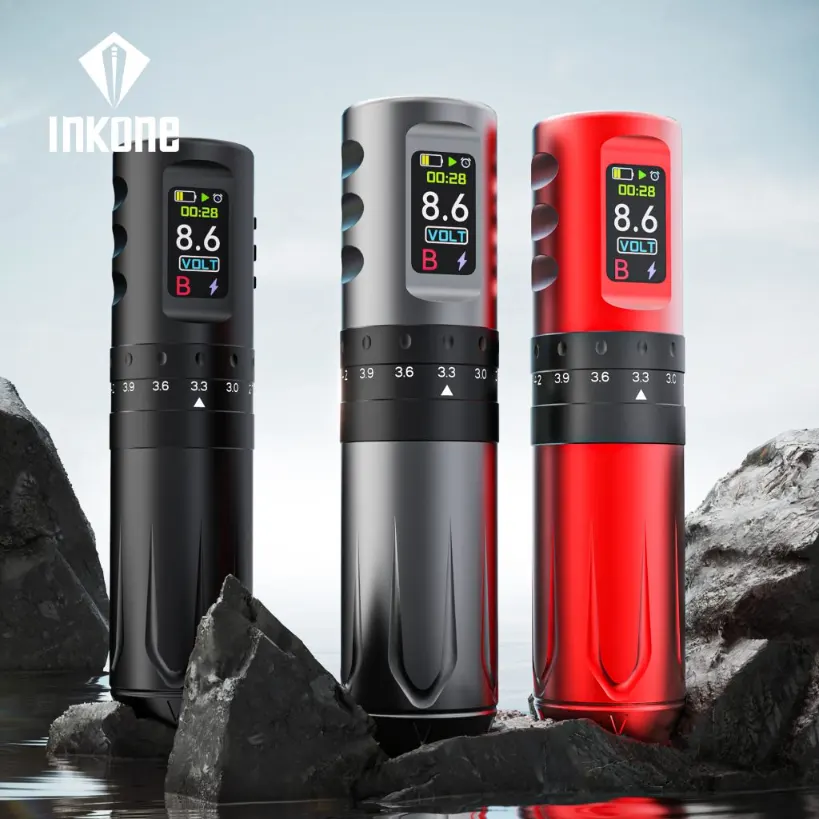
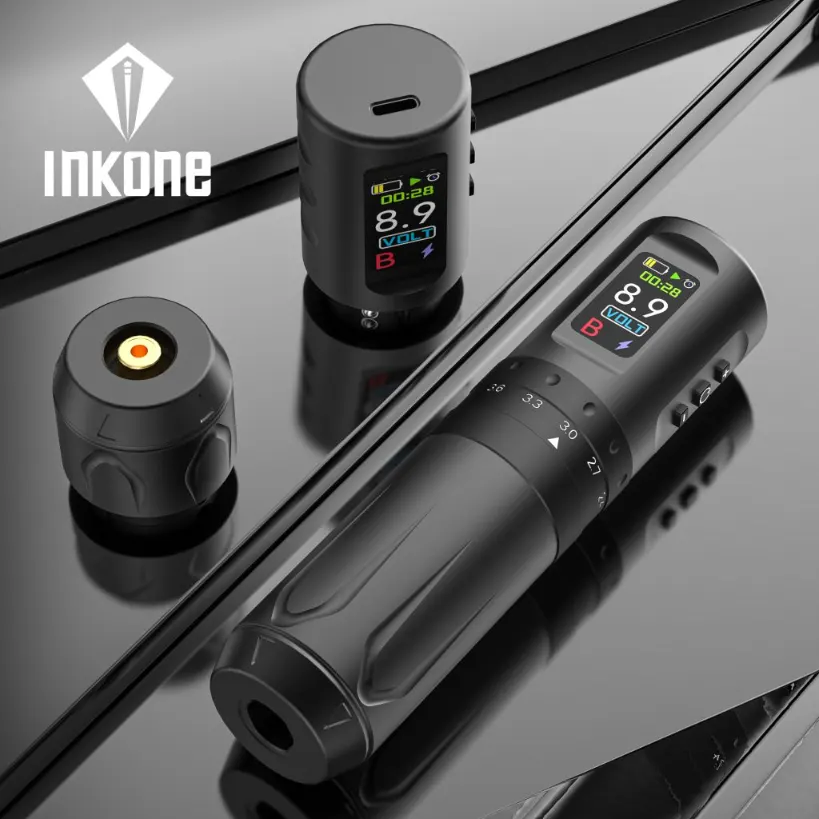
Modern wireless machines use high-quality lithium batteries with built-in control boards. They deliver steady voltage over most of the discharge curve, so the hit stays consistent until you are close to the low point. With many units you can read voltage and battery level on a small screen, which makes it simple to know how much time is left instead of guessing.
No Cords In Your Way
When there is no cord, nothing pulls on your hand while you work. You can move around the chair, reach awkward ribs or backs of knees, and spin your body without dragging a cable across the client or station. Artists often notice less wrist strain and fewer small breaks, because they are not stopping to free a twisted lead.
Better For Long Sessions And Travel
Many current pens run roughly 4–6 hours on a single battery, depending on voltage and style. With a spare pack ready, you can swap in seconds and keep going with almost no downtime.
For guest spots or conventions, a wireless setup means less gear in your bag and less worry about the sockets at the venue. One machine, a few batteries and cartridges, and you are ready.
What To Look For In A Professional Wireless Tattoo Machine
Once you decide to move away from a separate power pack, you still need the right tool. Not every cordless device feels like a true studio workhorse. When you pick a professional wireless tattoo machine, a few specs matter more than the rest.
Battery Capacity And Runtime
Look at battery size in mAh and at the claimed working time. Many pro pens sit around 1500–2000 mAh with 4–6 hours of real use, which is enough for most day sessions with one swap in between. Check charging time as well, so you can plan a simple rotation instead of waiting.
Motor Strength And Stroke Options
A strong coreless motor helps keep a solid hit at lower and higher voltages. Stroke adjustment, often from around 2.4 mm up to about 4.2 mm, lets you switch from fine lines to solid color work without changing the whole machine. This makes one pen cover most of your daily jobs if you also choose the right needles.
Ergonomics And Controls
Weight balance and grip size decide how your hand feels after a full day. Wireless pens are often lighter and more balanced than classic coil setups, which reduces fatigue during long sessions. Simple buttons and a clear display for voltage and battery level help you focus on the skin instead of guessing what the machine is doing.
About INKONE Professional Tattoo Equipment
INKONE is a specialist maker of rotary tattoo machines and related equipment, based in Yiwu and active in the global market since around 2018. The team focuses on cordless tools with custom coreless motors, adjustable stroke systems and battery packs designed for several hours of steady work, so artists can treat wireless gear as daily studio machines, not just travel toys.
Products from INKONE often combine aviation-grade materials with compact, pen-style bodies and clear digital displays for voltage and battery data. The goal is simple: stable power, flexible control and a familiar pen feel that suits both lining and shading. For artists who want to move away from messy cords but still keep a precise, professional tool in hand, INKONE has become a serious option in many studios.
FAQ
Q1: Why does my power pack drop voltage in the middle of a tattoo?
A: Heat, old cables and weak internal parts can all cause small voltage drops during long sessions. As the unit warms up or connections loosen, less power reaches the machine, so the hit feels soft or inconsistent.
Q2: Can a wireless pen really replace my old wired setup?
A: For most daily work, yes. A solid battery system with 4–6 hours of runtime, a strong motor and adjustable stroke can cover lining, shading and color packing. Many artists now use a cordless pen as the main machine and keep a wired setup only as backup.
Q3: How long should a wireless tattoo machine battery last in real use?
A: It depends on voltage and style, but many devices give several hours on one pack. If you keep a second battery charged, you can swap and work a full day without needing a wall power pack at all.
Q4: Will switching to a wireless machine change my technique?
A: The basic hand skills stay the same, but you may notice more freedom in how you move around the client. Some artists lower their voltage a little, since the hit feels different with a modern rotary and steady battery power.
Q5: What is the main advantage of a professional wireless tattoo machine for clients?
A: Clients usually notice fewer pauses, less clutter around the chair and often a quieter sound. Sessions feel smoother and more modern, which helps build trust, especially on big or sensitive pieces.