You just booked a massive back piece that will take the entire day. It is a great payday, but as you hit the six-hour mark, your hand starts locking up and every pull of the needle feels like fire in your wrist. Tattooing is brutal on the human body. Traditional setups with top-heavy motors and the constant pull of RCA cords are cutting promising careers short due to carpal tunnel and chronic cramping. By implementing smart physical habits and upgrading your gear, you can drastically extend your daily stamina while completely reducing hand fatigue. This is exactly why so many veteran artists are finally retiring their heavy coils and making the switch to truly ergonomic tattoo pens.
Why Is Hand Fatigue the Silent Career Killer for Tattoo Artists?
Ignoring the dull ache in your thumb or the tingling in your palm is a dangerous game. Most artists think they can just power through the pain with some grip tape and caffeine, but the damage happening to your tendons is cumulative. If you do not change how you hold your tools, that “cramping” will eventually turn into a permanent surgery date.
The Danger of Micro-Vibrations and Grip Death
Holding a vibrating metal tube tightly for hours destroys the delicate nerves in your forearm. When a machine shakes too aggressively, your brain subconsciously tells your hand to squeeze harder to maintain control. This is what we call “grip death.” This constant tension restricts blood flow and causes those painful mid-session spasms. It is not just about the weight; it is about how much your muscles have to fight the machine just to pull a straight line.
The Hidden Drag of Clip Cords and Heavy Power Supplies
Fighting the weight of a thick RCA cable hanging off the back of your machine forces your wrist to work twice as hard. Think about it. Every time you move your hand to shade a corner, you are also dragging a heavy rubber cord across your workstation. Over an eight-hour day, that tiny bit of resistance adds up to miles of extra physical work for your carpal tunnel. It is like trying to paint a fine portrait while someone is gently pulling on your elbow.
What Daily Habits Actually Help in Reducing Hand Fatigue?
Before you even touch your machine, you need to think about how your body is positioned. Actionable physical changes can give you immediate relief without costing a dime. Sometimes the fix is as simple as raising your client’s chair so you stop hunching over like a gargoyle.
Strategic Micro-Breaks and Wrist Stretches
Taking a five-minute stretch break every two hours is the absolute baseline for reducing hand fatigue before the cramping even starts. You need to put the machine down and pull your fingers back toward your elbow to stretch the flexor tendons. Shake out your hands. Get the blood moving again. It feels a bit silly when you are in the zone, but your 50-year-old self will thank you for it.
Station Ergonomics and the Magic of Grip Tape
Adjust your client’s height so your elbow stays at a 90-degree angle. If you are reaching too high or dipping too low, you are putting unnecessary leverage on your wrist joints. Also, do not be shy with the cohesive grip wrap. Wrapping your machine until the grip is thick allows your hand to stay in a more relaxed, open position. A wider grip means you do not have to pinch as hard, which is a huge win for your endurance.
How Do Lightweight Wireless Tattoo Machines Change the Game?
Modern motor technology has finally caught up with the needs of the human hand. The industry is moving away from clunky, imbalanced setups because the physics of a wireless pen simply make more sense for long sessions. You are no longer tethered to a brick on your desk.
Severing the Cord
Ditching the heavy power supply and moving to lightweight wireless tattoo machines instantly changes how your wrist handles a full-day booking. When you remove the RCA cord, you remove the “tail” that constantly pulls your machine backward. Your hand is finally free to rotate and pivot with zero external resistance. It feels more like drawing with a high-quality marker than operating a piece of industrial machinery.
The Science of Center-of-Gravity
To be considered true ergonomic tattoo pens, the battery and motor weight must sit perfectly over your knuckles, not dragging behind your wrist. A lot of cheap wireless pens are “back-heavy” because the battery sticks out too far. This actually makes hand fatigue worse because the machine wants to flip out of your hand. You want the weight to push down into the needle, not pull away from the skin.
Why Is the INKONE MIG-1 Weight Balance a Total Lifesaver?
When you are deep into a complex geometric piece, you need a tool that feels like an extension of your fingers. This is where professional engineering separates the toys from the real equipment. INKONE has built a reputation among top-tier artists for creating machines that prioritize the user’s longevity. They are not just throwing batteries onto motors; they are obsessing over how the machine sits in a human hand during hour seven of a session.
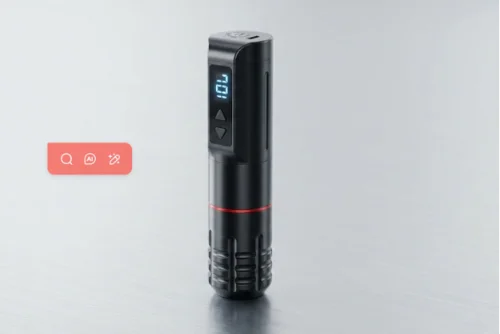
Because the INKONE MIG-1 weight balance pushes the center of gravity directly toward the needle, the machine practically rests itself in the web of your hand. It uses a customized coreless motor that is incredibly smooth, which means you do not have to deal with those hand-numbing vibrations that lead to “grip death.” It is a professional-grade solution for artists who are tired of waking up with sore wrists. Exploring the full range of INKONE products shows a clear focus on lightweight, wireless freedom that does not sacrifice hit power. It is honestly one of the smartest upgrades you can make if you plan on tattooing for the next twenty years.
Conclusion and Next Steps
Stop fighting your equipment. You invest thousands in your inks and needles, so do not neglect the health of your hands. Transitioning to ergonomic gear is about protecting your career longevity. Protect your wrists by upgrading to one of the most reliable lightweight wireless tattoo machines on the market and feel the difference on your next back piece.
FAQ
Q1: Can wireless machines handle thick 14RL liners?
A: Absolutely. Modern wireless pens like the MIG-1 use high-torque coreless motors that provide plenty of punch for big groupings without the erratic “kick” of an old-school coil machine.
Q2: How long does the battery actually last during a real session?
A: Most professional wireless batteries provide about 6 to 8 hours of run time depending on your voltage. It is always a good idea to keep a spare battery charging so you can swap it in ten seconds and keep working.
Q3: Is the vibration really that much lower than a coil machine?
A: Yes, the difference is night and day. Rotary motors produce a consistent, circular motion that creates much less vibration than the slamming of an armature bar, which is the main cause of hand numbness.
Q4: Do I need special cartridges for wireless pens?
A: No, these machines are compatible with all standard professional needle cartridges. The main thing is choosing a needle with a good internal membrane to prevent ink backflow into the motor.
Q5: Will switching to a lighter machine mess up my muscle memory?
A: It might feel a bit “light” for the first hour, but your brain adjusts quickly. Within a single session, you will find that your lines are actually steadier because your hand isn’t struggling against the weight of the machine.