Buying transfer paper for tattoos sounds simple until you run a busy day and a stencil starts to fade, smear, or shift. That is not just annoying. It costs time, burns through sheets, and can force a full reset on placement. Professional buyers usually care less about flashy claims and more about consistency, workflow fit, and predictable results across batches.
This guide focuses on tattoo transfer paper quality, what to test before a bulk purchase, and how to evaluate a tattoo transfer paper supplier without getting lost in marketing.
Why Transfer Paper Choice Affects Cost, Consistency, And Rework
In procurement, the real cost is not the carton price. It is what happens after the box is opened. When paper quality varies, artists compensate with extra solution, extra press time, extra wiping control. That slows the station down and raises reprint rates. If a studio has multiple artists, inconsistency gets louder fast because everyone has a slightly different stencil routine.
The goal is simple: buy professional tattoo transfer paper that behaves the same way each time you use it, across different designs, different skin types, and different artists.
The Hidden Cost Of “Cheap Sheets”
A low price can look great on paper, then disappear in practice. One weak stencil can trigger rework: re-clean, re-shave, re-place, re-check alignment. That is real time. It also adds stress for the client, which is never a good vibe.
Consistency Matters More Than “Peak Performance”
Some paper prints one perfect stencil, then the next sheet looks lighter, blurrier, or patchy. That is a batch consistency issue, not an artist issue. Buyers who track repeat orders tend to prefer “boringly consistent” over “sometimes amazing.”
Choose The Right Type For Your Workflow
Different shops run different stencil workflows. Matching paper type to how the studio actually works cuts down failures. This is where many sourcing mistakes start: buying the “most popular” option instead of the right fit.
Thermal Tattoo Transfer Paper For Fast, Repeatable Output
Thermal tattoo transfer paper is built for thermal stencil printing. It can be a strong choice when a studio prints many designs each day, especially detailed linework. You are usually buying speed and repeatability. The tradeoff is simple: it depends on hardware and print settings, so paper and workflow compatibility matter.
Manual Tattoo Transfer Paper For Flexible, Mixed Setups
Manual options are common in shops that mix printed designs with hand-drawn edits. This route can be forgiving, but it can also smear if handling is sloppy or if the coating is uneven. If your team uses multiple transfer solutions, test that pairing early. The paper might be “fine,” but the combo might not be.
Quick Comparison Table For Buyers
| Paper Type | Best For | What To Watch |
|---|---|---|
| Thermal tattoo transfer paper | High-volume printing, fine lines | Printer settings, storage heat/humidity |
| Manual transfer paper | Mixed workflows, hand adjustments | Smudge resistance, coating consistency |
Key Features Professional Buyers Evaluate
A good buying decision comes from a few practical checks. These are the points that show up in daily work, not just in product listings.
Transfer Clarity And Line Sharpness
Stencil clarity is the first test. Fine details should stay readable, corners should look crisp, and lines should not “fog” out. If clarity looks borderline on the paper, it usually gets worse on skin. Buyers often test with one small fine-line design and one larger piece with curves and text, because both expose weaknesses quickly.
Skin Adhesion, Smudge Resistance, And Set Time
Smudge resistance matters because artists wipe. Skin adhesion matters because skin moves. Paper that transfers cleanly but smears with the first wipe creates tattoo stencil smudging problems even when the design is correct.
Set time is part of this too. Some paper needs a longer “let it sit” window to lock in. That is not always bad, but it must match your studio pace.
Performance Across Different Skin Conditions
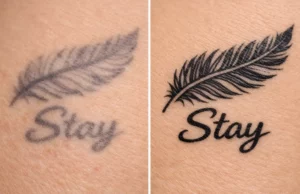
Oily skin, dry skin, high-movement areas, heavier hair growth: these are normal realities. A professional tattoo transfer paper purchase should be tested on a range of typical conditions, not a single “perfect” demo case. If your shop often struggles with tattoo stencil fading issues, that is a signal to test durability after gentle wiping and stretching.
Batch Consistency And Storage Stability
Buyers rarely talk about storage until something goes wrong. Heat and humidity can weaken performance. Poor packing can cause edge curl or layer shift. Ask about shelf life and storage guidance, then follow it. Stable paper should stay stable when stored correctly, not turn moody after a week in the back room.
Procurement Checklist For Bulk Purchase And Wholesale Orders
If you are doing tattoo transfer paper bulk purchase or wholesale, treat it like any other repeatable supply item. Small checks up front save a lot of frustration later.
Request Samples And Test Like A Studio, Not Like A Lab
Testing should match real workflow. Use your usual stencil solution. Use your normal wipe pattern. Try at least two design types. Also test “time pressure,” because that is when weak paper shows itself. If possible, have two artists test the same sheet type. Different hands reveal different issues.
Confirm Specs And Packaging Details In Writing
For sourcing, written clarity matters. Confirm sheet size, layer structure, packing count, and outer carton protection. Packaging is not just presentation. It affects moisture exposure and transit damage, which can show up later as “random” transfer problems.
Plan Total Cost, Not Just Unit Price
The cheapest sheet is not cheapest if it increases reprints or slows the station. Buyers often compare: cost per sheet vs. usable output rate. That is the real number that matters when the shop is busy.
Supplier And Quality Control Checks Before You Commit
A tattoo transfer paper supplier is part of your workflow. If the supplier changes coating, packing, or paper base without notice, your shop feels it immediately. Professional buyers look for repeatability and fast problem resolution.
What A Reliable Tattoo Transfer Paper Supplier Should Support
Look for clear answers on: batch traceability, defect handling, sample-to-bulk matching, and lead times that stay stable. A good supplier can explain what changes between batches (ideally, “nothing meaningful”) and how they control it.
Incoming Inspection That Takes Minutes, Not Hours
When a bulk order arrives, do a quick incoming check: open one pack, check for curl, layer shift, or obvious coating issues, then print or transfer one test stencil. Catching problems early makes resolution easier and prevents a full carton from being opened and mixed into daily stock.
Storage And Handling That Protects Batch Consistency
Even great paper can fail if storage is chaotic. Keep transfer paper for tattoos sealed, flat, and away from heat sources. Avoid storing in high-humidity areas. If your shop is in a hot climate or has steam-heavy rooms, treat storage like part of quality control, not an afterthought.
Simple Handling Habits That Prevent “Mystery Failures”
Avoid touching coating surfaces with wet gloves. Do not bend sheets to “make them fit.” Do not leave packs open on the counter all day. Small habits stop most of the “it worked yesterday” complaints.
A Professional Option For Buyers Who Want Stable Supply
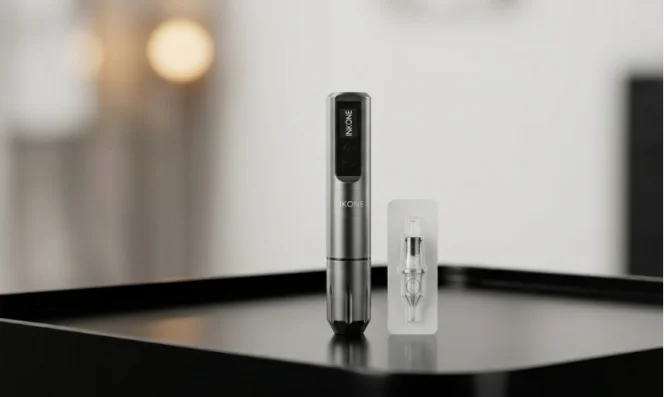
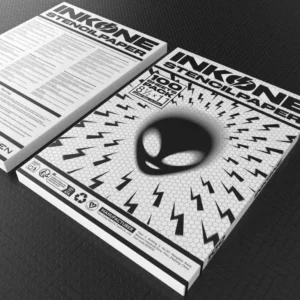
INKONE supplies tattoo equipment and consumables with a clear focus on production stability and real studio workflows. Alongside transfer paper and disposable tattoo products, INKONE tattoo machine solutions are developed with the same attention to structure, circuit reliability, and long-term consistency. For professional buyers, this matters because machines, transfer paper, and daily tools must work together instead of fighting each other. A supplier that controls both hardware and consumables is better positioned to maintain batch stability, packing quality, and repeat order consistency. When sourcing at scale, that integrated approach helps reduce unexpected stencil issues, lowers rework rates, and keeps daily operations predictable across different artists and sessions.
FAQ
Q1: What should you test first when choosing transfer paper for tattoos?
A: Test clarity and set behavior. Use your normal transfer solution, then check how the stencil holds up after light wiping and stretching.
Q2: Is professional tattoo transfer paper always worth the price?
A: It usually is when it saves reprints and time. If a cheaper sheet increases rework, the “savings” disappear fast.
Q3: What causes batch inconsistency in tattoo transfer paper?
A: Coating variation, packing exposure to moisture, and weak controls during production. A reliable supplier should address how batches stay consistent.
Q4: Should you buy thermal tattoo transfer paper if your shop is small?
A: It depends on workflow. If you print often and want repeatable output, thermal can be a good fit. If you do mixed hand edits, manual options may feel easier.
Q5: What questions help you screen a tattoo transfer paper supplier quickly?
A: Ask about sample-to-bulk matching, defect handling, storage guidance, and whether specs can stay stable across repeat orders. Those answers reveal a lot.