If you hang around any studio long enough, you will hear the same question pop up: “Should I move from coil to rotary?” Before you choose a side, it helps to be clear on what a rotary tattoo machine is, how it behaves in the chair, and why more artists are picking rotary tattoo pens for daily work.
This walk-through keeps things simple and practical. You will see what changes when you switch, where rotary wins, where coil still has a place, and when a pen style setup actually makes sense for you.
What Is a Rotary Tattoo Machine?
At its core, a rotary tattoo machine uses a small electric motor to move the needle. The motor spins a cam or eccentric wheel, which turns that rotation into a smooth back-and-forth motion that drives the needle bar or cartridge.
Compared with a traditional coil machine, there is no electromagnetic “hammer” effect. The stroke is usually more even, the vibration is lower, and the sound is closer to a hum than a buzz. For you, that means a smoother feel in the hand and a less aggressive noise level in the room.
How a Rotary Tattoo Machine Works
When you power a rotary, the motor spins at a set speed based on your voltage. That spin pushes the cam, and the cam moves the needle in and out in a steady cycle. There is often little or no “give” unless the machine is built with a give system, so the hit feels very direct.
Because the motion is constant, rotary machines are known for consistent needle travel and less chatter on the skin. Many modern setups use cartridge needles, which click in and out fast and cut down on setup time between groupings.
Key Traits of Rotary Machines
Most rotary units share a few traits that stand out in daily work:
- They are typically lighter and quieter than coil machines.
- Vibration is lower, so long sessions are easier on your wrist and fingers.
- Maintenance is simpler: basic cleaning and occasional checks, not constant tuning.
- A single rotary can be used for both lining and shading if you pick the right stroke length and needle setup.
Rotary Tattoo Machine vs Coil – What Really Changes?
Many artists start on coils and only later consider a switch. The big question is not which one is “right” forever, but what actually changes in your hand and in the client’s experience when you move to rotary.
Weight, Noise, and Vibration
Coil machines often run heavier and louder, with a classic buzz that some people love and others hate. Rotary machines, especially pen style designs, are usually lighter and much quieter, with noticeably less vibration in the grip.
Less noise can calm nervous clients. Less vibration means less joint stress if you tattoo all day, several days in a row. Over months and years, that comfort adds up.
Maintenance and Setup
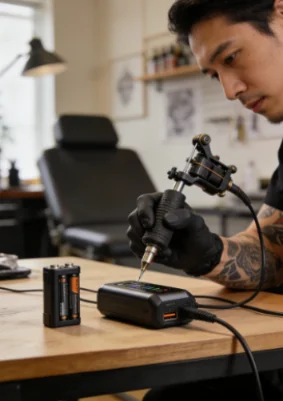
Coils reward people who enjoy tweaking springs, contact screws, and armature bars. If you do not want to spend time on that, it can feel like a chore. Rotary machines are closer to “plug in, set voltage, go to work”. They still need cleaning and care, but the learning curve for setup is lower and repeatability is higher.
Versatility for Lining and Shading
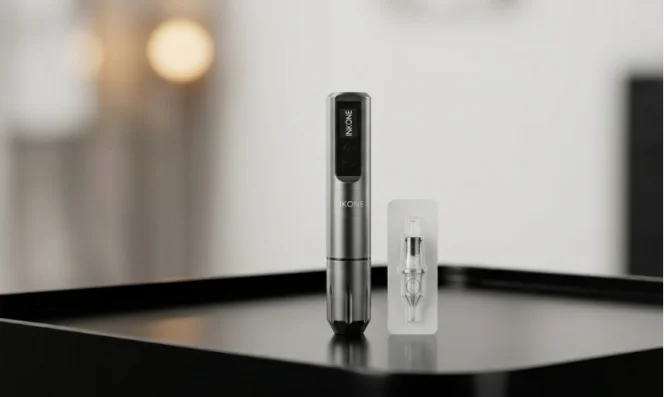
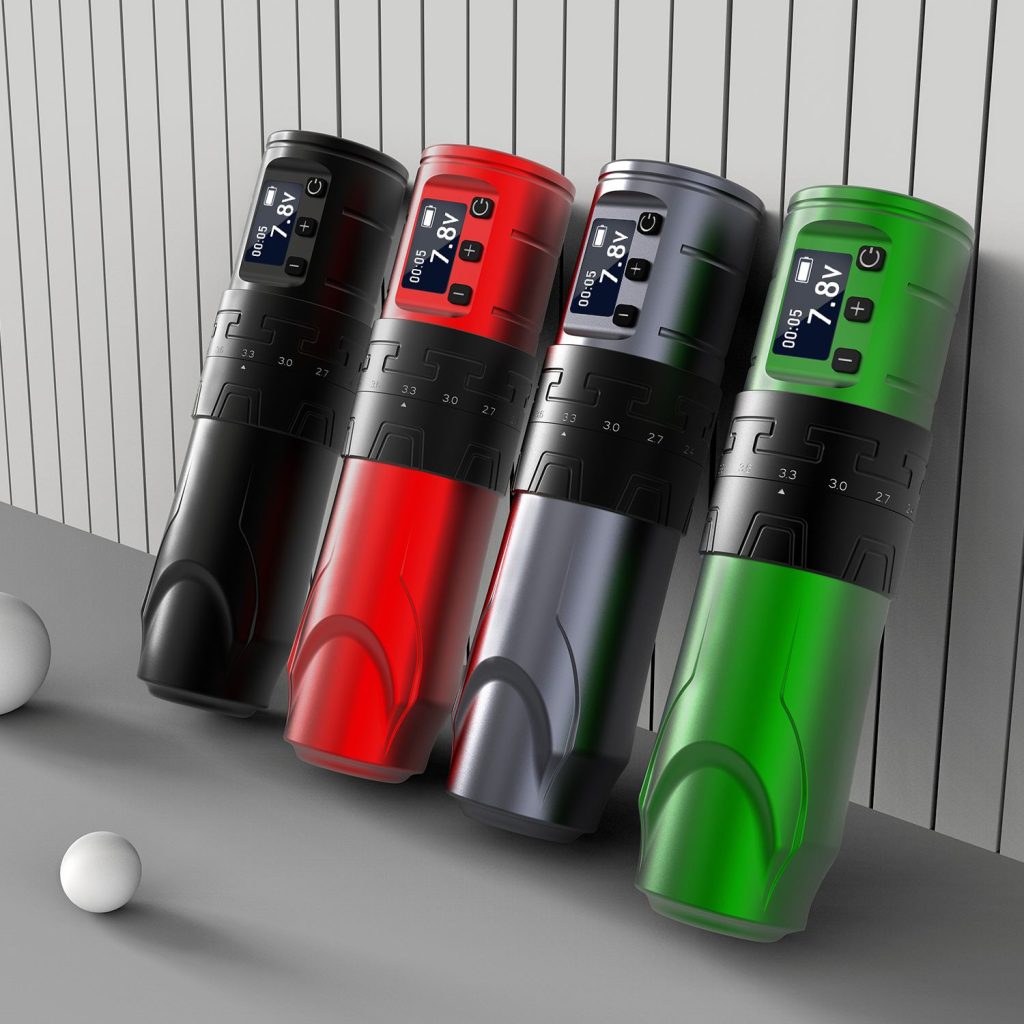
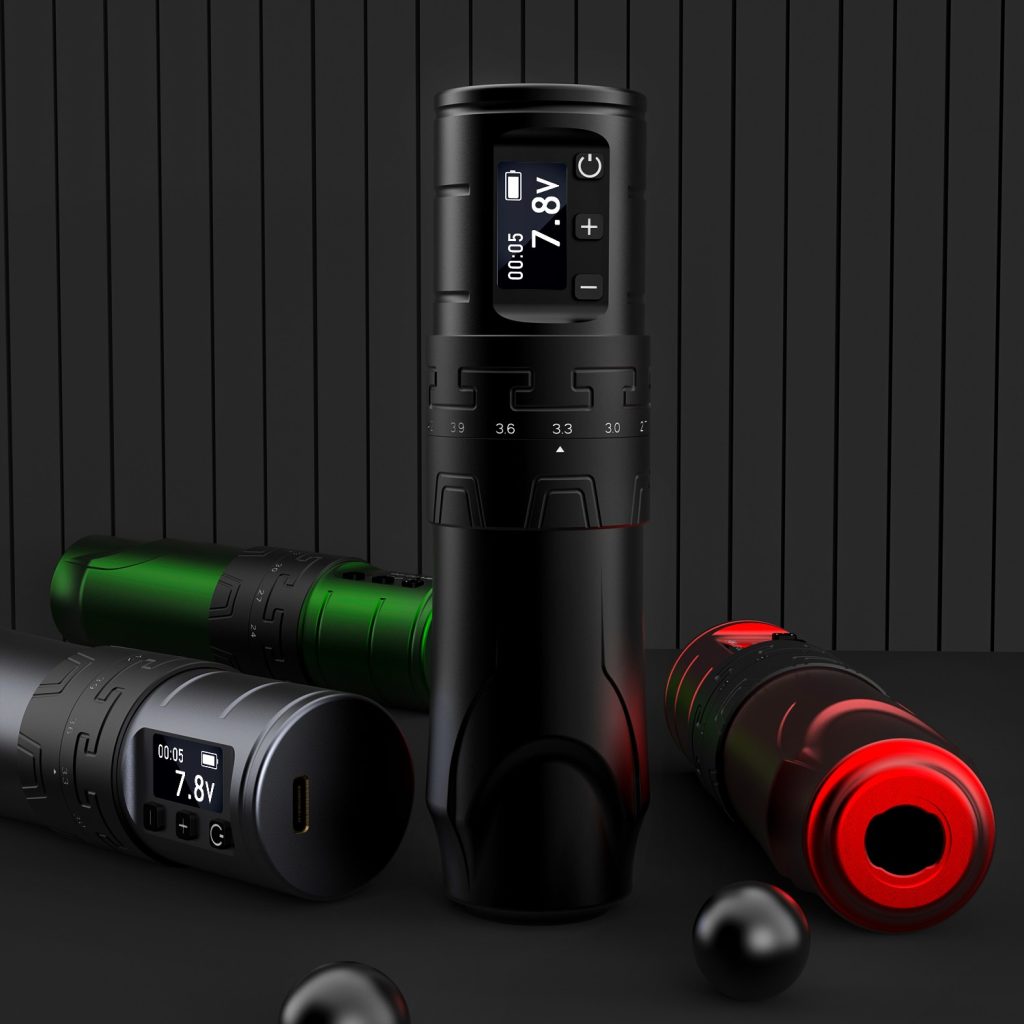
A well-chosen rotary can act as an all-rounder. With the right stroke and voltage, you can pull lines, build smooth black and grey, and pack color with the same body. Many wireless rotary pens now offer adjustable stroke options, often in steps from around 2.4 up to 4.2 mm, so you can tweak the hit without changing machines.
Why So Many Artists Are Switching to Rotary Tattoo Pens?
Rotary cartridges were already common. The pen form factor pushed things further. A pen style machine feels more like a marker or brush than a blocky frame, and that small change in shape has a big effect over long sessions.
Comfort and Long Sessions
Pen style rotary tattoo pens are slim, balanced, and sit in the hand like a thick pen. The weight is centered along the grip instead of high in a frame. That makes it easier to hold a consistent angle and pressure for hours, especially on large pieces or full-day sittings.
Clients may not know the tech behind your tools, but they do feel the difference between a buzzing, shaking machine and a smoother, quieter one.
Learning Curve and Control
For newer artists, rotary machines are often easier to pick up. There is less tuning, fewer moving parts, and a more direct link between hand speed, voltage, and how the needle behaves. Guides often point out that rotary machines are generally more beginner friendly and need less maintenance than coils.
At the same time, experienced artists like the way a pen lets them “draw” on skin with less effort, especially when working with cartridges across many needle groupings.
Wireless Rotary Options for Modern Studios
Wireless rotary tattoo machines add another layer: freedom from cables. A typical wireless tattoo machine pen might include a 1500 mAh battery, a coreless motor, 5–12 V operating range, and a stroke that adjusts between about 2.4 and 4.2 mm. That setup can deliver 4–6 hours of work on a charge, which covers most sessions.
For guest spots, conventions, or tight stations, not dragging a clip cord or power lead over the client’s body is a small but real upgrade.
For guest spots, conventions, or tight stations, not dragging a clip cord or power lead over the client’s body is a small but real upgrade. In this segment, an inkone tattoo machine is the kind of tool that targets exactly this mix of portability, stroke control, and daily reliability.
What Makes INKONE Worth a Look
INKONE is a tattoo equipment maker based in Yiwu, China, a city known for dense industrial supply and export routes. The company focuses on rotary machines, pen style devices, cartridges, grips, power units, and related accessories, so you can build most of a station from one line.
On the machine side, many of its rotary pens use a direct drive or coreless motor with stroke ranges in the 2.4–4.2 mm window, aimed at covering both lining and shading with one body instead of two or three frames. Products are designed in-house, with attention to circuit layout, motor pairing, and housing balance, rather than mixing random off-the-shelf parts. Since 2018, INKONE has shipped to multiple regions and offers OEM / ODM support, so distributors can request custom colors, logos, and packaging while keeping the same core hardware. For artists and resellers who want rotary tattoo machines that feel modern but still studio ready, that mix of focused product range and customization is hard to ignore.
FAQ
Q1: What is a rotary tattoo machine in simple terms?
A: Think of it as a tattoo machine driven by a small electric motor instead of big metal coils. The motor spins, a cam moves, and that motion drives the needle in a smooth cycle. Less clatter, less vibration, more of a steady push.
Q2: Is a rotary tattoo machine better than a coil?
A: “Better” depends on what you like. Rotary machines are lighter, quieter, and easier to keep running. Coil machines hit harder, give more feedback, and some artists love that feel. For all-round daily work, many people end up grabbing the rotary more often.
Q3: Can a rotary tattoo pen do both lining and shading?
A: Yes, if you pick the right one and set it up well. With a suitable stroke length, voltage, and needle choice, one rotary pen can pull lines, build grey, and pack color. Adjustable stroke models make this even easier, because you can change the hit without swapping machines.
Q4: Do you really need a wireless rotary tattoo machine?
A: Need, no. Is it nice to have? Often yes. Wireless pens clear the floor of cables and make moving around a lot simpler, especially at guest spots or conventions. If your current corded setup already feels clean and you rarely travel, it is more of a comfort upgrade than a must-have.
Q5: Is a rotary tattoo machine good for beginners?
A: For many beginners, rotary is the easier path. You spend more time learning needle depth, stretch, and design flow, and less time tweaking springs and screws. Once your basics are strong, you can always explore coils later if you feel curious about that classic feel.