“Professional” gets used like a compliment, but it should function like a standard. In practice, professional tattoo machines are the ones you can rely on when the day is long, the skin behaves differently than expected, and the work demands consistent control rather than occasional peak performance. A workflow-based perspective helps you judge machines by what actually matters in real sessions: repeatable output, predictable response, and reliability that doesn’t interrupt the work.
Professional Means Consistency Under Real Work Conditions
A machine can feel impressive for five minutes and still fail the professional test over a full week of sessions. Output consistency is the first marker. You are not just looking for power. You are looking for a machine that keeps the same behavior when the workload changes.
Output consistency over long sessions
Long sessions reveal what a machine really is. Heat buildup, grip fatigue, and small shifts in hand pressure show up as line drift, uneven saturation, or a need to “compensate” with your technique. A professional tattoo machine minimizes those variables. The goal is not to make every stroke effortless. The goal is to keep the machine’s response stable enough that your decision-making stays consistent from the first line to the last.
Predictable response when load changes
Real work rarely stays inside perfect conditions. Different cartridge groupings, different skin resistance, and different pacing all change load. A professional machine stays predictable when that load changes. When the response becomes inconsistent, you spend attention correcting the tool instead of executing the design. That is a workflow penalty, not a minor annoyance.
Control Is About Predictability, Not “Ease of Use”
Control is often confused with beginner friendliness. In professional tattooing, control means you can anticipate how the machine will respond and maintain a steady rhythm without fighting it.
What “control” looks like in daily work
Control shows up as clean starts, steady tracking through curves, and consistent resistance feedback that lets you make micro-adjustments without overthinking. It is also about what does not happen: unexpected surges, sudden softening under load, or a feeling that the machine is “doing something different” from one pass to the next.
Why professional feel is repeatable feel
A tool feels professional when the same setup produces the same outcome across sessions. If the feel changes noticeably from day to day, the machine becomes a variable you have to manage. Repeatable feel is what lets you build reliable habits, train new staff, and keep quality consistent across a busy schedule.
Stability Beats Peak Specs in Professional Tattoo Machines
Spec sheets are easy to read. Stability is harder to measure, but it is what professional tattoo machines are judged by. Two stability factors matter more than most headline numbers: voltage stability and machine vibration.
Voltage stability and clean execution
Voltage stability influences how consistently the motor behaves under real load. When voltage fluctuates, rhythm changes. Rhythm changes pressure. Pressure changes how quickly a stencil breaks down and how predictable your lines feel. That is why professional workflows favor machines that keep a predictable response rather than machines that look strong only at peak output.
Vibration and micro-instability in lines
Machine vibration is not just comfort. Micro-instability shows up as tiny edge roughness in lines, inconsistent saturation in tight areas, and fatigue that builds faster than expected. Lower, more controlled vibration helps you keep your hands steady and your decisions consistent, especially in long sessions.
Workflow Fit: What a Studio Actually Needs
Professional is not a single style or a single technique. It is a set of demands that show up across daily studio work: switching tasks, managing fatigue, and keeping results consistent even when the day gets busy.
Switching tasks without re-learning the machine
One professional machine lets you move between tasks without resetting your expectations every time. When a machine behaves differently across small changes—such as a different needle grouping or a different pacing—you lose time recalibrating. Workflow fit means the tool stays predictable enough that you can focus on the work, not the setup.
Ergonomics, fatigue, and consistency drift
Hand fatigue leads to consistency drift. That drift is not always obvious in the moment, but it shows up in the last third of a session. Ergonomics and weight distribution matter because they help you maintain control under real conditions. A machine that feels balanced and stable reduces the chance that fatigue will quietly change your technique.
Reliability and Maintenance Are Part of “Professional”
Reliability is not only about whether the machine works today. It is about whether it keeps working the same way, and whether maintenance interrupts the workflow.
Maintenance that doesn’t interrupt workflow
In professional settings, downtime costs more than parts. A machine that requires constant fine-tuning or frequent troubleshooting becomes a workflow risk, a professional tattoo machine should be stable enough that routine care is straightforward and predictable, not a recurring “fix” cycle.
Parts, build consistency, and failure modes
Build consistency matters because it reduces surprises. When machines vary widely unit to unit, training and standardization become harder. Professional use favors equipment that behaves consistently across production runs, with failure modes that are manageable rather than sudden and disruptive.
Wireless Can Be Professional—If the System Is Stable
Wireless tattoo machines used to be treated as a convenience category. Today, the real dividing line is not wireless vs wired tattoo machines. It is stability vs variability.
Wireless vs wired is not the real question
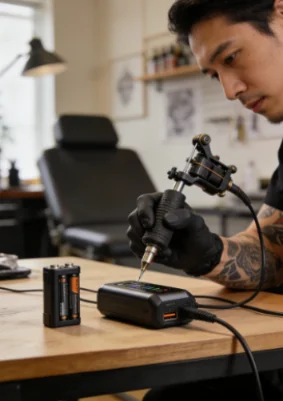
Wired systems remove one variable: the battery. Wireless systems remove another: cable drag and workspace constraints. Neither is automatically professional or unprofessional. What matters is whether the machine’s output stays consistent under real load and real session length.
What to check in a wireless system
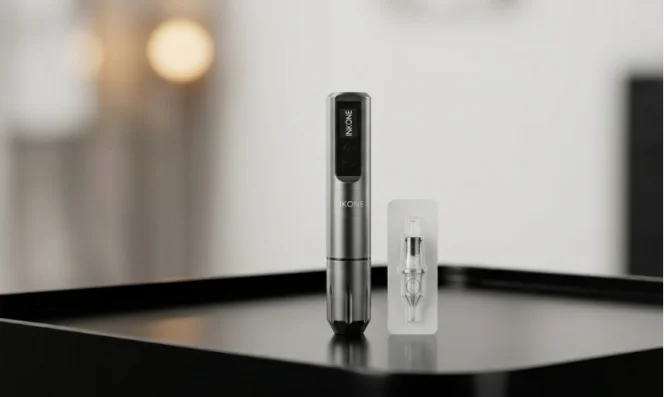
In a wireless setup, stability comes from predictable power delivery and consistent behavior as the battery state changes. If you want a structured way to evaluate this, focus on wireless tattoo machine stability as a decision factor rather than chasing headline specs. Many studios use systems such as an inkone tattoo machine platform when they want wireless flexibility without sacrificing predictable response, because the workflow cost of instability is simply too high.
A Practical Checklist: How to Evaluate Professional Tattoo Machines
A workflow-based checklist helps you compare tattoo machines without overbuying or getting trapped in spec anxiety.
| Evaluation point | What to look for | What it prevents |
|---|---|---|
| Output consistency | Same behavior from start to end of session | Line drift and late-session mistakes |
| Predictable response | Stable feel when load changes | Overcompensation and inconsistent rhythm |
| Voltage stability | No noticeable surges or softening under load | Wobbly execution and early stencil breakdown |
| Low vibration | Controlled feel over long sessions | Fatigue and micro-instability in lines |
| Workflow fit | Easy switching between tasks | Re-learning the tool mid-day |
| Reliability | Stable behavior across days and units | Unplanned downtime and training gaps |
What to test before you commit
Think in terms of repeatability. If a machine feels different with small changes in load or pacing, it will cost you attention during real work. Evaluate whether the tool supports consistent decisions, not just whether it can “do the job.”
How to compare options without overbuying
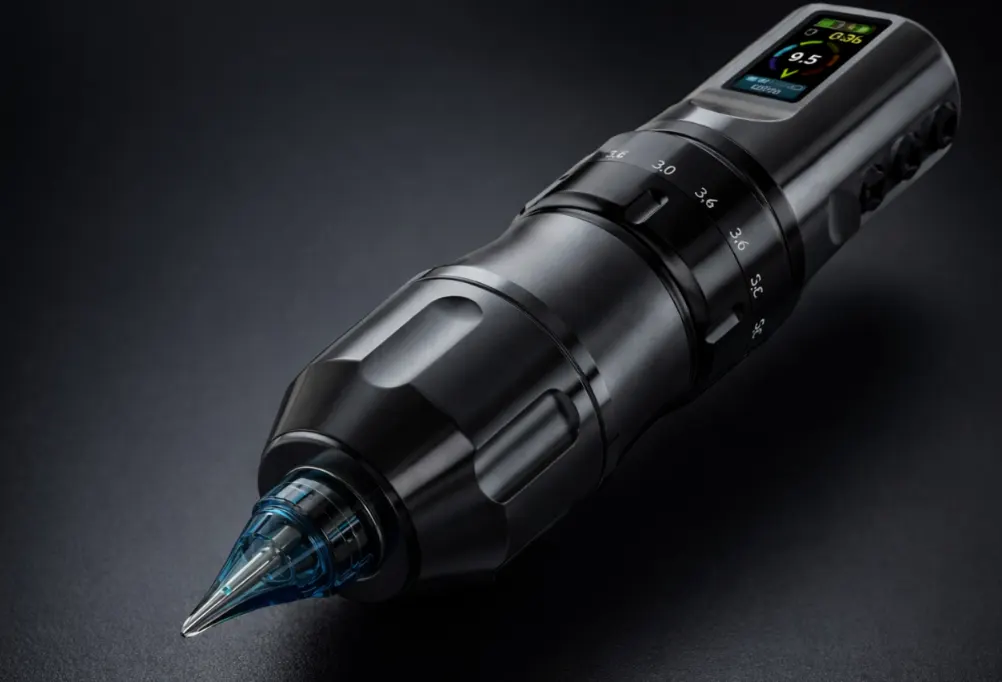
Overbuying often happens when you chase maximum flexibility instead of workflow fit. Choose the machine that reduces variables in your daily work. If you want a product example of a compact wireless tattoo pen designed to sit comfortably in professional workflows, you can review the INKONE Prick Wireless Machine Pen as a reference point for a stability-first approach.
Conclusion
A professional tattoo machine is not defined by hype, price, or peak output. It is defined by how reliably it fits into real work: output consistency over long sessions, predictable response under changing load, stable power delivery, and reliability that doesn’t interrupt the day. When you judge machines through workflow instead of specs, you choose tools that support consistent decisions—and that is what “professional” should mean.
INKONE Tattoo Equipment: Engineering-Focused Solutions for Professional Studios
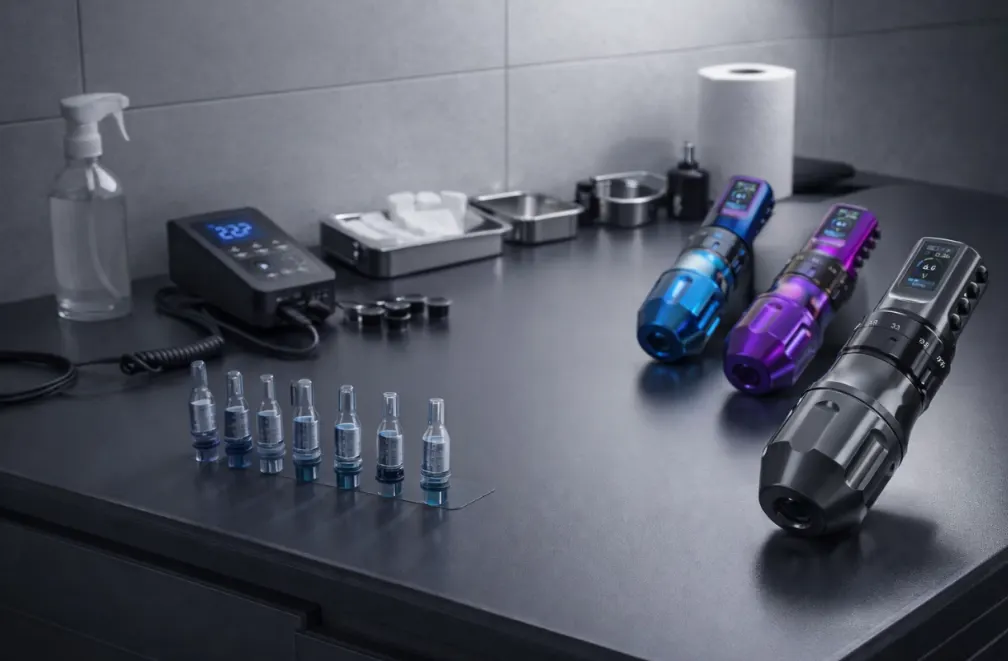
INKONE is a professional tattoo equipment supplier established in 2018, with in-house capabilities covering circuit schemes, machine structure design, and integrated hardware and software development. That engineering focus supports stable performance in daily use, while a broader product range—including wireless tattoo machines, tattoo cartridge needles, tattoo power supplies, and disposable tattoo products—helps studios and distributors keep their workflows consistent from setup to delivery.
FAQ
Q1: What makes a tattoo machine “professional” beyond price?
A: Professional typically means repeatable output, predictable response under load, low disruption from vibration, and reliability that holds up across long sessions and daily use.
Q2: Are wireless tattoo machines considered professional today?
A: They can be, if power delivery stays stable and behavior remains predictable across session length and battery state. Workflow consistency is the deciding factor.
Q3: Why does voltage stability matter in professional tattoo machines?
A: Voltage instability changes rhythm and pressure, which affects line control and can increase fatigue and inconsistency during long sessions.
Q4: How does hand fatigue affect tattoo quality?
A: Fatigue can cause consistency drift—subtle changes in pressure and control that show up later as line roughness, uneven saturation, and slower decision-making.
Q5: How can you compare professional tattoo machines without overbuying?
A: Use a workflow checklist focused on repeatability, predictable response, stability, and reliability. Choose the tool that reduces variables in daily work rather than chasing maximum specs.