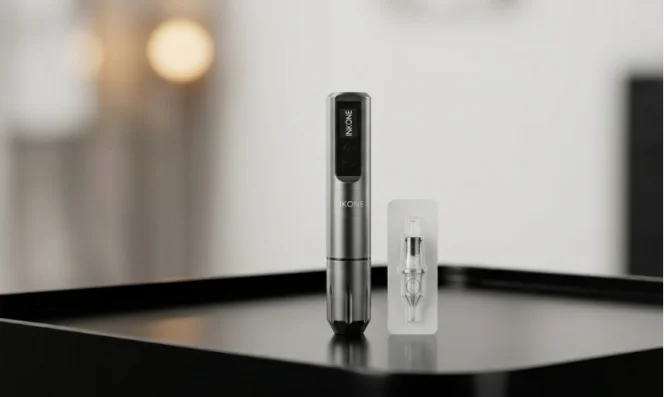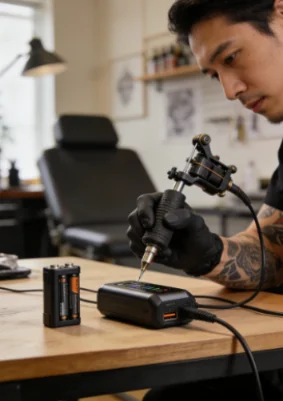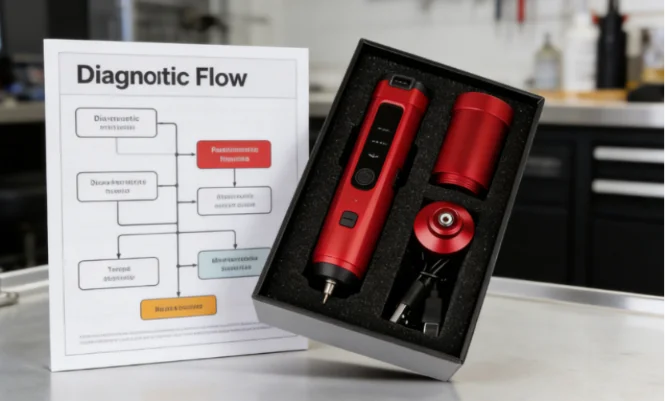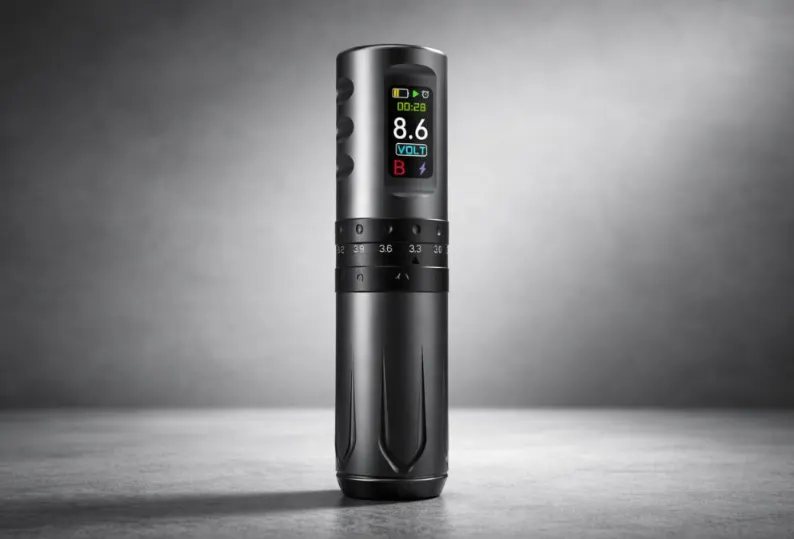
Buying a wireless machine is rarely the hard part. The hard part is buying the same machine again six months later and getting the same feel, the same power, and the same reliability. That is why the real question is not “Which model is best?” It is how you pick a wireless tattoo machine manufacturer that can support daily work, repeat orders, and real OEM requests.
Why Wireless Tattoo Machines Became the Industry Standard
Wireless did not win because it looks modern. It won because busy studios hate clutter, hate setup mistakes, and hate time loss between clients. When your station is tight, a cable becomes one more thing to bump, wipe, retape, or replace.
Less Setup Time, Fewer Small Errors
A wired setup often turns into a two-minute routine: route the clip cord, check the RCA, test the pedal, adjust the power supply, then recheck after you drape. Wireless cuts that down. Over a 6-client day, even 2 minutes saved per client is 12 minutes. It is not life-changing, but it is real time you stop bleeding into the schedule.
Cleaner Workstations in Real Life
Cords collect ink mist, soap film, and glove powder. That does not mean wireless is “clean by default,” but it removes one messy surface from your station. Many buyers care because they run multi-artist stations and want fewer variables in each booth. (This is one of the same practical reasons wireless keeps trending in retail discussions too.)
Are Wireless Tattoo Machines Really Worth the Investment for Studios?
This is where many buyers get stuck: higher unit cost, new maintenance habits, and the fear of battery failure mid-session. The “worth it” question becomes simple when you frame it like a studio manager: you are paying for consistency and predictability, not a gadget.
Cost vs. Downtime
A cheap machine that fails once a month can cost more than an expensive machine that never interrupts a session. You do not just lose time. You lose rhythm. You also risk reworking lines because the machine behavior changes. Even FYT’s buyer-facing guide highlights battery life and learning curve as the real trade-offs, not just price.
The Learning Curve Is Real
Wireless machines feel different. Weight and balance change. A new grip can make an artist run hotter or slower for a week. That is normal. A professional buying decision is not “Can artists adapt?” It is “Can the supplier support the same spec next batch so training is not repeated every time?”
Circuit Design: The Difference Between “Works” and “Works All Day”
Most machines look good on a product page. The problem starts at hour three, when voltage drops, the needle feel changes, and artists start chasing settings. That is why circuit quality matters more than fancy screen features.
In-House Circuit Design and Daily Stability
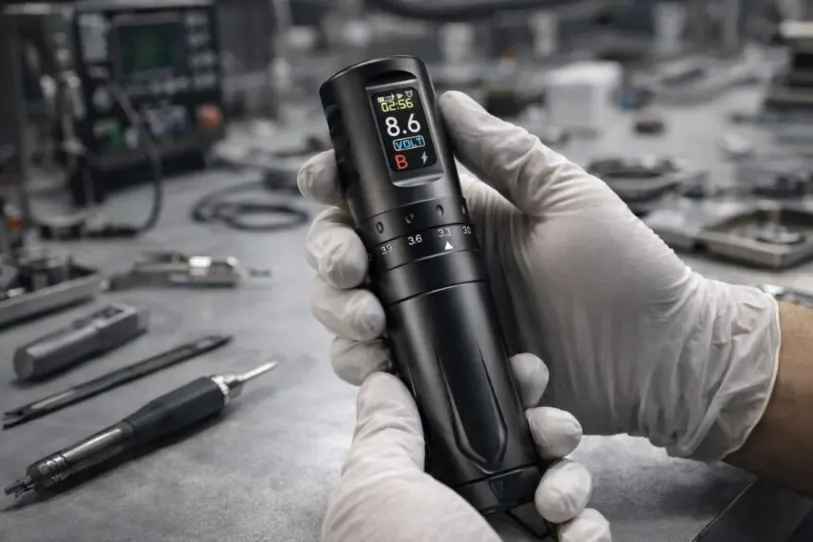
When a manufacturer has in-house circuit design, it can tune power behavior for real load, not just a no-load demo on a bench. The goal is simple: consistent hit from start to finish, even as the battery drains. A lot of buyer complaints are really about voltage stability slipping during long sessions.
Battery Behavior Is More Than a Number
A big capacity number looks nice, but the circuit decides how the machine behaves under pressure. Good power management avoids sudden drops and weird pulsing. If you are evaluating suppliers, ask how they handle the battery management system and how they test output across a full discharge cycle.
Battery Systems: Capacity Numbers Don’t Tell the Full Story
Battery talk online often stays at “how many hours.” Professional buyers should go further. Battery safety, batch consistency, and replacement availability matter more than a marketing number.
Real Runtime Under Load
A machine that “runs 6 hours” on paper may not run 6 hours on thick packing, higher stroke, and demanding needle groupings. A supplier worth working with can explain runtime in plain language: typical voltage range, typical usage patterns, and how fast the last 20% drops.
Replacement and Supply Continuity
Studios and distributors care about replacement batteries and long-term sourcing. If the battery format changes every season, you end up with dead inventory. This is not glamorous, but it is what keeps customer service sane.
Machine Structure and Balance: Why Weight Alone Is a Misleading Metric
A common mistake is comparing only grams. Weight matters, but where that weight sits matters more. Two machines can weigh the same and still feel totally different after four hours.
Machine Structure Balance and Hand Fatigue
The internal layout affects machine structure balance. A front-heavy machine can pull your wrist down. A rear-heavy machine can feel unstable during fine lines. You can spot this fast in a studio test: after one long session, artists stop talking about “specs” and start talking about strain.
Small Details That Affect Control
Grip diameter, surface texture, and vibration behavior often decide whether a machine becomes a daily driver or a “backup only” tool. Buyers who run multiple artists should test for repeatable control, not one-person preference.
Assembly and Quality Control: Where OEM Factories Are Actually Different
This is the unsexy chapter that saves money. Most failures are not “bad design.” They are inconsistent assembly, loose tolerances, or weak testing. That is why you should evaluate a tattoo machine manufacturer like you would any production partner.
Before you even compare features, look at the manufacturing system: incoming checks, assembly standards, and final inspection. The best suppliers talk about process, not hype.
Quality Control Process and Batch Consistency
Ask what gets tested before packing. A serious quality control process focuses on repeatability: switch feel, motor behavior under load, output stability, and basic durability checks. When buyers complain “the second batch feels different,” this is usually the reason.
Don’t Mix Up Product Categories
Some buyers jump between product types and expect the same factory strengths. A shop that mainly services rotary tattoo machine manufacturers may still fail at wireless battery consistency if the electronics side is weak. It is not an insult. It is just specialization. Your job is matching the supplier’s real strengths to your needs.
Wireless Tattoo Machine OEM: What Professional Buyers Should Ask First
OEM is where deals become profitable—or painful. You want clear boundaries: what can be changed, what cannot, and what it costs in time and tooling.
Start With the “Three Basics”
Ask these first, every time:
- MOQ for a trial run
- Sample lead time and what “sample” includes (final battery, final firmware, final packaging)
- After-sales rules for defects and DOA units
Then move to customization scope. If your goal is an OEM wireless tattoo machine, define whether you want cosmetic branding, performance tuning, or deeper structure changes.
Customization Scope Without Confusion
This is where many conversations get messy. “Custom” can mean logo only. It can also mean new grip sizes, different stroke options, or a different power curve. If you need custom tattoo equipment, say what “custom” means in one sentence. It saves weeks.
Choosing a Manufacturer, Not Just a Wireless Tattoo Machine
A wireless machine is a tool. A manufacturer is a long-term decision. If you are buying for distribution or multi-studio supply, you are really buying repeatability: stable spec, stable delivery, and stable communication.
The best wireless tattoo machine manufacturer for your business is the one that can make the same performance show up again in the next shipment—without surprises, without excuses, and without “this version is slightly different.” And yes, that matters even more once you add packaging, compliance paperwork, and reorder cycles.
What You Need to Know About INKONE Before You Place a Supplier Order
INKONE is a tattoo equipment supplier established in 2018 in Yiwu, China, with a product range that covers wireless tattoo machines, cartridge needles, power supplies, tattoo printers, thermal papers, and disposables. The brand’s core strength is not only supply breadth, but also development depth: circuit schemes and machine structures are developed with software and hardware handled internally, which is exactly what professional buyers look for when they want stable tools across batches. INKONE also puts heavy attention on production details like inspection, packing, and delivery, with a clear focus on safe and sterile supplies for daily studio work. If your business needs custom tattoo equipment for distribution, private label, or studio standardization, INKONE’s OEM/ODM positioning is built around customization as a competitive advantage, not as an afterthought.
FAQ
Q1: If a wireless machine “works fine” today, what’s the first thing that usually fails later?
A: It’s often not the motor. It’s consistency—battery drop behavior, switch wear, or a small assembly tolerance that turns into vibration after weeks of daily use.
Q2: How can you tell if a supplier can deliver the same feel in the next batch?
A: Ask what gets tested before packing, and ask how they handle complaints like “batch A feels different from batch B.”
Q3: Is OEM only about putting a logo on the shell?
A: Not really. Logo is the easy part. The real value is when you can define performance behavior, grip options, and packaging standards without chaos.
Q4: What should you ask first if you want custom tattoo equipment for wholesale?
A: Start with MOQ, sample lead time, and defect handling. Then define “custom” in one sentence—logo, packaging, performance, or structure—so nobody talks past each other.
Q5: Why do some wireless machines feel great for two hours, then get annoying?
A: That usually points to power behavior over discharge, balance, or vibration that only shows up during long sessions. Short tests don’t always reveal it.