If your machine starts to feel shaky after the second hour, you already know the problem. A low vibration tattoo machine is not just about comfort. It affects tattoo machine precision, line stability, and how much stress your hand takes during real work. That matters because prolonged hand-transmitted vibration is linked to numbness, tingling, and musculoskeletal strain, while even small machine instability can show up as rougher lines and faster fatigue buildup. In tattooing, those tiny changes are not tiny for long.
Why Does a Low Vibration Tattoo Machine Matter?
A lot of artists first notice vibration in the hand, not on the skin. Then, a bit later, they notice it in the work. That is usually how it goes. At first the machine feels “fine.” By hour three, your grip is tighter, your wrist is working harder, and the clean confidence you had in the first pass is harder to keep.
It Reduces the Work Your Hand Has to Do
A machine that shakes too much forces you to squeeze harder just to hold a straight path. That extra tension builds quietly. It can turn into cramping, forearm tightness, and the kind of tired hand that makes every pass feel slightly heavier. This is where tattoo machine hand fatigue becomes a real job issue, not a minor comfort issue. Even artists who handle long sessions well usually say the same thing in plain terms: a calmer machine is easier to trust.
It Changes What Your Lines Look Like
A stable machine helps you keep the same rhythm from the first pass to the last. That is a big part of tattoo machine precision. Lower, more controlled vibration means less edge roughness in linework and less inconsistency in tight shading areas. It also means fewer moments where you are correcting the tool instead of following the stencil. That sounds small on paper. It really does. On skin, it is not small at all.
What Makes a Machine Feel Stable in Real Work?
You can usually feel the difference before you can explain it. Some pens feel calm and planted. Others feel busy in the hand, even when the voltage looks normal. The reason is usually not one single feature. It is the mix of motor quality, body balance, grip size, and how repeatable the machine stays during a full day.
Motor Quality and Body Balance Matter More Than Hype
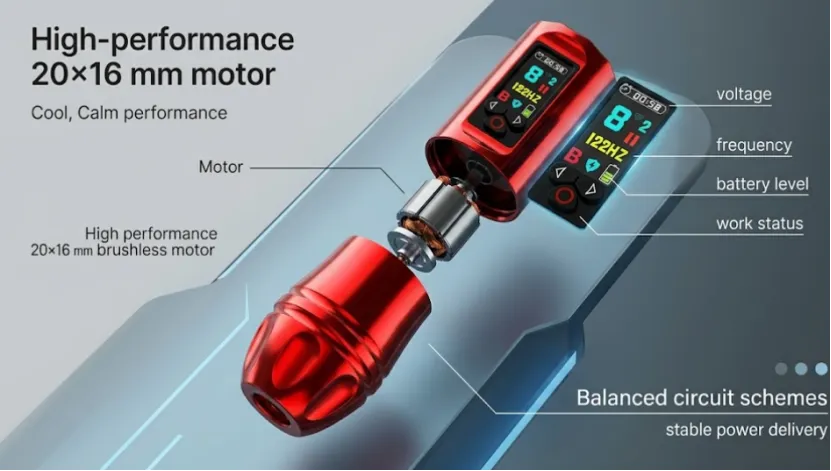
A good brushless tattoo machine often feels smoother because the motor stays steadier under load and introduces less unwanted movement. Balance matters too. A pen can be light but still feel awkward if the body is too long or front-heavy. A low vibration tattoo pen should feel settled in your hand, not twitchy, not noisy, and not like it needs to be wrestled into line. Official workflow notes from the company also point to predictable response, stable power delivery, and low disruption from vibration as the traits that matter most in daily studio use.
Grip Size and Shape Change Daily Comfort
This part gets ignored more than it should. Tattoo machine grip comfort affects how hard you pinch, how your wrist sits, and how fast your hand tires out. A grip that is too slim can make you clamp harder. A grip that is too bulky can feel clumsy in detail work. That is why size options matter in practice, not just in product photos.
Why Can the Supplier Behind the Machine Matter Too?
This sounds like business talk, but it reaches the workstation pretty fast. If specs change from batch to batch, or if build quality drifts, you feel it in the hand. A machine is still a tool. The company behind it decides whether that tool stays consistent.
A Short Look at INKONE
INKONE has been in the tattoo equipment business since 2018 and is based in Yiwu, China. What stands out is not just the product range, which includes wireless machines, needles, power supplies, printers, thermal papers, and disposables. The stronger point is that the company says it develops circuit schemes, machine structures, and both hardware and software in house. It also puts a lot of attention on inspection, packing, and delivery, which matters more than flashy copy ever will. For professional buyers, that usually signals something simple but important: repeatability. If a supplier can keep performance stable across batches, daily work gets easier.
Why That Shows Up in the Work
When a supplier focuses on repeatability, you are less likely to deal with a machine that feels different for no obvious reason a few weeks later. Stable specs, tighter quality checks, and better assembly standards do not make headlines, but they do make long sessions less annoying. And honestly, less annoying is a pretty useful standard in tattooing.
Can a Low Vibration Tattoo Pen Handle Lining and Shading?
Many artists want one pen that does more than one job. That makes sense. Fewer tool changes, less clutter, and less time resetting your hand to a new balance point. The trick is not chasing one machine that claims to do everything. The trick is choosing one that stays predictable while you switch tasks.
Stroke Options Help a Tattoo Machine for Lining and Shading
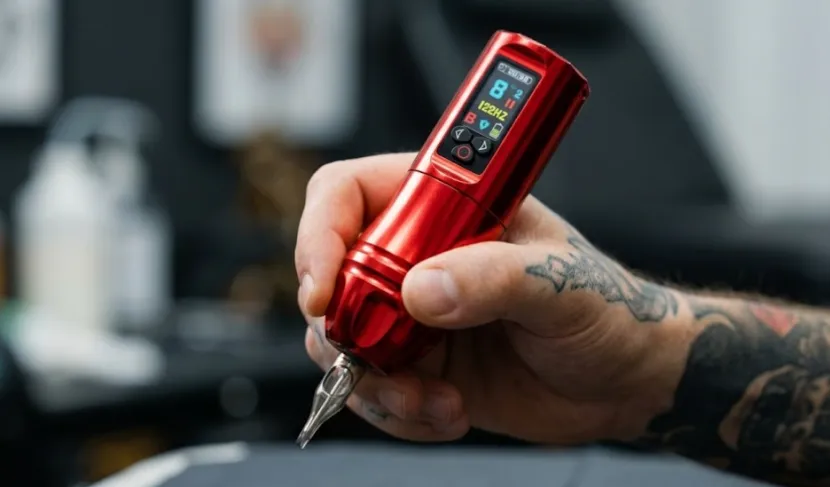
The MIG-1 wireless machine is a practical example. The product page lists a 20×16 mm brushless motor, 3.5 mm and 4.0 mm stroke options, two grip sizes at 35 mm and 38 mm, a 110 mm body length, a 200 g weight, and a high-definition color LED screen that shows voltage, frequency, battery level, work status, and timer. That setup is easy to read as a tattoo machine for lining and shading rather than a one-trick pen. The compact body and dual grip sizes also make a real difference when you care about tattoo machine grip comfort in long sessions.
Battery Rotation Helps More Than People Admit
The same product page highlights dual 2000 mAh batteries for long sessions, and that matters because downtime breaks your pace as much as vibration does. A machine that stays steady through a session has a better shot at becoming the best tattoo machine for long sessions for your workflow. If you want a broader take on task switching, this one-machine guide for lining, shading, and packing fits well with that approach.
How Should You Judge the Best Tattoo Machine for Long Sessions?
It is tempting to judge by power alone. That is usually the wrong shortcut. In daily work, the better question is simple: how much does the machine fight you by the end of the day?
Look for Less Fight and More Calm
If the machine stays quiet, balanced, and predictable, your hand stays calmer. That means steadier lines, better pacing, and less tattoo machine hand fatigue. This is also why a low vibration tattoo machine can feel stronger in practice than a louder, harsher pen with more raw noise but less control.
Check the Little Things You Feel After Hour Three
Look at body length. Look at grip size. Look at whether the screen gives useful data at a glance. Look at whether the pen still feels planted when you change pace. If you want a good reality check, this hand fatigue guide makes one point very clearly: your muscles get tired not only from weight, but from fighting the machine all day. That is the part many spec sheets never say out loud.
FAQ
Q1: What is a low vibration tattoo machine?
A: It is a machine designed to reduce unnecessary movement and hand shock during use. In practice, that means smoother handling, steadier linework, and less fatigue over long sessions.
Q2: Does a low vibration tattoo machine really help with tattoo machine hand fatigue?
A: Yes. When the machine transfers less vibration to your hand, you usually grip less aggressively and make fewer small corrections. That reduces strain over time.
Q3: Is a brushless tattoo machine better for long sessions?
A: Often, yes. A brushless tattoo machine tends to run smoother and stay more stable under load, which helps when you are working for hours instead of testing a pen for five minutes.
Q4: Can a low vibration tattoo pen work as a tattoo machine for lining and shading?
A: Yes, if it has the right stroke options, balanced weight, and enough stability to stay predictable when you switch tasks. That is what makes a good tattoo machine for lining and shading.
Q5: What should you check if you want the best tattoo machine for long sessions?
A: Check vibration level, grip size, weight balance, stroke options, battery setup, and whether the machine stays calm in your hand after several hours. Those details usually matter more than flashy marketing.