
Your first quote for custom tattoo machines may charge for tooling and for samples separately. Work prior to production of your custom tattoo machines, such as making up a design and assembling a prototype for test, may be charged in the initial bill. The more you order the lower the average cost per item of the initial work.
What Do Tooling and Prototype Costs Actually Cover?
What Is Tooling Cost?
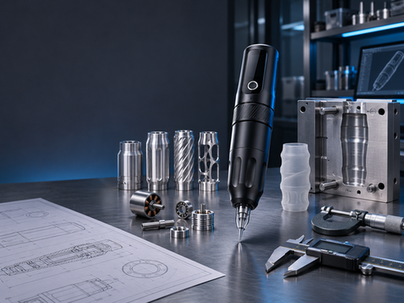
This refers to the molds, fixtures and production aids needed to produce the parts and components needed for your custom tattoo machines. For example, the CNC aluminum housings for your tattoo machines may require specialized fixtures to allow for proper machining. In addition, the molded plastic covers for your machines could require special injection molds to produce the necessary components.
What Is Prototype Cost?
These are the costs for prototypes / samples, which will be produced temporarily in order to test dimensions, appearance, grip comfort, assembly and operation of the custom tattoo machine. The production methods that will be used in the end may differ from the methods used for the temporary sample production.
How Does Customization Level Affect Development Costs?
There are four levels of customization. Depending on what changes need to be made to an existing product, costs will vary. This is based on the amount of work that is required for development.
|
Customization Level |
Typical Requirements |
Cost Impact |
|---|---|---|
|
Private Label |
Logo, labels, packaging |
Low |
|
Cosmetic Customization |
Colors, finishes, grips, accessories |
Low to medium |
|
Modified OEM |
Motor, battery, stroke, controls, housing changes |
Medium to high |
|
Full ODM Development |
New structure, electronics, software, tooling |
High |
Private Label products use existing engineering to produce your Private Label branded products and Cosmetic Customization work can include production of finished samples with all necessary finishing work. Modified OEM products require a full component check and ODM development requires full design and test of your new product. Development cost generally increases with the degree of customization away from the original OEM product.
What Are the Main Factors That Drive Custom Tattoo Machine Tooling Costs?
1. Product Design and Structural Complexity
Design features such as complex cavities and unusual grip angles can demand more time and resources for machining individual parts. Also, features that require very tight dimension tolerances can need verification via dimensional inspection of finished parts. The size of a part alone does not determine its cost.
2. Material Selection and Manufacturing Process
This can include the type of production (e.g. machining of aluminum or molding of plastics) and the material hardness. Additional surface finishing like polishing or anodizing has to be considered as well.
3. Number of Customized Components
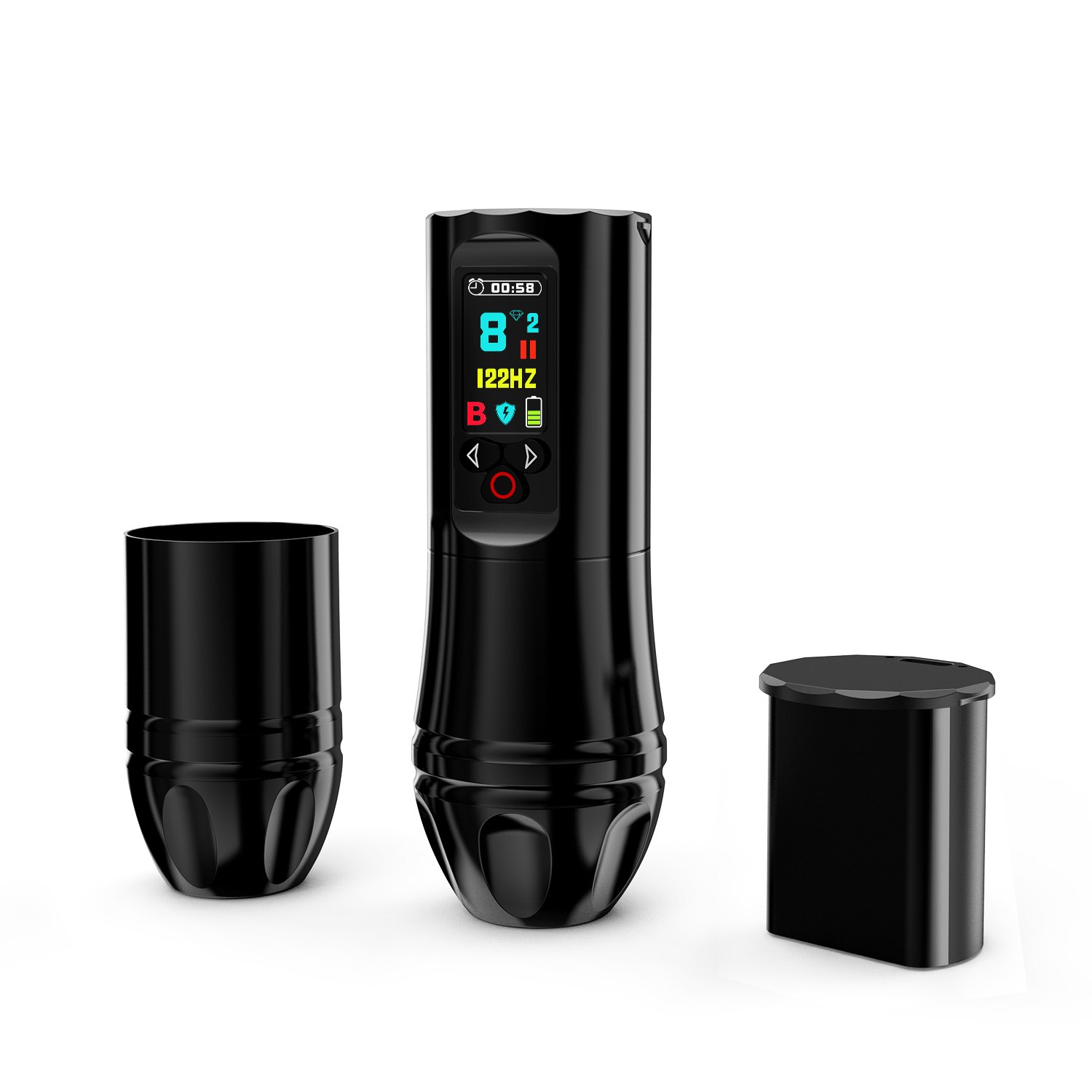
Housing, cover, button, and grip parts may all require tooling. Could some of these parts remain as ‘standard’ items? Additional parts equal more drawings, more parts to check, more people to co-ordinate.
4. Production Volume and Tooling Requirements
These costs are paid up front but then spread across all subsequent machines of the same model. It is also worth establishing whether the cost of the tool is included in the subsequent price of the product and how long the tool will last and who will be responsible for any subsequent wear.
What Factors Influence Custom Tattoo Machine Prototype Costs?
1. Prototype Manufacturing Methods
A prototype can be a 3D printed grip to test for fit and feel. For metal parts that require precise tolerances, CNC machining is a great method. Rapid tooling or even molded samples of proposed production materials can also be created to test their properties.
2. Component Selection and Assembly
The cost of parts and the cost of assembly of the components such as coreless motors, brushless motors, batteries, battery charging circuitry, displays, control boards and stroke mechanisms must also be considered. All of the components must fit together well, especially if the battery size is to change.
3. Design Revisions and Engineering Time
Movement of a switch, such as moving a button, could require additional drawings and samples. Review the quantities of samples required and the number of design revisions allowed.
Why Do Testing and Design Revisions Add to Development Costs?
Functional testing includes testing the motor within a cartridge load test to verify stroke accuracy and the stability of the stroke adjustment. Also, test runtime and charging cycles, test for heat, noise, vibration and imbalance. Test for compatibility of cartridges and for durability of buttons, displays and connectors.
Set clear limits on what is acceptable, in order to be able to fix any ‘uncomfortable’ parts of the grip as cost effectively as possible.
How Can Buyers Reduce Custom Tattoo Machine Tooling and Prototype Costs?
1. Start with an Existing Product Platform
Start with an existing product for a similar market and reuse all proven drive and battery parts where required.
2. Define Specifications Before Development
Set out the motor, stroke, battery, dimensions, target price, and essential features before development. Identify which upgrades are optional.
3. Optimize the Design for Manufacturing
Request a manufacturing review to see how production can be made using standard parts where possible and parts made to very close tolerances where the fit is critical.
4. Plan Production Volume in Advance
The development cost needs to be spread over the first order and a realistic repeat order quantity and compared between different tooling options.
What Should Be Included in a Custom Tattoo Machine Development Quotation?
Have an itemized list to compare similar work.
|
Cost Item |
What to Check |
|---|---|
|
Design & Engineering |
CAD drawings, specifications, development work |
|
Tooling |
Each mold, fixture, and production aid |
|
Prototype |
Sample quantity, parts, assembly |
|
Testing |
Functional checks and performance validation |
|
Revisions |
Included rounds and additional fees |
|
Production |
MOQ and unit prices at agreed quantities |
|
Logistics |
Sample shipping and delivery expenses |
Agree on who owns the tooling, who maintains the tooling, the process for approving samples, and the lead time for production. In addition to the initial cost of any later changes, also find out how they will be charged.
Develop Your Custom Tattoo Machine with INKONE
INKONE would be happy to discuss your specifications and provide you with an order estimate for OEM/ODM development of your custom tattoo machine as well as any related tattoo supplies. We can also provide you with information on the tooling and sample options available to you. Please contact INKONE.
Frequently Asked Questions About Custom Tattoo Machine Development Costs
Does Every Custom Tattoo Machine Require New Tooling?
No. Branding changes usually are done on top of an existing platform (shells, components) whereas structural changes may require new molds and/or fixtures for production.
Are Prototype Costs Included in Tooling Costs?
Be sure to differentiate between the costs of producing samples and those of producing molds and other tools for production. Ask what each charge includes in terms of production activities.
Can Tooling Costs Be Reduced for Larger Orders?
As you place larger orders your tooling costs per unit will decrease. In addition to the above costs for the development of tooling the supplier may also give you a discount on the actual tooling itself. This will also depend on your supplier agreement.