A wireless tattoo machine can look finished before the engineering is finished. An attractive shell and a smooth bench sound do not guarantee stable performance with a cartridge installed for hours.
In an OEM project, the motor, stroke, battery, and housing must work as one system.
What Should You Define Before Requesting a Wireless Tattoo Machine OEM Quote?
A useful quote starts with a useful product brief. “A good wireless pen with our logo” is not enough. The supplier needs to know who will use it, what work it should handle, and where the retail price must land.
The brief should include:
- Target user and main tattooing style
- Expected wholesale and retail price
- Fixed or adjustable stroke preference
- Required runtime and charging method
- Logo, color, packaging, grip, or structural changes
- Estimated order quantity
Many projects begin with premium specifications and a budget that only supports a standard platform.
Which Motor Is Best for an OEM Wireless Tattoo Machine?
Motor selection is not simply about RPM. Cartridge resistance, needle grouping, stroke length, and voltage all affect behavior under load.
When Is a Coreless Motor the Better Choice?
A coreless motor is often the practical option for mid-range wireless pens. It can be compact, responsive, and relatively light. With a well aligned drive system, vibration stays manageable.
On an existing private label platform, it also reduces development risk. Problems more often come from inconsistent sourcing, poor alignment, or lost torque under load.
When Is a Brushless Motor Worth the Higher Cost?
Brushless motors make more sense in premium machines where service life, efficiency, and sustained output matter. They can remain smooth during long sessions and usually create less mechanical wear.
The added cost only works when the battery and housing support it. A badly balanced brushless machine is still uncomfortable. Check loaded torque, heat, noise, startup response, and low battery output.
Should Your OEM Machine Use a Fixed or Adjustable Stroke?
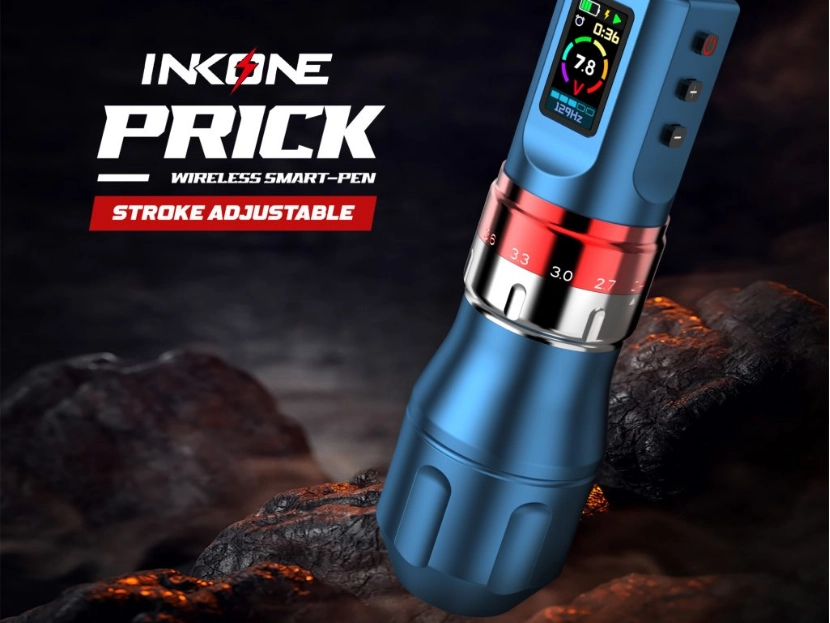
Stroke changes both performance and product positioning. Fixed stroke feels deliberate. Adjustable stroke sells versatility, but adds parts, tolerances, and another mechanism that can loosen.
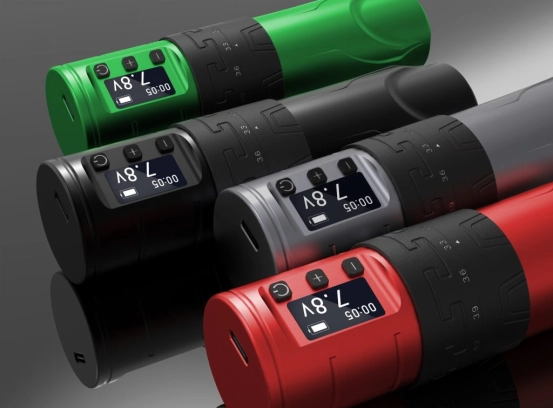
Fixed Stroke for Simplicity and Consistency
Fixed stroke suits focused product lines. Shorter strokes work well for soft shading. Medium strokes cover general use. Longer strokes are commonly chosen for stronger lining and color packing.
A 3.5 mm fixed stroke pen is a sensible mid-market configuration: easier to control in production and easier for distributors to explain.
Adjustable Stroke for a Versatile Product Line
Adjustable stroke fits professional, all round machines. One body can cover several working styles.
The mechanism must lock firmly and return to the stated position. A dial marked 4.0 mm that measures 3.7 mm will become a customer service issue.
| Option | Main advantage | Best suited for | OEM consideration |
| Fixed stroke | Simple, consistent output | Entry level or specialized models | Lower complexity |
| Adjustable stroke | Wider working range | Professional all round machines | Tighter tolerances |
How Should You Select the Battery Configuration?
Battery capacity is easy to print on a specification sheet. Runtime is harder. A larger mAh figure does not automatically produce a better working day.
Capacity, Runtime and Power Stability
Real runtime depends on voltage, motor efficiency, cartridge load, screen consumption, and working habits. Testing should be done with cartridges installed and at several voltage levels.
Voltage stability matters. Some machines feel strong at full charge, then soften below 30 percent. Artists notice. Heat should also be measured after extended operation, not only during a short bench test.
Integrated, Replaceable or Dual Battery Designs
An integrated battery gives a clean body but creates charging downtime. Replaceable batteries suit studio use. Dual battery kits fit premium packages.
Check USB-C charging, charge time, battery display accuracy, overcurrent protection, temperature protection, and shipping documentation. Battery compliance should not be handled after production.
Which Housing Options Improve Ergonomics and Brand Recognition?
The housing controls weight, balance, grip, heat transfer, and visual identity. It is not only a cosmetic part.
Material and Manufacturing Options
CNC machined aluminum alloy is common because it balances strength, weight, and finish quality. Wall thickness and internal geometry matter as much as material grade.
A thin shell may reduce weight but amplify vibration. Extra material can improve rigidity, yet pull the balance forward. Internal tolerances must keep the drive system aligned.
Grip, Balance and Surface Finish
Grip diameter should match the target user. A large grip may feel stable during packing but tiring for smaller hands. A narrow grip can improve control, though it may transmit more vibration.
Anodized, painted, and metallic finishes wear differently. Laser logos usually survive repeated cleaning better than some printed marks. Samples should be tested with gloves, barrier film, and a slightly wet grip—not only under showroom lighting.
How Do Motor, Stroke, Battery and Housing Choices Affect Each Other?
These choices cannot be approved separately. A higher torque motor may draw more current. A larger battery adds weight. A longer stroke can increase vibration. A thicker housing improves rigidity but may damage balance.
| Product position | Motor | Stroke | Battery | Housing |
| Entry level private label | Coreless | Fixed medium stroke | Integrated | Standard aluminum |
| Professional all rounder | High torque coreless or brushless | Adjustable | Replaceable or dual | Ergonomic CNC body |
| Premium custom model | Brushless | Precision multi-stroke | Modular battery | Fully customized housing |
The strongest specification is rarely the one with the highest numbers. It stays consistent at the intended price, weight, and working style.
What Should You Test Before Approving the OEM Sample?
A sample is a production reference, not a display piece. Several units should be tested when possible. One good unit can hide a tolerance problem.
Check:
- Loaded motor performance and startup
- Stroke accuracy and adjustment lock
- Runtime, charging, and low battery output
- Heat, vibration, noise, and balance
- Cartridge compatibility
- Button, screen, and connector durability
- Logo, finish, and packaging consistency
Record acceptable limits in writing. “Feels good” is not a quality standard.
Conclusion: Build the Specification Around Your Target Market
A successful wireless tattoo machine is not created by combining the most expensive motor, longest runtime, and widest stroke range. It is built around a clear user and a realistic price.
For an OEM or ODM project with INKONE, provide the target market, preferred stroke, battery format, design references, packaging needs, and order quantity. That gives the engineering team something concrete to build.
FAQ
Q: What is the most common stroke for a general purpose wireless tattoo machine?
Around 3.5 mm is a common choice because it can cover lining, shading, and moderate color work without becoming too specialized.
Q: Is a brushless motor always better than a coreless motor?
No. A well matched coreless motor can perform very well in mid-range machines. Brushless motors are more suitable when durability and sustained output justify the higher cost.
Q: How long should a wireless tattoo machine battery last?
The target is usually a full working session, but runtime must be verified under cartridge load. Voltage stability and heat are as important as battery capacity.
Q: Can the housing be fully customized?
Yes, depending on tooling budget and order volume. Color, logo, finish, grip pattern, screen layout, and packaging are easier to change than a completely new internal structure.