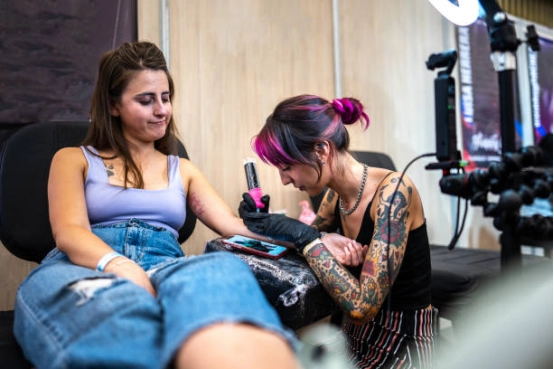
Marta peels the barrier film off at 2:40. The 3:05 client is already in the waiting chair. On the cart: a used 3RL cartridge, blue gloves, a metal ink cup with red ink — three things that still belong to the last session. Twenty-five minutes to sort them.
Why Does the Difference Between Single-Use and Reusable Tattoo Supplies Matter?
Tattooing opens the skin. A wiped surface, a grip with dried blood under the threads, an ink cup that looked clean — each can wait on a cart. How long? Long: hepatitis B stays infectious in dried blood for up to a week. Tattoo hygiene supplies split on that line, and tattoo infection prevention starts with how a studio handles tattoo supplies between clients.
Which Tattoo Supplies Should Be Single-Use?
Tattoo Needles and Cartridge Needles
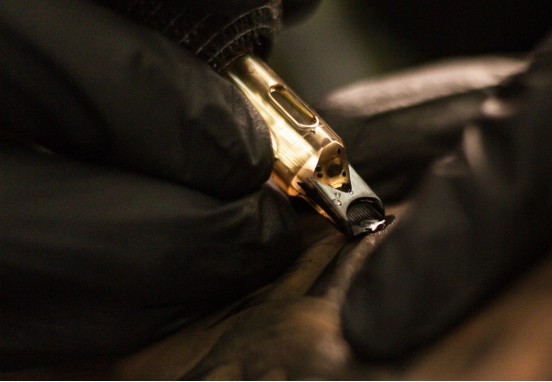
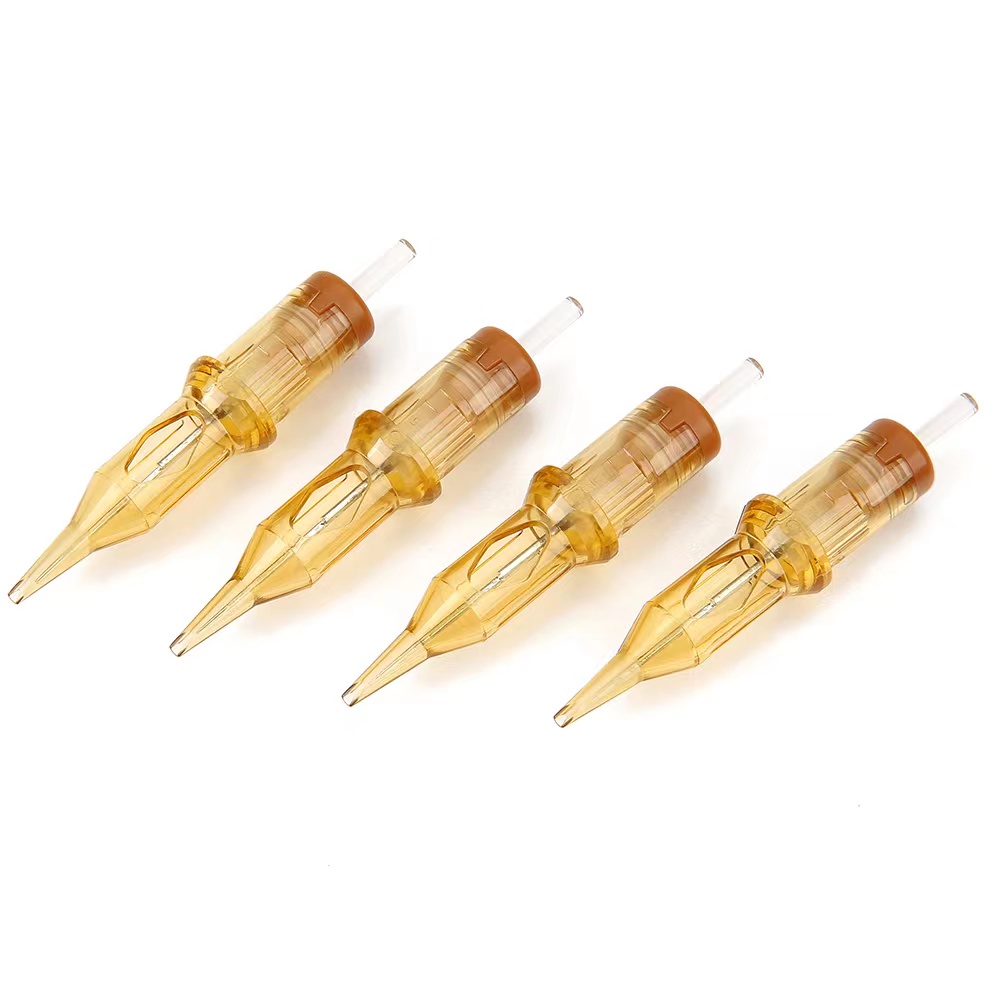
A used single-use tattoo needle looks the same as a clean one — the intact sterile pack is the proof. After the tip touches skin, the cartridge goes to the sharps container, not the "one more client" drawer. Individually packaged tattoo needle cartridges keep one client, one pack. The membrane across the opening slows the ink and blood that would creep back toward the machine.
Disposable Gloves and Protective Barriers
Gloves off, into the waste. Barrier film, clip cord covers, protective wraps, disposable sleeves — the tattoo disposable accessories leave with the gloves, one pair per client. What breaks most studios? A drawer that ran out the day before. Stock the disposable tattoo supplies to the schedule, not the shelf.
Ink Caps, Razors, and Other Consumables
Plastic ink cap, razor, rinse cup, swabs, wipes — one client each, then out with the gloves. Leftover ink goes to the waste, never back into the bottle, even half a cup. Metal ink cups are the split: some health departments count them single-use; others allow reuse after a reprocessing step. The local rule wins.
Which Tattoo Equipment Can Be Reused?
Reusable Tattoo Grips, Tubes, and Tips
Reusable tattoo grips and the metal tube go to the soaking tray. They look like they last forever — and that look is how a contaminated grip reaches a second client. Two conditions before any reuse: the maker designed the part for it, and local rules allow it. Then clean, sterilize, inspect — in that order. Skip the cycle once? The grip carries the last client’s blood into the next session.
Tattoo Machines and Power Equipment
The rotary machine, power supply, and clip cord see every client, and the machine body is a protected surface, not an instrument. Film over the contact points before the first pass, film off after, then cleaning and disinfection per the maker’s manual. Tattoo equipment sterilization for the body itself applies only when the maker allows the cycle — most cannot. Three terms do the work: cleaning takes off what you can see; disinfection lowers the microbial load on the surfaces a product is rated for; sterilization — usually steam at 121 °C for 15 minutes — removes everything, spores included.
How to Handle Tattoo Supplies Between Client Sessions
Four steps, in that order.
Step 1 – Remove and Dispose of Single-Use Items
2:40. Cartridge into the sharps container; gloves, film, ink caps, leftover red ink, razor — into the waste.
Step 2 – Clean and Disinfect Reusable Equipment
Visible contamination first, then a proper clean. Disinfectant on the machine, power supply, and workstation — the contact time on the label is the minimum.
Step 3 – Sterilize Reusable Instruments When Required
Grips and tube into the autoclave — clean, inspected, packaged. Check the pack before anything leaves the cabinet; file the record for the next shift.
Step 4 – Prepare a Clean Workspace
Fresh film, new caps, the next cartridge sealed until the client sits down.
Single-Use vs. Reusable Tattoo Supplies: Key Differences
|
Comparison |
Single-Use Supplies |
Reusable Equipment |
|---|---|---|
|
Usage |
One client/use |
Multiple uses after proper reprocessing |
|
Hygiene |
Discard after use |
Requires cleaning and appropriate reprocessing |
|
Preparation |
Ready-to-use when supplied sterile |
Requires cleaning, disinfection or sterilization as applicable |
|
Initial Cost |
Generally lower per item |
Generally higher initial investment |
|
Ongoing Cost |
Regular replenishment |
Maintenance and reprocessing costs |
|
Examples |
Needles, gloves, razors |
Autoclavable grips, metal tubes |
Neither option is universally better; the equipment, the use, and local regulations decide.
What Should Tattoo Studios Consider When Choosing Between Disposable and Reusable Supplies?
Hygiene and Regulatory Compliance
Which market is the studio selling into? Its regulations decide what is fit for use — the label on the box answers only part of that.
Long-Term Operating Costs
Disposables look cheap until the schedule multiplies them, box after box. Reusable tattoo equipment costs more up front, then runs on cleaning, sterilization, maintenance — the line owners forget in the budget.
Convenience and Workflow Efficiency
A 20-minute turnaround changes the math: a disposable deletes the reprocessing step. The reusable only pays when the routine behind it holds up.
Product Quality and Compatibility
A cartridge that does not fit leaks — and one leak doubles the changeover. The needle, cartridge, and machine should share one specification — a needle cartridge guide covers the fit.
What Should B2B Buyers Check When Sourcing Tattoo Supplies?
For a wholesaler, the question is whether the stock can be defended.
A pack printed "sterile" is a claim. The sterilization method and the supporting documents are what a regulator will ask for. Is each cartridge sealed on its own? Batch number, expiry date — readable straight off the pack? Do the grips and tubes survive the reprocessing your customers run? Does the second order look like the first?
Why Choose INKONE for Tattoo Supplies and Equipment?
Professional Tattoo Needles and Disposable Supplies
The INKONT GT-R cartridge needles arrive individually packed and EO-sterilized, membrane at the cartridge opening.
One-Stop Tattoo Equipment Supply
Tattoo machines, tattoo needles, power supplies, disposables, studio essentials — one supplier for all of it.
OEM/ODM Customization for Tattoo Brands
Since 2018, INKONE has run OEM/ODM work for tattoo brands — logo, packaging, product development for private-label businesses.
Single-use items leave after one client; everything else comes back through the routine, documented, not improvised. INKONE’s catalog covers the needles, disposables, and OEM/ODM work.
Looking for a reliable tattoo equipment supplier? Contact INKONE to explore wholesale tattoo supplies and customized OEM/ODM solutions for your business.
Frequently Asked Questions About Single-Use and Reusable Tattoo Supplies
Can Tattoo Needles Be Reused Between Sessions?
No. One client, one needle; the cartridge ends in the sharps container.
Are Reusable Tattoo Grips Safe?
Safe when the grip is designed for reuse — cleaned, sterilized, and inspected before every appointment.
Do Tattoo Machines Need to Be Sterilized After Every Client?
Most of the time, no: film before the session, cleaning and disinfection after. The autoclave is for the parts, not the machine.
Are Disposable Tattoo Supplies More Hygienic Than Reusable Ones?
Not automatically. A disposable skips reprocessing entirely; a reusable stays safe while its cleaning and sterilization hold up.