Introduction: Why Rated Battery Life Does Not Tell the Whole Story
The battery warning arrives before you’ve finished filling a section. You charged it before the appointment, so why is it running short? With wireless tattoo machine battery life, the answer may lie in today’s work. Quoted runtime is a starting point; your voltage and cartridge setup help decide how much time you get.
What Does “Under Load” Mean for a Wireless Tattoo Machine?
The needle needs energy to move, and that energy comes from the battery through the motor. Add the electronics’ consumption and you have the machine’s electrical load.
You can hear a pen running on the tray, but that doesn’t tell you how it’ll cope with resistance during a pass. Runtime comes down to usable energy divided by average power consumption.
Five Factors That Change Battery Life Under Load
Your settings and cartridge resistance account for two factors. Motor efficiency and battery condition add two more. Power management is the fifth.
1. Voltage Settings and Motor Power Demand
You turn up the voltage because you want a faster response. There’s an energy cost to that: speed generally increases, while the current needed also depends on how hard the motor has to push. But 8V on one pen doesn’t establish the runtime of another at 8V. Their motors and controls may behave differently.
Regulated output can keep a machine feeling steady as charge falls, until it reaches its operating limit. Depending on the design, you may get little gradual slowdown before shutdown. A familiar sound isn’t a reliable fuel gauge.
2. Needle Configuration and Tattooing Technique
There’s more to a cartridge’s load than the number of needles. The motor has to overcome cartridge membrane tension as well as friction inside the assembly.
Stroke matters too. Our TROX wireless pen pairs an 1800mAh battery with adjustable stroke from 2.4 to 4.2mm. Adjusting stroke may change demand.
Compare light passes with prolonged color packing. The whole setup matters, including your technique. Counting needles won’t tell you the current draw.
3. Motor Efficiency and Electronic Components
Matching the battery capacities of two pens doesn’t match their efficiency. Some energy becomes useful movement. Some becomes heat.
The display consumes power as well, and voltage conversion has losses. I’d want to know whether a pen still works well toward the end of its charge. Heat and a weakening response would concern me more than a few minutes’ difference in runtime.
4. Battery Age, Temperature, and Operating Conditions
After many charge cycles, a pack can hold less energy. The display can still read 100%: you’ve filled the capacity it has now.
Cold can temporarily reduce available output. Heat is harder on long-term battery health. A hot car is a poor place to keep spare packs. Check your model’s temperature limits for use and charging. Include the contacts when inspecting its condition.
Why mAh Alone Cannot Predict Real Battery Runtime
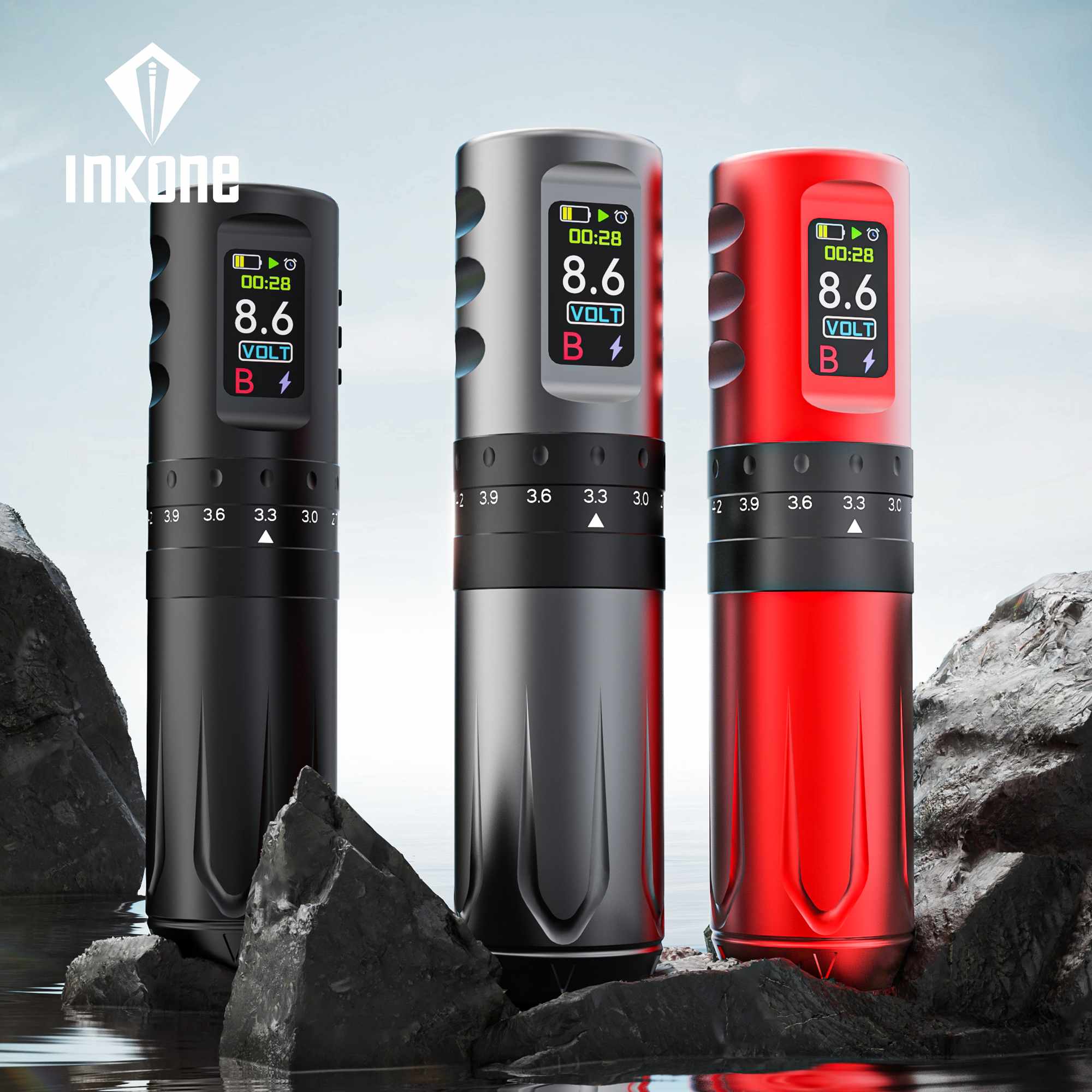
Reading 2000mAh as a promise of hours is a mistake. It’s a charge rating; watt-hours tell you the energy.
For example, 2000mAh at a nominal 3.7V works out as 2Ah × 3.7V = 7.4Wh. Suppose you can use 6Wh. At a constant 2W that would mean three hours, falling to two hours at 3W.
Actual usable energy depends on conversion losses and protective cutoff. Compare loaded runtime alongside mAh, especially when battery voltages differ. Calculate with nominal battery voltage, not the selected output voltage.
What Battery Runtime Variation Looks Like in a Tattoo Studio
Suppose you’ve booked three hours for either of two jobs. One involves small designs with the motor stopped while you reposition. The other involves long stretches of packing a larger area. Same booking length. Different motor time and demand.
Starts and stops change the operating pattern. That 50% on the screen isn’t necessarily another half-session either; the reading can fall unevenly. Repeat the workload when checking for capacity loss.
How to Test Wireless Tattoo Machine Battery Life Under Load
A Practical Testing Checklist
Charge fully, as instructed. Enter the battery’s condition and identity in the log.
Keep your setup consistent. Record the cartridge configuration alongside stroke and voltage.
Apply a repeatable load. Use a consistent practice surface and working pattern.
Track actual running time. Log interruptions separately. Check charge at fixed intervals.
Watch the response. Record warmth and changes in motor behavior. Output stability needs a suitable measuring instrument, beyond reading the screen.
Try other samples. Where possible, draw them from more than one batch.
Test each voltage separately. Agree whether you’re timing to cutoff or to an unacceptable loss of performance. Write that into the report with the setup and duration. Otherwise someone comparing suppliers may unknowingly compare two quite different tests.
How Artists Can Reduce Unexpected Battery Drain
If you keep turning up a struggling pen, pause and check the cartridge and machine. More voltage may conceal a fault while wasting energy.
Begin long appointments with a charged pack and a compatible spare. Log each pack’s runtime so a gradual decline is easier to notice. Include a connector check in routine care.
Store used packs apart from charged ones, within the conditions allowed by their instructions. Otherwise it’s all too easy to pick up yesterday’s used battery while preparing the station.
What Wholesale Buyers and OEM/ODM Brands Should Verify
Battery Performance Beyond the Specification Sheet
Ask for loaded runtime with the exact setup attached. Check output as charge drops, then compare several production samples. One unusually good battery tells you little about a shipment.
Review temperature during sustained use and charging. Request protection details and battery documentation tied to identifiable batches. Get a replacement supply arrangement for batteries and charging accessories.
Put the expected cartridge setup into your OEM/ODM requirements, along with target runtime and charging time. Set acceptable weight and capacity together. We wouldn’t approve a design on maximum hours alone without seeing repeatable test results.
Frequently Asked Questions
Does Higher Voltage Always Mean Shorter Battery Life?
On the same pen, turning it up generally uses more power. For a different model, I’d want to try the same cartridge and workload before predicting its runtime.
Why Does My Wireless Tattoo Machine Lose Battery Faster During Color Packing?
During packing you might run the motor for much longer between pauses. Cartridge resistance and technique also affect consumption. A longer motor run matters even within a shorter appointment.
Is a Higher-mAh Tattoo Machine Battery Always Better?
Only if the extra capacity suits the job. Compare voltage and efficiency before choosing. I’d also try the heavier pack in hand and watch its temperature over a long run.
Conclusion: Evaluate Battery Performance Under Real Working Conditions
Choose a battery setup around the work it must finish. Check runtime and stable output together, then consider battery quality and replacement support. Explore our wireless tattoo machines and bring your working conditions to a wholesale or OEM/ODM discussion with INKONE.