A few years ago, a wireless tattoo machine still felt like a side option. In 2026, that is no longer true. The wireless tattoo pen has moved into the center of daily studio work because it gives you cleaner movement, faster setup, and far less cable drag around the station. But the old question never fully went away. In long tattoo sessions, especially sleeves, backs, and heavy color packing, artists still worry about tattoo machine voltage drop, falling battery life, and the quiet stress of battery anxiety halfway through a big piece. One industry article this year puts the issue plainly: most high end wireless pens now run about 6 to 10 hours per charge, but runtime still changes with voltage and needle grouping, which is exactly why artists keep asking whether power vs portability is still a real tradeoff.
Why Are Wireless Tattoo Machines Trending in 2026?
The shift did not happen just because wireless looks modern. It happened because artists got tired of working around cords. Once a machine can rotate freely, bagging gets simpler, the station looks cleaner, and your wrist stops fighting that little rearward pull from the cable. That sounds minor on paper. In a six hour session, it is not minor at all.
Freedom Became Part of Professional Workflow
A wireless tattoo machine now fits the way many artists actually work. You move around the client more naturally. You reposition faster. You spend less time dealing with clip cords, power supplies, and the usual cable mess that somehow always shows up right when the stencil area is crowded. The industry has also tied wireless systems to lower wrist strain and cleaner workstations, which helps explain why wireless tattoo machines in 2026 feel less like a trend and more like the new default.
Convenience Is Not the Same as Compromise
The real reason artists switched is simple. Convenience finally stopped feeling cheap. Current wireless pens are no longer treated like backup tools for conventions only. They are being used as primary machines because artists expect a stable wireless tattoo machine, not just a cordless gadget.
Are Artists Sacrificing Power for Portability?
This is where the conversation gets real. Nobody minds a lighter setup if the machine still hits the way it should. What artists mind is the moment a machine starts feeling soft in hour four, or when saturation takes an extra pass for no obvious reason.
Why the Fear of Tattoo Machine Voltage Drop Is Real
Tattoo machine voltage drop is not just a technical phrase. It is a working problem. You feel it when the machine starts to lose that clean, steady pull and the hit feels less consistent than it did at the start. In long tattoo sessions, battery drain becomes more noticeable with larger needle groupings and higher voltage. A 10 volt setup pushing a big mag will naturally drain faster than a 7 volt setup with a 3RL. That is why do wireless tattoo machines lose power is still a fair question, especially for artists who do large blackwork, dense color, or long realism sessions.
Portability Alone Does Not Win Professionals Over
For professional use, portability is nice, but consistent power output matters more. You can forgive a machine for being slightly thicker. You cannot forgive it for feeling different from hour one to hour five. That is why serious buyers now judge a high-quality wireless machine by runtime stability, battery swap options, stroke control, and motor behavior, not just by whether it looks sleek on a product page.
What Causes Voltage Drop in Wireless Tattoo Machines?
A lot of artists blame the battery first, and sometimes they are right. Still, voltage drop usually comes from a mix of battery load, motor demand, and the way the machine is built as a whole.
Battery Load Changes During Long Tattoo Sessions
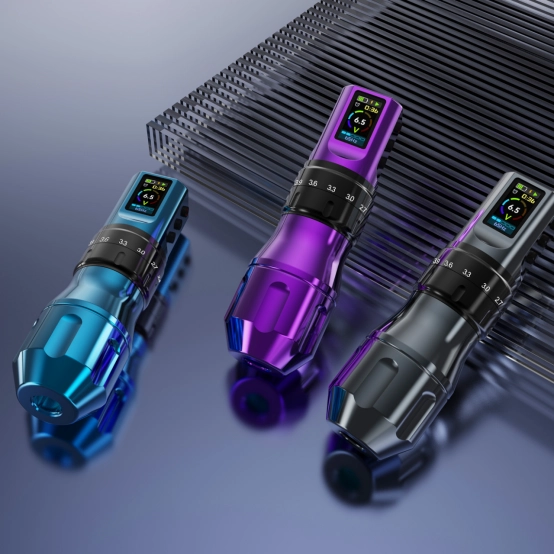
When you run longer, battery output has more chances to dip under stress. More voltage, bigger groupings, and more resistance all increase drain. That is why wireless tattoo machine battery life is never just a single number. The useful runtime depends on how hard you push the machine. One 2026 article gives the broad market range as 6 to 10 hours for many high end pens, while several current INKONE models sit in the practical studio range: the Prick and Saber list 1500mAh batteries with about 4 to 6 hours of working time, and the Novum lists dual 2000mAh batteries at about 6 to 8 hours each.
Motor Design and Stroke Matter Too
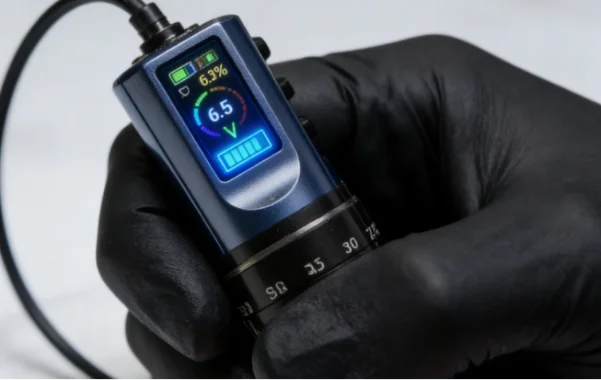
Battery size is only part of the story. A machine with a coreless motor, low vibration, and better stroke control often feels more stable because the whole system is working more efficiently. On the machine category pages, INKONE highlights coreless motors, low vibration, adjustable stroke ranges from 2.4 to 4.2 mm, and even real time screen feedback for voltage and battery level on some models. That kind of design matters because it helps you spot drop-off earlier instead of guessing from hand feel alone.
How Is Modern Battery Technology Reducing Battery Anxiety?
This part is why the 2026 market feels different from the early wireless phase. Modern battery technology is not only about packing in more hours. It is also about making those hours more usable.
High-Density Lithium-Ion Batteries Raised the Floor
The broader market has moved forward because high-density lithium-ion batteries now allow a full workday of usable power inside a compact pen body. That is a big reason wireless systems are no longer treated as weak by default. The same 2026 source also notes that modern wireless machines use improved power management, which is why the best units today can approach wired-level consistency for many artists.
Interchangeable Battery Packs Fix the Worst Case
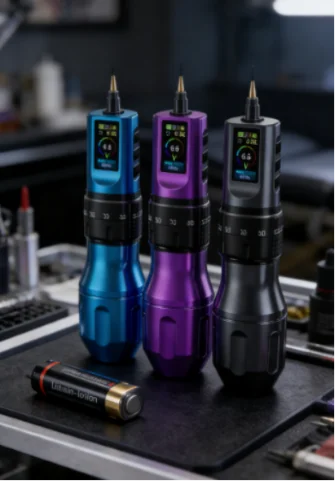
The simplest answer to how to prevent battery anxiety during long tattoo sessions is still the most practical one. Use interchangeable battery packs. Keep a second battery charging while you work. Several current machines in the INKONE lineup already ship with two batteries, and some also include an RCA adapter, which gives you a fallback path if you want a wired option on standby. That kind of setup is not flashy, but it solves real studio problems. And that matters more than flashy.
What Makes a Stable Wireless Tattoo Machine Worth Buying?
Once you get past the marketing words, the checklist becomes pretty clear. You want stable output, a sensible battery system, low vibration, useful stroke options, and a body shape that does not punish your hand after lunch.
Why INKONE Feels Relevant in This Shift
If you look at the current tattoo machines category and the main INKONE site, the company reads like a supplier that has been built around that exact shift. It says it was established in 2018 in Yiwu, runs a mature operating team, offers custom services, and develops circuit schemes and machine structures in house. On the machine side, the lineup shows what artists actually ask for in 2026: wireless pens, dual battery options, low vibration coreless motors, adjustable strokes, dual grip choices on some models, and RCA compatibility on others. The brand also says it pays close attention to production, quality inspection, packing, and delivery, which is the kind of boring detail that usually matters a lot more than people admit.
The Buying Standard Is Higher Now
A professional wireless tattoo machine is no longer judged by portability alone. You want a machine that can stay steady through long tattoo sessions, keep the hand feel predictable, and give you a backup plan before the battery icon gets scary.
Final Verdict
So, are wireless tattoo machines in 2026 sacrificing power for portability? Cheap ones still might. Mature ones, not necessarily. The real divide now is not wired versus wireless. It is weak power management versus a stable wireless tattoo machine built for actual studio hours. If your machine has good motor control, honest wireless tattoo machine battery life, and swappable power, portability stops feeling like a compromise and starts feeling like basic professional comfort.
FAQ
Q1: Do wireless tattoo machines lose power as the battery drains?
A: They can. The effect becomes more obvious in long tattoo sessions, high voltage work, and larger needle groupings. Better power management and spare batteries reduce the problem.
Q2: How long does a wireless tattoo machine battery last?
A: Many high end wireless pens in 2026 are commonly described in the 6 to 10 hour range, but actual runtime depends on voltage, cartridge resistance, and the way you work.
Q3: What causes voltage drop in wireless tattoo machines?
A: Battery drain is one cause, but motor demand, stroke setup, voltage level, and needle grouping also affect how stable the machine feels over time.
Q4: Are interchangeable battery packs necessary for long tattoo sessions?
A: For long sessions, yes, they are one of the easiest ways to reduce battery anxiety and avoid interruptions.
Q5: Are wireless tattoo machines worth it in 2026?
A: For most artists, yes. The gains in mobility, setup speed, and reduced cable drag are real. The key is choosing a high-quality wireless machine with stable output, not just a cordless body.