Choosing your voltage seems easy at first. But when you are in the middle of a tattoo and things feel too sharp or too weak, it gets tricky. A real tattoo machine voltage guide needs to do more than just list some numbers. It should help you understand how the machine feels, how the skin reacts, and how your setup works in real life. If you look at modern tools, you will see that things like stroke and battery power change how the machine acts. For cordless gear, wireless tattoo machine voltage is not just a digit on a screen. It is a big part of your daily work.
What Does Voltage Really Change on a Wireless Tattoo Machine?
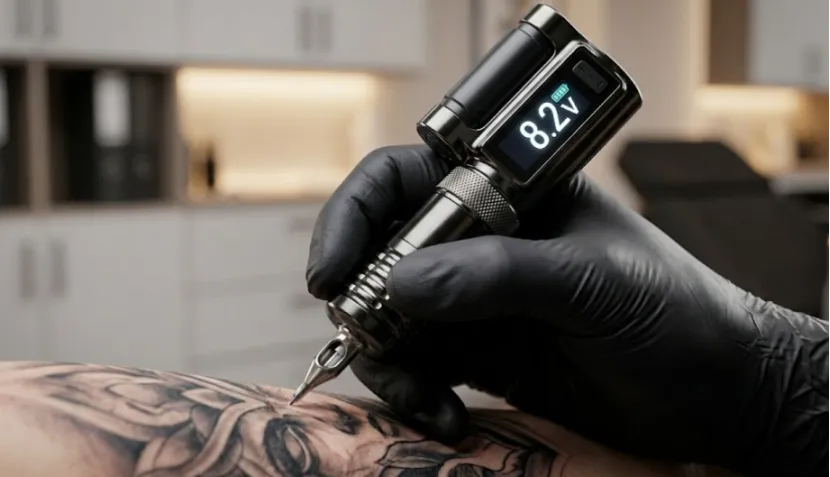
Many artists want a single perfect number. But skin does not care about what is written on a page. The same 8V can feel smooth on one person and rough on another. Voltage mostly changes the speed and the “hit” of the needle. A good tattoo machine voltage guide tells us that higher power makes the needle move faster. However, how deep the needle goes still depends on your hand and your machine setup.
Voltage Changes Speed and Machine Feel
When you turn the power up, the machine moves fast. It hits the skin with more force. Lower power slows things down and makes the hit feel softer. This is very important. Linework needs a sharp feel. But smooth black and grey shading needs a light touch. You can hear the difference too. A good setup sounds steady. If it sounds jumpy, something is wrong.
Voltage Is Only One Part of the Setup
The type of needle you use and the skin you are working on change everything. Big needles need more push than small ones. Thin skin on the ribs needs less power than thick skin on the arm. It sounds simple, but this is where most artists make mistakes.
What Is the Best Voltage for Lining, Shading, and Packing?
You do not need a magic number. You just need a good place to start. Most guides suggest starting around 7.5V for basic work. You can use 8V for lines and 6.5V for shading. These are not strict rules, just a starting point for your day.
Best Voltage for Tattoo Lining
If you want the best voltage for tattoo lining, start a bit higher. Most artists pick 7.5V to 9V. You have to match this to how fast your hand moves. If the power is too low, the line looks weak. If it is too high, the skin gets red and angry very fast.
Tattoo Shading Voltage
A good tattoo shading voltage is usually lower. Many people use 6V to 8V. You want soft moves so you can make smooth fades. If the machine feels like it is jumping, turn it down. If the ink is not staying in, turn it up just a little bit.
Tattoo Machine Voltage for Color Packing
For tattoo machine voltage for color packing, artists stay in the middle. 7V to 9V is a good range to test. You want the color to go in solid without hurting the skin too much. More power is not always the answer. Good saturation with fewer passes is the goal.
How Do You Adjust Tattoo Machine Voltage During a Session?
The big question is how to change things as you work. The skin changes and the machine gets warm. Good wireless tattoo machine voltage settings come from making tiny changes, not big jumps.
Start Low and Watch the First Passes
Don’t start too high. Try 7.5V first. Look at how the ink goes in and how the skin looks. If the skin turns red right away, go lower. If the machine feels like it is dragging, add a little power.
Change in Small Steps
Make tiny moves. Change the power by 0.1V or 0.3V at a time. This is enough to feel a change without losing control. Trust the skin more than the screen.
Why Can the Same Number Feel Different on Another Machine?
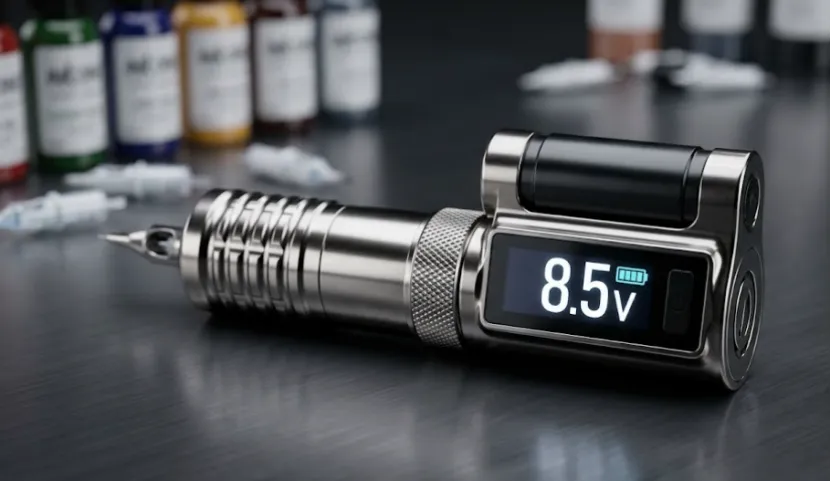
Two wireless pens might both show 8V but feel totally different. This happens because stroke length and power stability work together. A machine with a steady battery will feel better than one that is weak.
A Stable Setup Matters More Than a Big Range
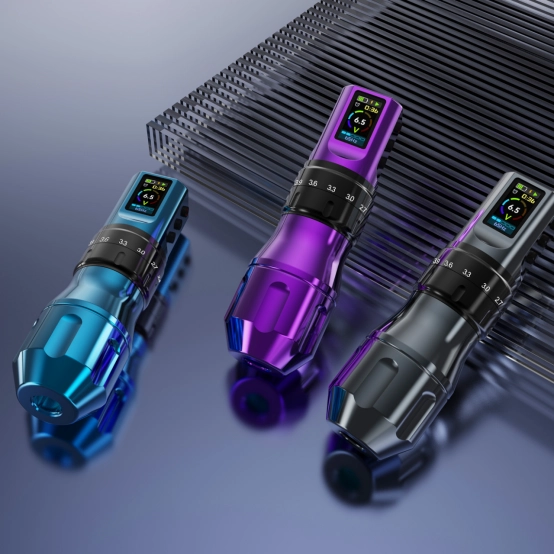
The INKONE NARW is a great example of a tool for pros. It has a 4.0 mm stroke and a 20×16 custom coreless motor. It works from 4.0 to 12V and has an 1800 mAh battery. It also uses Type C charging and comes with two batteries. These details matter because you need your tool to work the same way every single day.
Why INKONE Fits Serious Buyers
INKONE is a real professional supplier. The company started in 2018 in Yiwu, China. They have a real team that designs the circuits and the hardware themselves. They sell everything from needles to printers. This means they care about quality for the long term.
Why Is My Tattoo Machine Losing Power During Long Sessions?
If you ask why is my tattoo machine losing power, it might not be the motor. Often, it is the battery getting low or the machine getting too hot. This can make the machine feel weak or bumpy.
Check Battery Life First
Wireless tattoo machine battery life changes how the power feels. On the NARW page, one battery lasts 6 to 8 hours. Having two batteries is great for long days. If the battery is low, the hit might feel softer even if the screen says the same number.
How Can You Tell When Tattoo Machine Voltage Is Too High or Too Low?
Tattoo Machine Voltage Too High
If the power is too high, you will see blood and very red skin. The machine will sound very loud and angry. If this happens, turn it down.
Tattoo Machine Voltage Too Low
If the power is too low, the lines will look patchy. The machine might sound tired. Raise the power in small steps until it feels smooth again.
FAQ
Q1: What is a good voltage for beginners?
Try 8V for lines and 6.5V for shading. Then adjust based on how the skin looks.
Q2: What is the best voltage for lining?
Usually 7.5V to 9V. It depends on your needle and how fast you move.
Q3: What shading voltage should I try first?
Start with 6V to 8V for a soft touch.
Q4: Why does my machine feel weak?
Check your battery and make sure the machine isn’t too hot.
Q5: Does stroke matter?
Yes. A 4.0 mm stroke feels stronger than a short stroke at the same voltage.