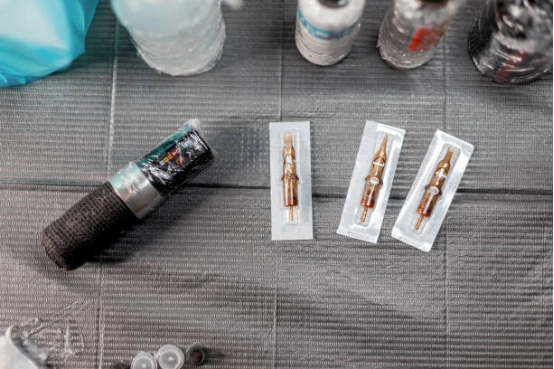
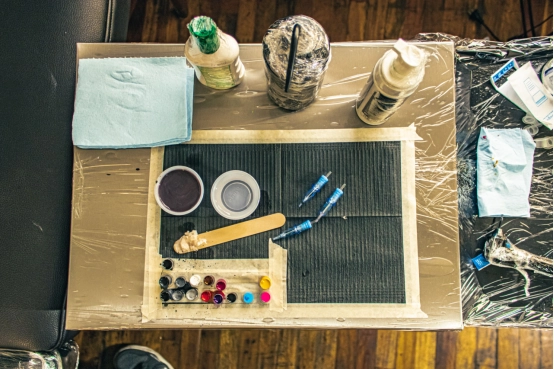
Sometimes. Whether you need to mirror tattoo stencils depends on what the file and printing app have already done. Looking directly at the pigment-bearing face, you should see the reverse of the intended tattoo. Placing that face against skin reverses it again. If your workflow already handles this, leave the file alone.
Picture a shared studio on a busy morning. One artist prepares a name in script. A colleague opens the exported file and presses Mirror out of habit. Both think they have done the right thing. The uncertainty starts with the file, well before anyone picks up the paper.
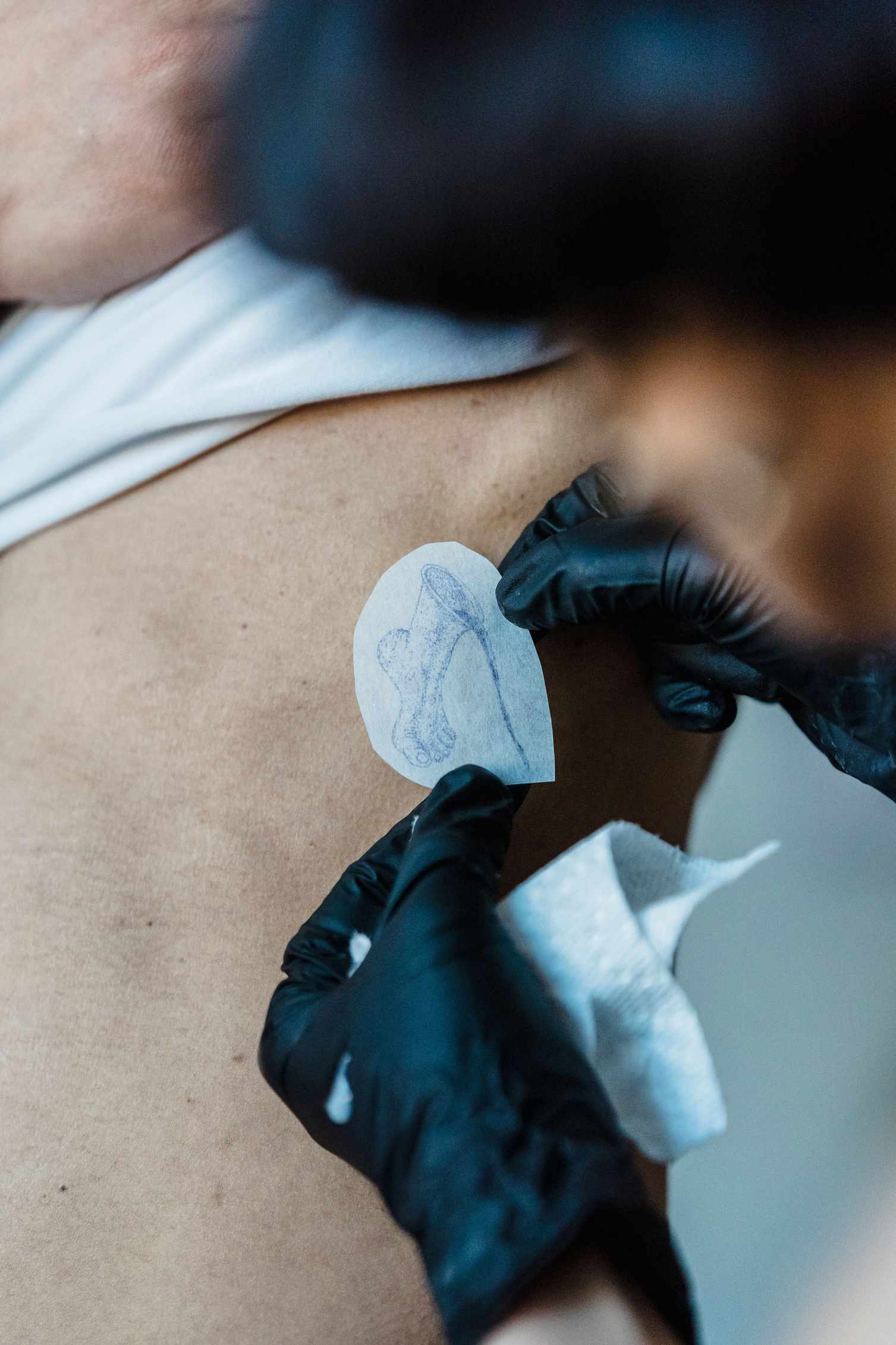
What Actually Flips When a Stencil Touches Skin?
Thin stencil paper makes this surprisingly easy to muddle. The drawing is visible from either side, so two people holding the same sheet can describe its direction differently. For the transfer, the view that matters is straight onto the pigment-bearing surface.
Imagine an ordinary F on that surface. Pressing it face down leaves a backward F. To get the ordinary letter on skin, the pigment on the contact face needs to form the backward version.
Through the back of the sheet, you would see the opposite view. The pigment has not moved. Only your viewpoint has changed, which makes “the print looks fine” a rather weak answer when somebody asks whether the lettering is ready.
We prefer a finished practice transfer next to the approved drawing. There is much less to interpret.
Where Should You Apply the Mirror Setting?
At a shared printer, it is easy to inherit somebody else’s settings. A little clarity about the source file is worth more than another tap on Mirror.
Keep the Approved Drawing
The approved drawing has a job after the consultation ends. It tells you exactly what the client agreed to. Overwriting it with a flipped printing version takes away that easy reference, especially when a colleague needs to check the wording later.
Save the printing version separately. “Print copy already flipped, revision 2” is a perfectly serviceable handoff note. It gives the next person a starting point, although opening the file will tell them more than its name.
Check the Print Preview
Watch what happens between opening the file and reaching the print preview. If the letter F changes direction there, something in that step has applied a reversal. Inspect the mirror control and any saved preset.
For the same horizontal software operation, the arithmetic is simple.
|
Software Flips Applied |
Orientation Compared With the Starting File |
|---|---|
|
0 |
Unchanged |
|
1 |
Reversed |
|
2 |
Back to the starting orientation |
These numbers describe the digital file before any paper-transfer steps. The two-flip case is the one to watch at a shared station. Someone has done the reversal in the drawing app; someone else repeats it at the printer. Both actions cancel out.
How Do You Test Stencil Direction Before an Appointment?
A separate practice file takes the client’s artwork out of the experiment. Ours would be as plain as “F 23” with an arrow pointing right beneath it. Nothing elaborate. The letter and arrow make a reversal obvious, while the number adds a second reading check.
Run that file through your usual device and app, using compatible thermal tattoo transfer paper loaded as instructed. Transfer the printed proof onto suitable practice material. You need to see the result at the end of the process.
Look at the transferred marks with the original test file open. Can you read F 23 normally? Is the arrow pointing right? If so, that combination of file and settings has produced the intended direction. Keep the result as your reference.
If it comes out backward, go back to the same file and alter one mirror control. Make another proof. Resist the temptation to fix the drawing as well while you are there; two reversals can send you straight back to the same result.
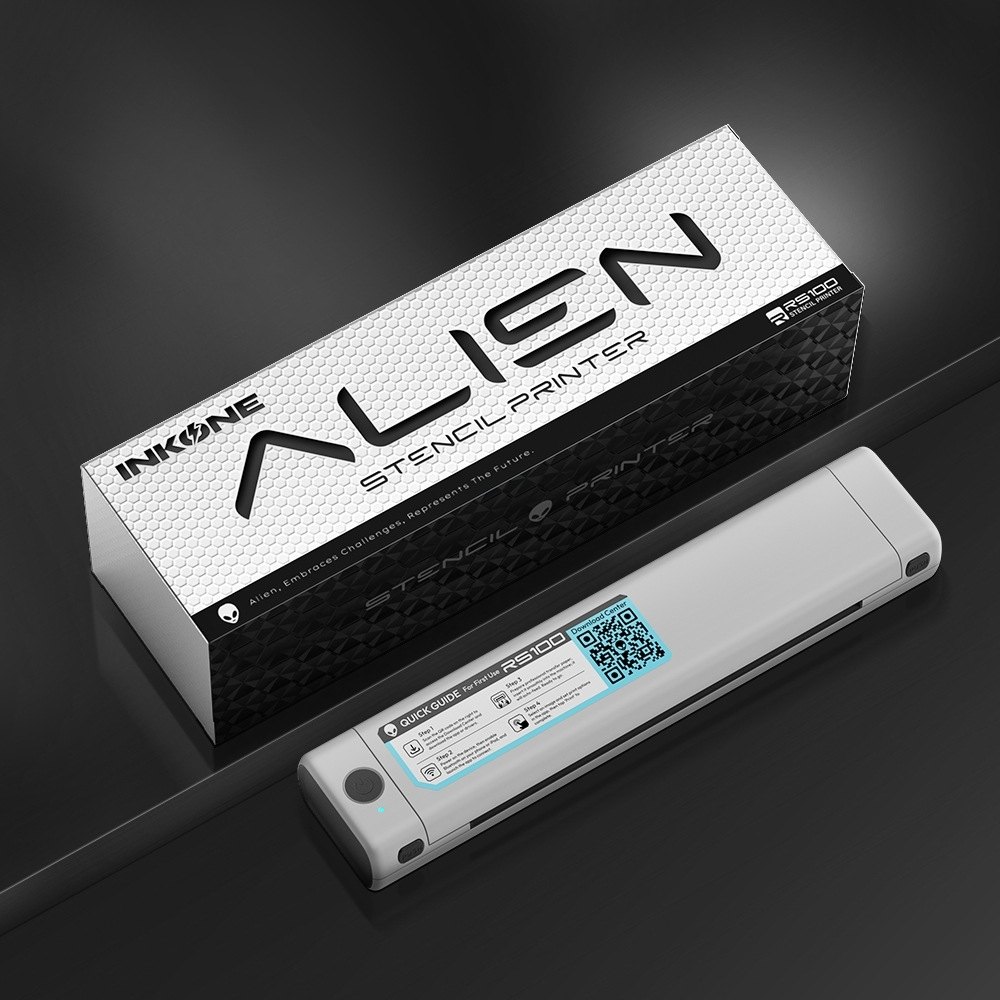
Our INKONE RS-100 has a resolution of 203 DPI. That is a useful specification when considering how the printer reproduces a drawing. For this particular test, though, sharpness is not the answer. Even a crisp print can leave the name backward. Check the direction before spending time on the finer lettering.
Which Details Need a Separate Orientation Check?
The test drawing answers the equipment question. Now bring the client’s artwork back onto the desk.
Read the Actual Lettering
With script, a quick glance tends to recognise the word as a whole. Slow down enough to read the individual characters against the approved reference. A flourish should not distract you from a backward letter or a missing apostrophe.
A late addition deserves another look. Perhaps the name was approved an hour ago, and the client has now asked for a date below it. Print from the revised file and check the new digits as carefully as the name.
Name the Client’s Side
Consider a bird drawn for the shoulder. “Facing left” could mean the client’s left or yours. “Beak toward the chest” is harder to misunderstand. Use a body landmark when agreeing on the direction.
This also affects the flow of a tattoo around the body. Stand where you agreed to judge the composition and look again. For lettering on a forearm, the wearer and a person opposite may see different “right ways up.” Settle that with the client while you are checking placement.
Keep a Stencil Proof Beside the Printer
Save the test file with a photo of its correct transferred result. Record the app and mirror setting used. That gives the next artist something concrete to compare.
When you choose a tattoo stencil printer, bring the same little drawing. Run it through the intended app before using a client file. The useful result is an F facing the right way, with settings your studio can repeat.
FAQ
Is Rotating a Stencil the Same As Mirroring It?
No. Think of a backward word written on a card. Turning the card around on the desk merely puts that backward word upside down. A 180-degree rotation cannot do the job of a horizontal reflection.
Can a Symmetrical Design Prove the Mirror Setting Is Correct?
No. A circle gives you no visible clue that it has been flipped. Choose something with an obvious left and right for the separate test file, even if the client’s design is symmetrical.
Does Hand Tracing Need the Same Mirror Setting?
Hand tracing has no software toggle, but the contact face still matters. Check the result made by your actual paper layers and tracing method. Do not copy a digital printing instruction without checking the transferred direction.
Can Another Artist Reuse My Printer Settings?
They can use the same settings when the file orientation and printing setup match. A preset cannot identify an already-flipped export. Give them the approved reference and verify a proof when the workflow changes.