Anatomy of Flow: Why Body Placement Dictates Tattoo Quality
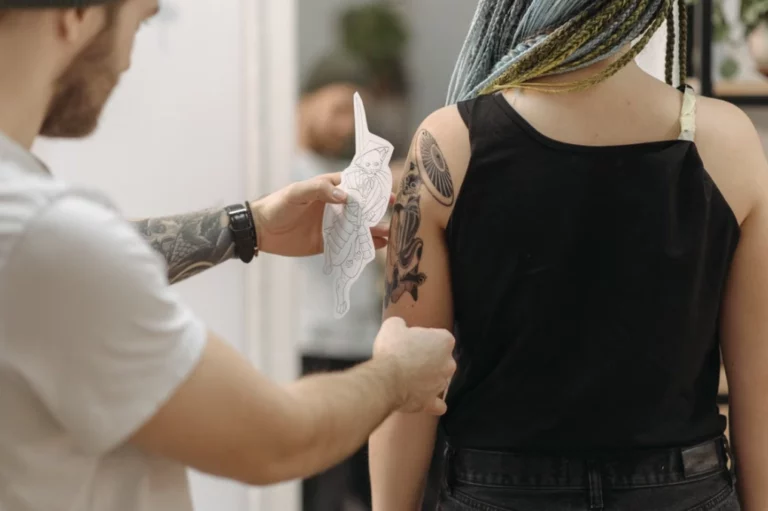
Flow is the invisible architecture of a great tattoo. It refers to how a design follows the natural muscle groups and skeletal structure of the wearer. When a design is slapped onto the skin without considering the underlying anatomy, it feels disjointed, like a sticker that doesn’t belong. Successful designs enhance the wearer’s physique rather than fighting against it. For instance, a dragon winding around a forearm should accentuate the twist of the ulna and radius, not cut across them in a way that flattens the arm’s natural roundness.
Movement on the skin causes distortion; understanding this is vital for long term tattoo integrity. The body is not a flat canvas; it is a series of cylinders, spheres, and complex hinges. A circle tattooed on a bicep will rarely look like a circle when the arm moves. Designers must anticipate how the skin stretches and compresses to ensure the image remains recognizable and aesthetically pleasing in motion.
The Intersection of Artistic Theory and Professional Tattoo Supply
The bridge between a conceptual sketch and a flowing masterpiece is the technical execution, which relies heavily on the quality of the tools used.
How High Quality Equipment Facilitates Precision Flow
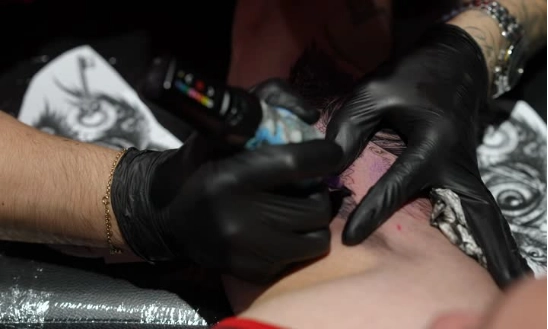
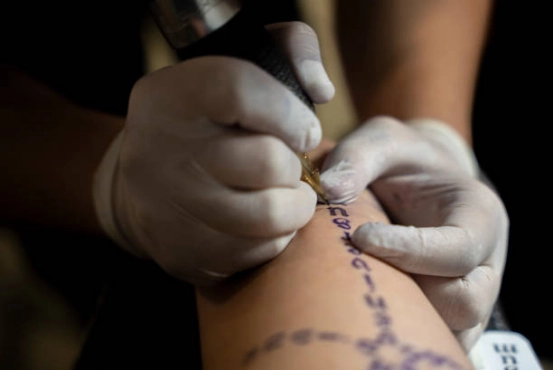
Consistent power delivery from a professional tattoo machine allows for smoother long form lining. If a motor bogs down or fluctuates in speed while an artist is pulling a twelve inch line down a thigh, the “flow” is instantly broken by variations in depth and saturation. Tattoo needle stability is essential when navigating the curves of the ribs or the wrap of a forearm. Any lateral play in the needle bar creates “chatter,” which ruins the fluid motion required for bio-organic work. Furthermore, reducing skin trauma through calibrated equipment preserves the intended flow during the healing process. Overworked skin scars, and scar tissue disrupts the way light hits the pigment, effectively killing the visual rhythm of the piece.
Why Ink Viscosity and Pigment Load Matter for Shading
Proper flow requires seamless transitions that only high grade pigments can provide. When shading a large muscle group, the ink must transition from deep black to the skin’s natural tone without visible “steps.” The relationship between needle taper and ink flow determines the softness of a gradient. A high quality tattoo supply will offer pigments with a high load that stay true to tone, preventing the “muddy” look that often happens when inferior inks are layered too heavily to compensate for poor saturation.
Common Challenges: Why Do Some Tattoos Look “Stiff”?
Stiffness usually happens when the artist forgets the body is alive. Over detailing in areas of high movement often leads to visual clutter. If you put too much tiny detail on an elbow or knee, the constant stretching turns that detail into a blurry mess within a few years. Ignoring the S-curve of the body results in designs that look like stickers rather than organic extensions. The human body is full of natural “S” shapes—the spine, the calf to the ankle, the shoulder to the chest. If the tattoo follows a straight line where the body curves, it looks rigid. Additionally, poorly chosen machine strokes can lead to choppy lines that disrupt the visual rhythm. A stroke that is too short for bold lining requires the artist to move too slowly, often resulting in “shaky” looking flow.
Strategic Design: Balancing Negative Space and Solid Saturation
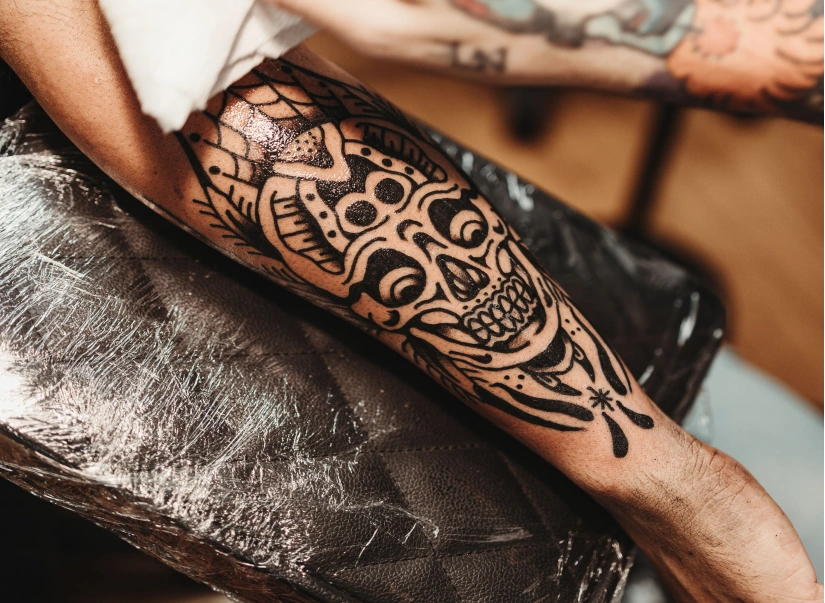
A tattoo that is 100% saturated from edge to edge often lacks direction. Negative space acts as a “breather” for the eye, guiding the viewer along the design’s path. It creates the “wind” in a Japanese sleeve or the light in a realism piece. Heavy saturation should be used to anchor the piece in areas with less muscular contraction, providing a solid foundation for the more dynamic, open parts of the design. Contrast management ensures the tattoo remains legible from a distance. Without high contrast and smart use of skin gaps, a flowing design becomes a grey blob when viewed from ten feet away.
Selecting the Right Tattoo Machine for Fluid Large Scale Work
The choice of a tattoo machine is a mechanical decision that dictates artistic capability.
Rotary vs. Coil: Which Better Supports Dynamic Movement?
Rotary machines offer a consistent stroke that is often preferred for “whiplash” style lining and bio-organic flow. Because the needle motion is a fixed cycle, it allows for a very predictable hand speed. The weight and balance of the machine influence the artist’s ability to pull long, sweeping lines without fatigue. A heavy, front weighted coil machine might be great for packing color, but for a six hour session of flowing filigree, a lightweight rotary is often the superior choice for maintaining steady hand eye coordination.
The Importance of Adjustable Stroke Lengths
Shorter strokes are ideal for soft flow in realism and smooth shading, as they allow for multiple passes without chewing up the skin. Conversely, longer strokes provide the punch needed for bold, traditional flow that defines the body’s silhouette. Having a machine that can switch between these or choosing a specific machine for the task is a hallmark of a professional setup.
How Can Suppliers Help Artists Achieve Better Flow?
A supplier isn’t just a warehouse; they are a partner in the technical process. Providing a diverse range of needle configurations, such as curved magnums, specifically designed for anatomical contours, is a huge advantage. These needles allow the artist to shade into the “dips” of the muscle without catching the edges. Offering ergonomic machine grips that allow for greater range of motion during complex sessions also prevents the cramping that leads to stiff lines. Finally, ensuring a reliable supply chain for consumables so artists can focus entirely on the technical execution of the design is the most basic, yet vital, support a supplier can offer.
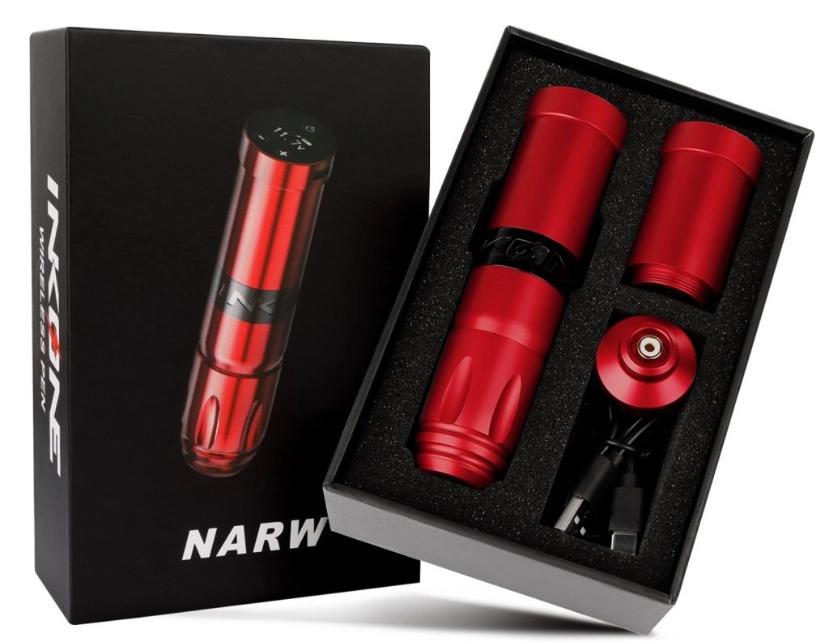
Explore INKONE’s professional tattoo equipment today and equip your studio with the tools needed to create tattoos that move naturally with the body—and stand the test of time.
FAQ
Q: What is the S-curve in tattooing?
It refers to the natural, fluid lines of the human body. Designing with an S-curve means following the natural “S” shapes found in muscle groups to make the tattoo look like it grew there.
Q: Why does my tattoo look different when I flex?
Because skin is elastic. A good artist anticipates this distortion and places the design so that it looks good in a “neutral” standing position, even if it shifts during movement.
Q: Can a tattoo machine affect the flow of my lines?
Absolutely. If a tattoo machine has too much vibration or inconsistent power, it makes it nearly impossible to pull the long, smooth lines required for a flowing design.
Q: Are curved magnums better for large pieces?
Generally, yes. The slight arch of the needles matches the natural curve of the skin, making it easier to achieve smooth blends without harsh “edge” marks in the shading.