China has no shortage of tattoo equipment suppliers. The difficult part is separating a real manufacturing partner from a company that can only send a polished catalog and a low quotation.
A poor supplier decision often appears later: unstable motors, battery complaints, mismatched packaging, delayed production, or a sample that performs better than the bulk order.
What Type of Tattoo Equipment Manufacturer Does Your Business Need?
The right supplier depends on the product plan. A distributor buying standard rotary pens has different needs from a brand developing a custom wireless machine.
Define the project before comparing factories:
- Product category and target price
- Expected annual volume
- Required branding or structural changes
- Destination market
- Packaging format
- Launch deadline
A buyer planning a new adjustable stroke platform needs engineering support, prototype revisions, tooling, and a longer schedule.
OEM, ODM, or Ready-to-Ship Products?
OEM usually means producing an existing or buyer specified product under the buyer’s brand. ODM goes deeper. The factory may change the housing, drive structure, electronics, interface, or packaging system. Ready to ship products offer the least control but are useful for testing demand.
These labels are often used loosely. Ask what the factory will actually design, manufacture, test, and document.
How Can You Verify the Manufacturer’s Production Capabilities?
A product page proves that a company can market a product. It does not prove that the company controls production.
Ask where machining, surface finishing, PCB assembly, final assembly, testing, and packaging are completed. Outsourcing is normal. The concern is whether the supplier can trace components, control subcontractors, and react when a tolerance changes.
Capacity claims need context. “50,000 units per month” means little without line numbers, staffing, and model mix.
Manufacturer or Trading Company?
A trading company is not automatically a bad choice. Some manage sourcing and export work well. Buyers still need to know who controls engineering changes, inspection criteria, rework, and delivery dates.
Useful evidence includes:
- A live factory video tour
- Production and testing records
- Business registration details
- Current products shown on the line
- Named engineering and quality contacts
A showroom video is not a factory audit.
What Quality Control Processes Should a Tattoo Equipment Supplier Have?
Quality control should exist before final inspection. By the time a finished machine reaches packing, many defects are already locked in.
A competent supplier should inspect motors, batteries, housings, PCBs, connectors, and chargers before assembly. Workstations need written instructions and measurable limits. Final inspection should use defined criteria, not a technician’s feeling that the machine “sounds fine.”
One common failure is batch inconsistency. The approved sample runs smoothly, while production units vibrate more because a motor source changed or housing tolerances drifted.
Key Tests for Tattoo Machines
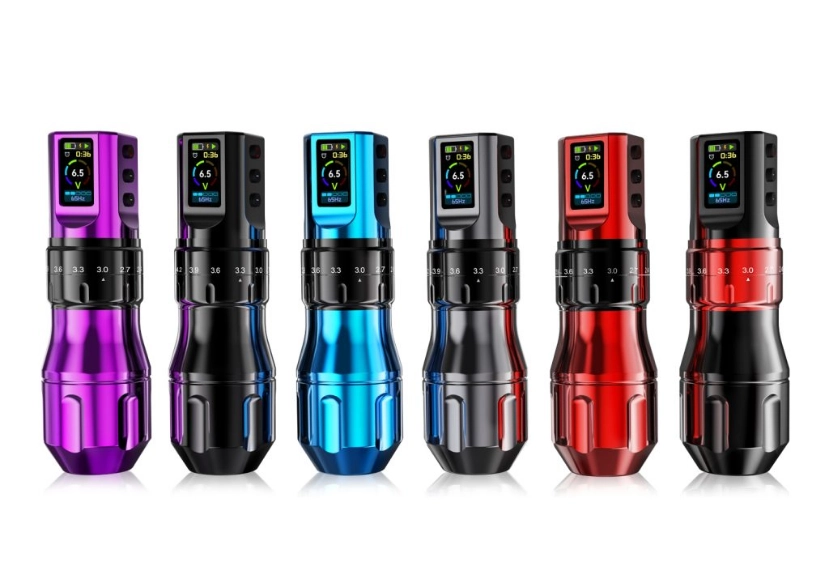
Relevant checks include motor startup, voltage stability, battery runtime, charging, heat rise, vibration, button response, display accuracy, and continuous operation.
A useful report identifies the model, batch, test condition, equipment, acceptance limit, and result. A sheet marked only “PASS” is weak evidence.
Packaging needs testing too. A machine can pass bench tests and still arrive damaged inside a loose retail box.
Which Certifications and Compliance Documents Should You Check?
Requirements depend on product type and destination market. A wireless machine may involve electrical, EMC, restricted substance, battery, labeling, and transport documents. Sterile cartridges require a different file set.
Ask for model specific documents, not a folder of unrelated certificates. Check the model number, report date, issuing laboratory, and listed standards.
Documents may include CE related reports or declarations, RoHS reports, UN 38.3 test summaries, battery SDS files, sterilization records, and traceability information. A certificate showing a similar product is not enough.
How Should You Evaluate OEM and ODM Customization Services?
Customization can mean logo engraving—or a completely new machine.
Color, branding, manuals, and boxes are relatively low risk. Housing redesign, motor changes, adjustable stroke structures, firmware, displays, or charging systems need engineering validation.
The factory should explain which changes use existing tooling and which need new molds or fixtures. It should also identify changes that affect reliability, compliance, or lead time.
What Should You Ask Before Starting a Custom Project?
Clarify the boundaries in writing:
- MOQ for each customization level
- Sample, tooling, and design fees
- Number of prototype revisions
- Ownership of molds and drawings
- Golden sample approval process
- Engineering change procedure
- Development and production lead times
A useful supplier will challenge risky requests. Automatic agreement to every idea often means no technical review has happened.
How Can You Compare Prices, MOQs, and Lead Times Fairly?
Quotations must use the same specification. The lowest price may exclude batteries, packaging, accessories, inspection, spare parts, or branding.
| Comparison Factor | Supplier A | Supplier B | Supplier C |
| Unit price | |||
| MOQ | |||
| Sample cost | |||
| Customization included | |||
| Packaging included | |||
| Production lead time | |||
| Warranty | |||
| Shipping terms |
Compare landed cost, not only ex-factory price. A machine that costs three dollars less but creates higher returns and replacement freight is not cheaper.
How Can You Confirm the Supplier Is Reliable Before Placing a Bulk Order?
Samples should come from the intended production process, not a hand selected engineering batch. Test several units under realistic conditions.
Confirm specifications, accessories, labels, packaging, firmware, and finish with an approved golden sample. For a new supplier, a controlled trial order is usually safer than a large launch quantity.
Factory audits and third party inspections are useful when order value or technical risk is high. Also watch how the supplier handles defect questions. Fast replies help. Specific replies with measurements, causes, and corrective actions matter more.
What Should Be Included in Your Final Manufacturer Checklist?
A final evaluation should cover:
- Relevant tattoo equipment experience
- Verified production capacity
- Written quality control procedures
- Model specific compliance documents
- Clear OEM or ODM capability
- Transparent MOQ and pricing
- Acceptable sample performance
- Realistic lead times
- Export and battery shipping experience
- Warranty and replacement terms
- Technical communication
Scoring each supplier against the same checklist reduces the influence of sales presentation and price pressure.
Conclusion: Choose a Manufacturing Partner, Not Just a Low Cost Supplier
A reliable tattoo equipment manufacturer should explain how a product is built, tested, documented, packed, and supported after shipment.
Price matters. It belongs beside process control, engineering discipline, and response quality—not above them.
INKONE supports wholesale supply, private label production, and OEM/ODM development for tattoo equipment buyers. A useful project discussion should begin with the target market, product specification, expected volume, and launch schedule.
Looking for an experienced tattoo equipment manufacturer in China?
Contact INKONE to discuss product sourcing, wholesale supply, private-label production, or OEM/ODM customization.
FAQ
Q: What is a typical MOQ for private label tattoo machines?
MOQ depends on the customization level. Logo and packaging changes usually require lower quantities than custom housings, electronics, or molds.
Q: Should buyers always visit the factory?
Not always. A live video audit, document review, samples, and third party inspection can be enough for smaller orders. Complex ODM projects usually justify an on site audit.
Q: How many samples should be tested before mass production?
One sample is rarely enough. Test several units when possible, especially for battery runtime, vibration, heat, and assembly consistency.
Q: What is the most important supplier warning sign?
Unclear answers about who makes the product, how defects are measured, or which models are covered by compliance documents.