Choosing the right tattoo needles can make or break a fine line tattoo. Artists who focus on delicate work know that even a small change in needle size or shape can affect how cleanly a line heals. Good results come from knowing how needles are built and how they work with your machine, ink, and skin.
Characteristics of Fine Line Tattoos
Fine line tattoos stand out for their thin, clean lines and light shading. They need steady hands and steady ink flow to stay sharp as they heal. These tattoos often show up in simple designs, shapes, or small words. The clean look does not make them simple to do. Any small shake shows up right away.
Technical Demands of Fine Line Work
At this level every part must line up. Voltage, needle hold, and speed all matter. Artists watch ink amount closely. Too much force or color can cause blowouts. Too little leaves spots. Machine speed also counts. Slower speeds give more control but need a very steady hand.
Common Tattoo Needle Types
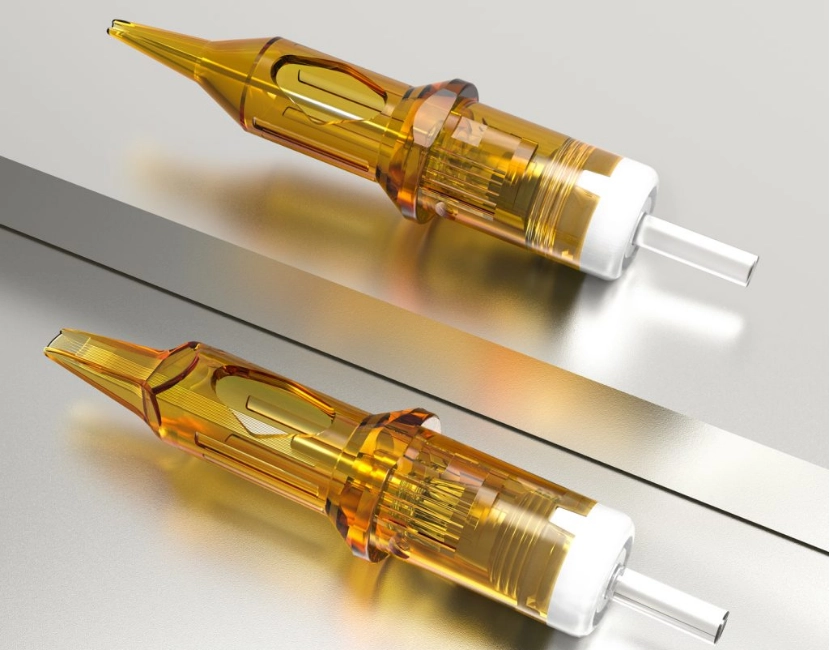
Tattoo cartridge needles come in different groups. Each group changes how the needle works on skin. Knowing the groups helps pick the right ones for fine lines. Before looking at codes and sizes, it helps to see how needles are sorted by shape and job.
Classification by Needle Grouping
- Round Liners (RL): Tightly grouped needles made for clean lines.
- Round Shaders (RS): Looser groups good for soft shading.
- Magnum Needles (M1, M2): Used mostly to fill areas or build smooth fades.
For fine line work, round liners work best. Their tight group gives steady control on each pass.
Understanding Needle Codes and Configurations
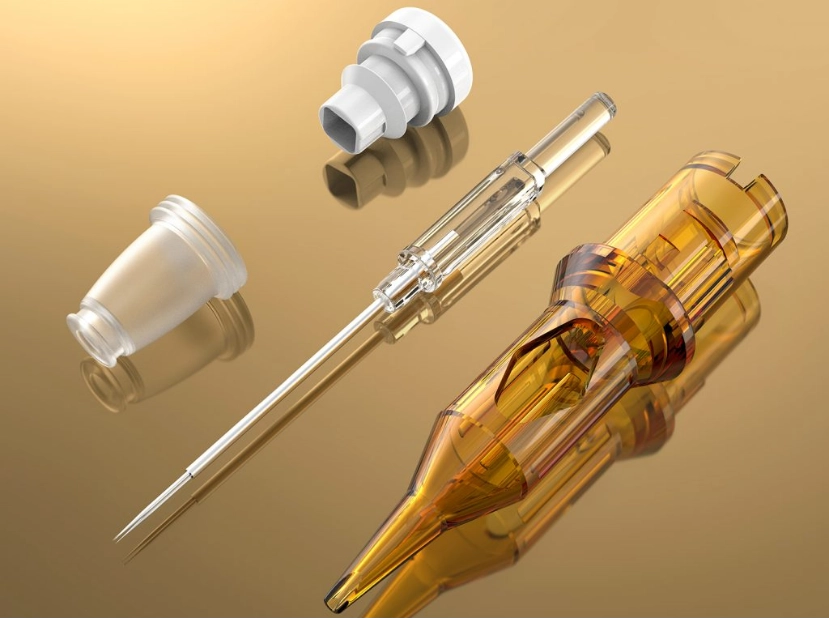
Codes like 3RL, 5RL, or 7RS show both the group and the number of pins. A 3RL has three round liner pins soldered close together. That setup gives clean outlines. Diameter matters too. A 0.25 mm needle makes finer lines than a 0.30 mm one because less ink comes out. Taper length also counts. Longer tapers make sharper points that go in smoothly and cause less skin damage.
| Code Example | Type | Diameter | Typical Use |
| 1RL | Round Liner | 0.25 mm | Ultra-fine detail |
| 3RL | Round Liner | 0.25–0.30 mm | Clean outlines |
| 5RS | Round Shader | 0.30 mm | Soft shading |
| 7M1 | Magnum | 0.35 mm | Filling/gradients |
Selecting the Right Needles for Fine Line Tattooing
Once you know the codes, picking the right needle gets easier. Still, experience helps match needles to your hand and machine.
Ideal Needle Groupings for Fine Line Work
Most artists use small round liners from 1RL to 5RL for fine detail. A single needle can make very thin lines. It also needs more skill because it shows every bump in the skin. Tight groups keep lines sharp on different skin types and lower the chance of ink spreading under the surface.
Recommended Needle Diameters and Tapers
A 0.25 mm needle gives crisp lines with less skin damage. It works well on thin areas like wrists or collarbones. If you want a bit thicker line but still want control, try 0.30 mm. Long tapers help ink flow better and cut down on friction. Extra-long tapers help even more during long sessions where every pass must stay exact.
Factors Influencing Needle Performance in Fine Line Tattooing
Even the best needles only work well when they match the machine, ink, and skin.
Machine Compatibility and Power Settings
Rotary machines run smooth and suit steady line work. Coil machines give more feel that some artists like. Lower the voltage for small needle groups so the needle does not push too much ink.
Ink Type and Flow Control Considerations
Thin inks move better through small needles and avoid clogs. Keep the same ink thickness during a session. Switching brands mid-way can change how thick the line looks.
Skin Type and Technique Adaptation
Skin differs from person to person. Soft or thin skin needs light pressure to stop blowouts. Tougher skin may need firmer passes for solid color. Stretch the skin so the surface stays flat. This habit helps every stroke follow the stencil.
Enhancing Tattoo Results Through Proper Needle Maintenance and Handling
Even good needles lose performance if you store or handle them wrong. Clean habits protect clients and your name. Keep unused needles in clean, dry, dark places. Use single-use cartridges when you can. If you reuse traditional needles, run them through an autoclave first.
Do not press hard on the skin. Hard pressure bends or dulls tips fast. Check cartridges during long sessions. Wipe gently instead of scrubbing. These small steps keep single liners sharp longer.
Why Partner with INKONE for Professional Tattoo Supplies
INKONE offers a full line of machines, power supplies, grips, cartridges, inks, and extras. One supplier means less time chasing parts and more time tattooing. Studios can order needles and machines with their own brand and specs. This helps artists build tools that match their own style, especially in fine line or micro lettering work.
Each needle ships in sterile packs that meet global safety rules. Machines check every batch so size and shape stay the same. Shipping reaches most countries with fast delivery. Support teams answer questions about setup and use. Good logistics let you focus on the work instead of waiting on supplies.
FAQs
Q1: What size tattoo needle is best for fine line tattoos?
Small round liners between 1RL and 3RL, around 0.25 mm, usually give the cleanest ultra-fine lines.
Q2: Do long-taper needles make a difference?
Yes. Longer tapers create sharper points that reduce skin damage and keep ink flow steady during slow passes.
Q3: Can I use magnum needles for thin lines?
Magnums spread ink too wide for thin lines. Curved magnums can sometimes soften shading next to fine lines if used with care.
Q4: How do I prevent blowouts when using small-diameter needles?
Lower voltage a little and use light pressure. Keep your hand steady and stretch the skin for better control.
Q5: Are rotary machines better than coil machines for fine line work?
Rotary machines give smoother motion that helps with steady fine lines. Some artists still like the feel of coil machines depending on their style.