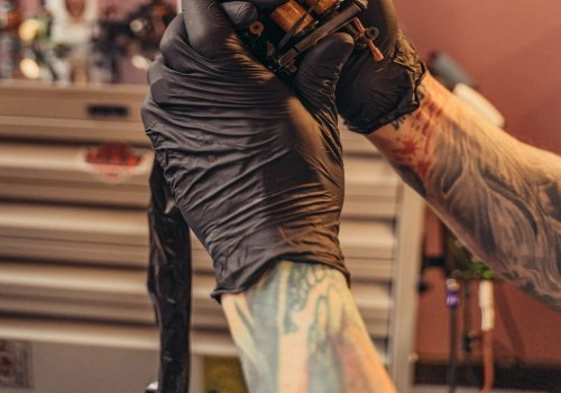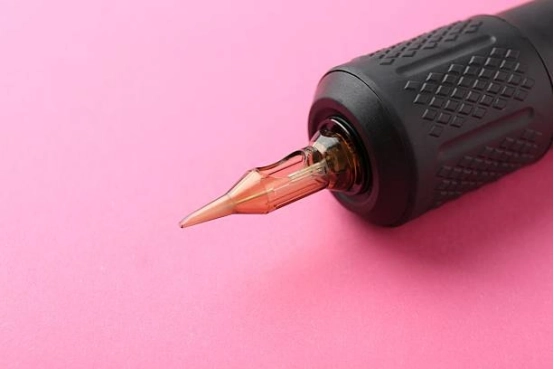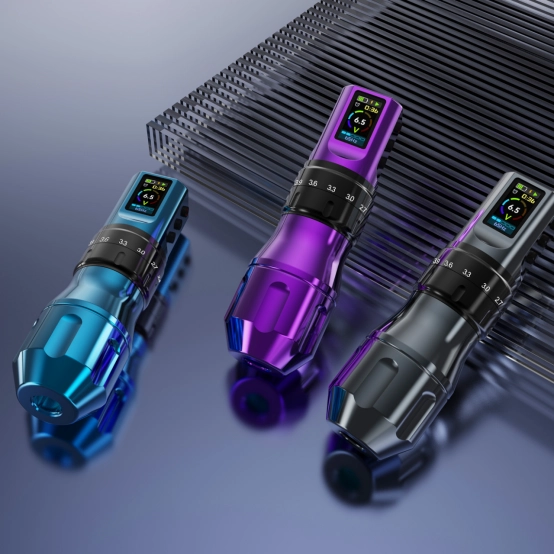
Stroke length is the distance the needle travels from its highest point to its lowest point during a single cycle. This mechanical distance is the engine behind every mark on the skin. If the stroke is too short, the needle might not bury deep enough to leave a lasting mark; too long, and it might cause unnecessary trauma.
The depth of the needle hit influences how much pigment is deposited into the skin. Think of it as a hammer: a longer swing packs more force.
The Versatility of Adjustable Stroke Tattoo Machines
The industry has shifted toward flexibility. An adjustable stroke tattoo machine isn’t just a luxury; for many, it has become a necessity to keep up with diverse client requests.
Why Multi-Stroke Capabilities are Transforming Studio Workflows
Efficiency in a busy shop is about more than just speed; it’s about flow. A single machine can transition from soft shading to bold lining by rotating a dial. This eliminates the “dead time” spent swapping between three different setups for one piece. Adjustable stroke settings allow artists to fine-tune the “give” and hit intensity mid-session. Some artists start a portrait with a 3.0mm stroke for the softest grey washes and click it over to 4.0mm to finish the sharp, dark outlines of the hair without ever putting the pen down.
Reducing the need for multiple machine setups minimizes cross-contamination risks and setup time. Fewer machines on the tray mean fewer cords or batteries to wrap and less surface area to sanitize. You’re assured of safe and sterile equipment that prevents health hazards to artists as well as their customer, furthermore, you also can get the beautiful and tidy packing of products to help your selling. Furthermore, professional-grade wireless tattoo machines now integrate adjustable cams without sacrificing battery life. Modern chipsets manage power consumption so efficiently that moving a heavier cam doesn’t drain the cell significantly faster than a short one.
Technical Advantages for All-Rounder Artists
If a portfolio covers everything from realism to traditional, the stroke range is the artist’s best friend.
- Short strokes (2.5mm – 3.0mm) excel in soft black and grey blending and smooth gradients.
- Medium strokes (3.5mm) serve as the industry standard for traditional color packing and solid fills.
- Longstrokes (4.0mm+) provide the necessary torque for heavy lining and “power” tattooing.
When Does a Fixed Stroke Machine Outperform an Adjustable One?
While versatility is great, there is a strong argument for simplicity. Fixed stroke machines often feature fewer moving parts, leading to increased mechanical durability and less vibration. In an adjustable machine, the mechanism that allows the stroke to change is a potential point of failure. Specialized artists (e.g., pure lineworkers) often prefer the consistent, predictable hit of a dedicated 4.2mm stroke. They know exactly how the machine will react every single time it touches the skin.
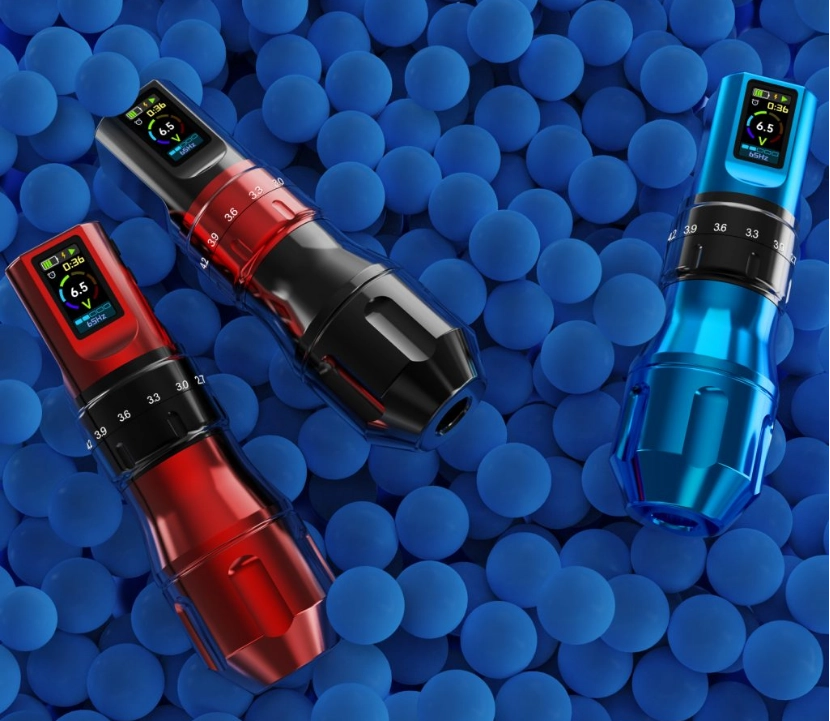
Calibration remains constant, eliminating the risk of accidental setting shifts during long sessions. There is nothing worse than realizing halfway through a sleeve that the dial bumped from 3.5mm to 3.0mm. Fixed systems are generally easier to maintain and sterilize for high-volume B2B environments. As a professional tattoo equipment supplier, we pay attention to every details, we pursue the perfection in the process of production, quality inspection, packing, delivery. This focus on simplicity often translates to a machine that lasts years without needing a factory tune-up.
How Do Wireless Tattoo Machines Impact Stroke Performance?
The move to battery power changed the physics of the hit. Modern wireless tattoo machines utilize brushless motors to maintain consistent torque regardless of stroke length. In older brushed motors, a long stroke might bog down under the resistance of the skin, but brushless tech compensates by drawing more current to maintain RPM.
Battery weight distribution can affect the “hand-feel” of a long-stroke hit compared to traditional RCA setups. A top-heavy wireless pen can actually help “drive” a long stroke into the skin, using gravity to its advantage. Digital interfaces on wireless pens allow for precise voltage adjustments to complement the selected stroke. If you’re running a long stroke for lining, you might bump the voltage up to 8.5V; for a soft shade on the same machine, you might drop to 6.0V. It’s all about the synergy between the motor’s speed and the cam’s distance.
Critical Factors for B2B Buyers and Shop Owners
For those managing a business, the choice is about ROI and reliability. Established in 2018, INKONE is a professional tattoo equipment supplier in China, Having convenient transportation, in line with internationalization Our company has a mature operating team, and then we can realize customized services for you.
Balancing Equipment Longevity with Artist Preference
Evaluating the return on investment (ROI) of a versatile adjustable machine versus a fleet of fixed-stroke pens is a primary concern. An adjustable machine costs more upfront but replaces two other tools. However, one must consider the learning curve for apprentices when using highly sensitive adjustable equipment.
Giving a beginner a machine with too many variables can lead to inconsistent healing. The importance of OEM/ODM quality in ensuring the internal tension of adjustable cams does not degrade over time cannot be overstated. At the same time, we also supply almost all tattoo equipment like wireless tattoo machine, tattoo cartridge needles, tattoo power supply, disposable tattoo products etc.
Which Hardware Configuration Suits Your Professional Portfolio?
Identifying the primary tattooing style of the studio helps determine the necessary stroke range. A shop specializing in Japanese Traditional needs 4.0mm+ machines. A Fine Line studio might never need anything over 3.0mm. Assessing the demand for “all-in-one” portable solutions in the guest-spot and convention circuit is also vital.
Traveling artists love the wireless tattoo machine because it’s one less thing to pack. Why having a mix of both fixed and adjustable hardware provides the most comprehensive service to clients? Because it ensures that no matter the skin type or style, the shop has the right tool for the job.
Maintenance and Precision: Keeping Your Stroke Consistent
Precision requires upkeep. Lubrication requirements for adjustable internal mechanisms are more demanding compared to fixed cams. The sliding parts in an adjustable unit generate more friction and heat. Signs of “stroke drift”—where the hit feels weaker or the sound changes—are how to identify wear and tear in high-frequency wireless units.
A cheap cartridge with a loose membrane will wobble, ruining the precision of even the best 4.0mm stroke. We understand that high-quality needles play a crucial role in stabilizing stitches at varying needle travel lengths. Contact INKONE today to explore our tattoo machine collection and build a more efficient, reliable, and professional tattoo equipment lineup for your business.
FAQ
Q: What is the best stroke for a beginner?
A 3.5mm stroke is generally recommended as it is versatile enough for both lining and shading without being too aggressive.
Q: Can I use a 4.0mm stroke for shading?
Yes, but it requires a very fast hand and lower voltage to avoid traumatizing the skin. It is usually reserved for “whip shading.”
Q: Do wireless machines lose power as the battery dies?
High-quality wireless units use constant voltage output, meaning the stroke performance remains the same until the battery is completely depleted.
Q: How often should I lubricate an adjustable machine?
Check the manufacturer’s guide, but generally, a tiny drop of synthetic lube every 100 hours of work keeps the adjustment mechanism smooth.