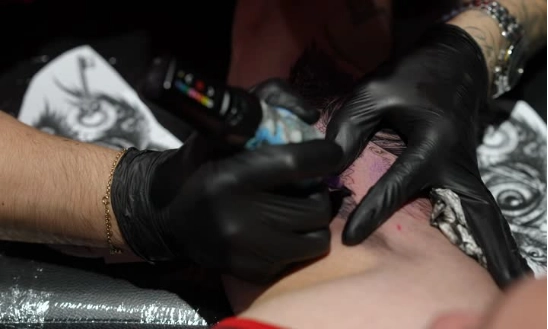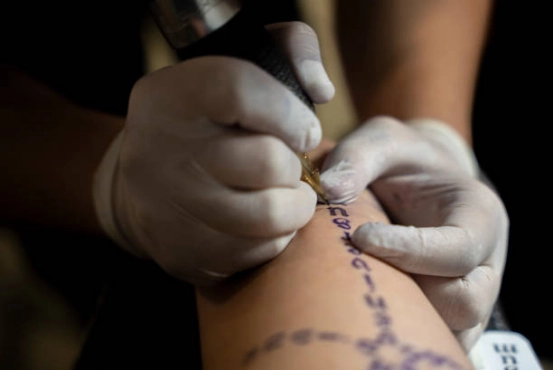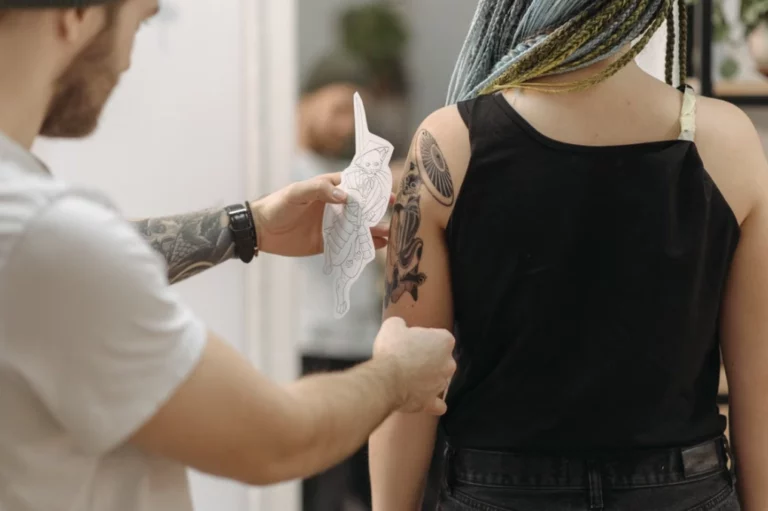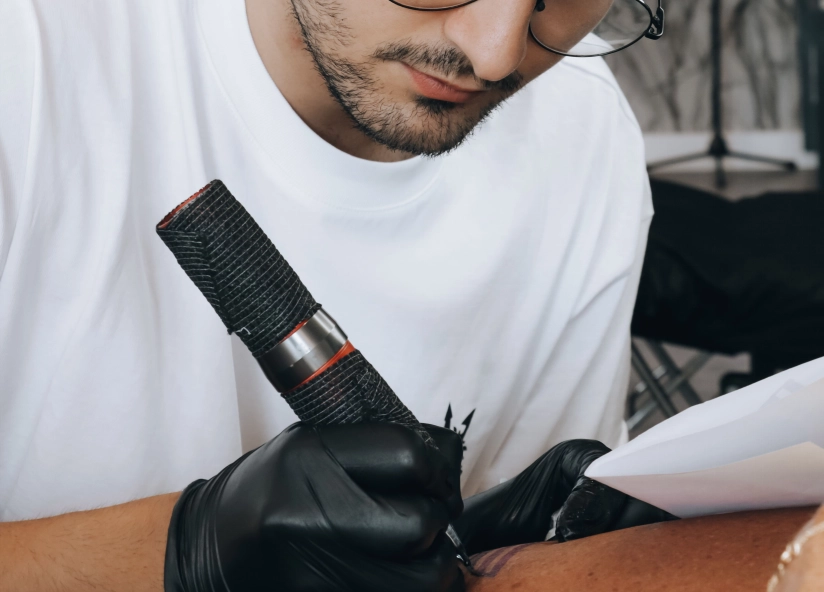
Wireless tattoo machines are now standard studio tools. Fewer cables mean faster setup and easier movement around shoulders, ribs, or the back of the leg.
The harder question is which machine remains stable after several hours. Stroke range, battery layout, grip diameter, and balance matter more than feature count.
What Are the Best Wireless Tattoo Machines in 2026?
There is no single winner. Adjustable stroke machines suit mixed styles, while compact fixed stroke pens often feel more predictable. Dual battery systems are better for back to back appointments.
| Model | Best For | Stroke Options | Battery | Key Advantage |
| PRICK | Versatility | 2.4–4.2 mm | 1500mAh | Seven stroke settings |
| MIG-1 | Compact setups | 3.5 or 4.0 mm | Dual 2000mAh | Short 110 mm body |
| NOVUM | Long sessions | 3.5 or 4.0 mm | Dual 2000mAh | RCA backup |
| TROX | Multi-style work | 2.4–4.2 mm | 1800mAh | Replaceable batteries |
| ARMOR | Shading and packing | Multiple options | 2000mAh | Large grip |
How Did We Evaluate These Wireless Tattoo Machines?
The comparison uses published specifications, layout, battery design, controls, and intended application. Motor speed alone says little.
Key checks included:
- Stroke range and adjustment
- Power stability under load
- Battery replacement options
- Weight, balance, and grip comfort
- Noise, vibration, and cartridge compatibility
- Suitability for lining, shading, and packing
Balance is often the hidden issue. A battery heavy pen can tire the wrist faster than a slightly heavier machine with a neutral center of mass.
Which Wireless Tattoo Machine Is Best for Your Tattooing Style?
Style changes the answer. A fine line artist and a color realism artist may both want low vibration, but they need different stroke behavior.
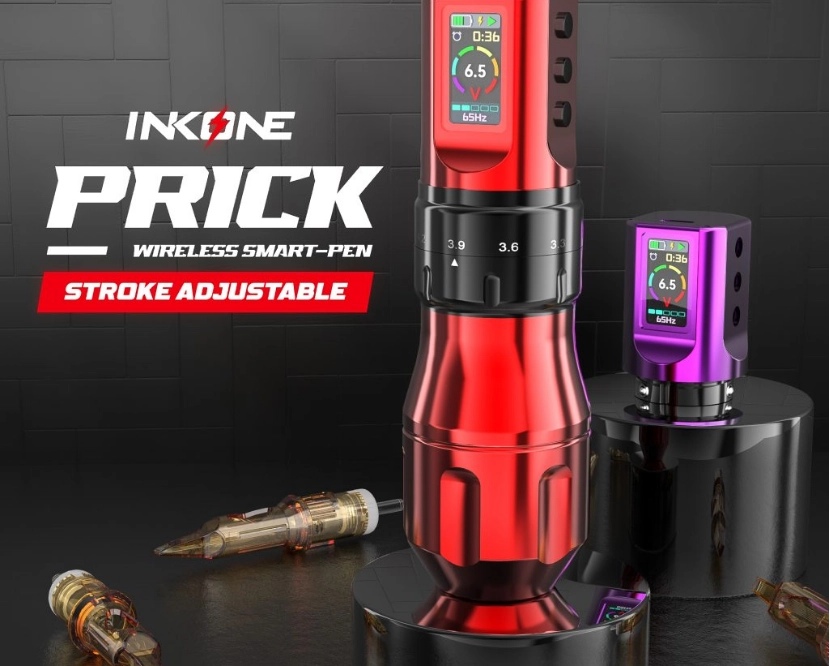
PRICK — Best Overall Adjustable Stroke Wireless Tattoo Machine
PRICK offers seven stroke settings from 2.4 mm to 4.2 mm. Short settings suit soft shading and light transitions; longer settings give more authority for lining and packing.
The LCD display shows voltage and battery status without interrupting the session. That sounds minor until power starts dropping during a dense black section.
PRICK is a strong general purpose choice. Newer users, however, may spend too much time changing settings instead of building consistent hand speed.
MIG-1 — Best Compact Wireless Tattoo Machine
MIG-1 uses a short 110 mm body and comes in 3.5 mm or 4.0 mm stroke versions. Its compact shape keeps the machine close to the hand, useful during small wrist movements and tight angle work.
The brushless motor targets stable output with low vibration. Dual batteries suit travel and guest spots.
The fixed stroke is less flexible than PRICK or TROX. That is not necessarily a weakness. Many experienced artists prefer predictable behavior every day.
NOVUM — Best for Long Tattoo Sessions
NOVUM is built around endurance. Two 2000mAh batteries reduce charging interruptions during large pieces or full day bookings. The 3.5 mm and 4.0 mm versions cover general lining, shading, and packing.
RCA compatibility adds a useful fallback. During a six hour back piece, a spare battery usually solves the problem; RCA removes the remaining risk.
NOVUM works well as a main studio machine. Artists who adjust stroke repeatedly may find it too fixed.
TROX — Best for Artists Who Change Techniques Frequently
TROX combines a 2.4–4.2 mm adjustable stroke with an 1800mAh battery, replaceable power modules, and RCA support.
On a large illustrative piece, TROX can move from short stroke transitions to medium stroke texture, then longer stroke outlines and dense black areas without changing bodies.
Battery capacity is only part of runtime. Voltage, cartridge resistance, and motor load still matter.
What Features Should You Look for in a Wireless Tattoo Machine?
Specification sheets are useful only when the numbers connect to actual work. Three areas deserve close attention.
Stroke Length and Tattooing Style
Short strokes around 2.4–3.0 mm generally suit soft shading and blending. Mid-range settings around 3.3–3.6 mm are practical for general work. Longer strokes around 3.9–4.2 mm fit firm lining and solid packing.
Needle grouping, voltage, skin type, and hand speed can still change the result.
Battery Life and Power Management
A replaceable battery is often more useful than an optimistic runtime claim. Long session users should look for dual batteries, USB-C charging, clear indicators, and RCA backup.
A studio power routine should be simple: one battery in use, one charged, no improvisation.
Weight, Balance and Grip Comfort
Total weight matters less than where it sits. Battery placement, grip diameter, and center of mass affect fatigue after several hours.
A wider grip may reduce finger tension; a narrow body may rotate more easily. Neutral balance matters more than saving a few grams.
Are Wireless Tattoo Machines Better Than Wired Machines?
For many studios, wireless machines are easier to manage.
Advantages:
- Cleaner workstations
- Faster setup
- Better movement around the client
- Easier travel
Limitations:
- Batteries require charging
- Power modules add weight
- Weak battery systems may lose consistency
- More electronics mean more failure points
Wired machines still provide continuous power and familiar balance. Wireless is better when mobility and setup speed matter more.
What Should Studios and Tattoo Equipment Buyers Ask a Supplier?
B2B buyers need more than motor specifications. Production consistency, spare parts, warranty handling, packaging, and customization affect the real cost.
Ask:
- Are samples available before bulk production?
- What quality checks are completed?
- Are spare batteries and components stocked?
- Can logos, colors, manuals, and packaging be customized?
- Is full OEM/ODM development available?
- What are the MOQ, lead time, and warranty terms?
INKONE provides professional tattoo equipment and consumables, plus OEM/ODM support covering design, sampling, branding, packaging, and mass production.
Frequently Asked Questions About Wireless Tattoo Machines
These questions appear in most studio purchase discussions.
Q: How long does a wireless tattoo machine battery last?
Runtime depends on capacity, voltage, motor load, cartridge resistance, and working pattern. Professional users should keep a spare battery.
Q: What stroke length is best for an all purpose tattoo machine?
Around 3.5 mm is a balanced choice for general work. Adjustable stroke offers more range for artists moving between soft shading and strong packing.
Q: Can one wireless tattoo machine handle lining and shading?
Yes. Adjustable stroke helps, but stable power, correct cartridges, suitable voltage, and controlled hand speed still matter.
Q: Can wireless tattoo machines be private labeled?
Yes. Common options include logos, colors, manuals, and packaging. Full ODM may also cover housing design, prototypes, and production.
Which Wireless Tattoo Machine Should You Choose in 2026?
PRICK and TROX suit artists who want broad stroke adjustment. MIG-1 fits compact, predictable daily work. NOVUM is better for long sessions and battery redundancy. ARMOR suits users who prefer a larger grip and firm output for shading or packing.
For studios, distributors, and private label brands, the machine is only half the decision. Supply stability, replacement parts, quality control, and OEM/ODM support determine whether it works as a business purchase.
Explore INKONE wireless tattoo machines or contact our team for product specifications, wholesale quotations and OEM/ODM customization options.