Many distributors, wholesalers, and e-commerce sellers enter the tattoo market through white label or private label tattoo supplies. The products may look similar—a familiar machine, a new logo, a branded box—but the commercial impact is different. The choice affects cost, MOQ, lead time, product control, and market differentiation.
What Are White Label Tattoo Supplies?
White label tattoo supplies are existing products already produced by a manufacturer. The buyer selects a model, adds branding, and sells it under a different name. The main structure normally stays unchanged.
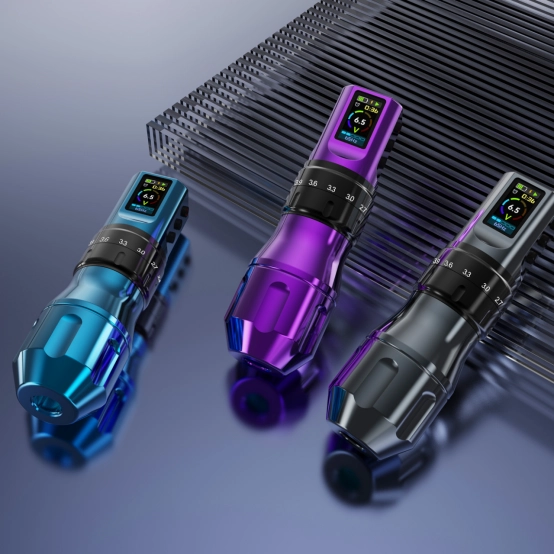
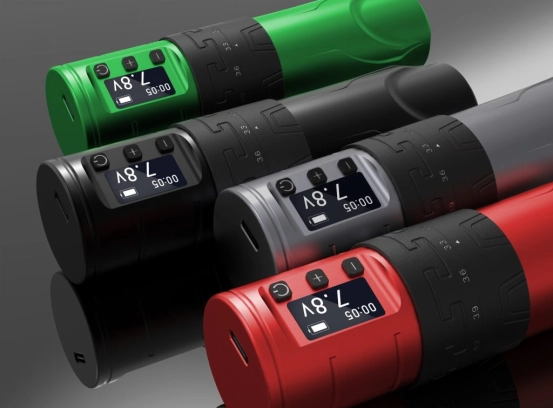
Common changes include a logo, housing color, labels, instruction cards, and retail packaging. A wireless tattoo pen may keep the same motor, stroke, battery board, grip, and charging system.
The product has already passed through tooling and production setup, so samples can often be prepared quickly. The trade-off is limited exclusivity. Another brand may sell a similar machine, which may be acceptable for a distributor competing through stock, service, and local relationships.
What Are Private Label Tattoo Supplies?
Private label tattoo supplies give the brand owner more control over the final product. The manufacturer may start with an existing platform, then adjust specifications, appearance, packaging, or product combinations for one customer.
Changes may include grip geometry, stroke options, battery capacity, display graphics, surface finish, cartridge assortments, or branded accessory kits.
Private label does not always mean developing a tattoo machine from zero. Modifying a proven platform is often the better engineering decision. It reduces tooling cost and unnecessary failure points.
White Label vs Private Label Tattoo Supplies: Key Differences
The main difference is the buyer’s level of control.
| Factor | White Label | Private Label |
| Product design | Existing design | Modified or brand specific design |
| Customization | Logo, color, packaging | Features, specifications, packaging |
| Exclusivity | Usually limited | Possible by agreement |
| Development cost | Lower | Higher |
| MOQ | Usually lower | Usually higher |
| Lead time | Shorter | Longer |
| Differentiation | Limited | Stronger |
| Best suited for | Testing and fast launches | Long term brand building |
Supplier terminology is not always reliable. Custom packaging may be called “private label,” while a modified motor setup may be described as OEM. The written specification matters more.
MOQ also needs to be separated by item. The machine may have one minimum, the printed box another, and a custom molded grip a much higher one. Exclusivity should be documented. A unique color is not the same as an exclusive structure.
Which Model Is Better for Your Tattoo Equipment Business?
The decision depends on what the business already knows. A small brand with strong product data may be ready for private label; a large wholesaler testing a new country may still choose white label.
Choose White Label If You Want to Launch Quickly
White label makes sense when speed matters, demand is uncertain, or the budget is controlled. It allows buyers to test a category without funding major engineering work.
Consider a distributor that already sells tattoo needles and disposables but wants to add wireless tattoo machines. A standard machine with branded packaging is a practical first step. Sales data can reveal preferred price points, colors, battery expectations, and support issues.
White label becomes weak only when the brand has no advantage beyond the logo. Distribution, service, content, stock availability, and product selection still create value.
Choose Private Label If Differentiation Matters
Private label is a better fit when the product needs a clear reason to exist. It gives the brand more control over function, appearance, accessories, and user experience.
An established brand may know that customers want a lighter pen, larger battery display, or specific stroke range. Those requirements can guide development and reduce direct price comparison.
Development takes longer. Samples may need revision. A grip that looks balanced in a rendering may feel too wide during a four hour session. This is normal product work.
What Tattoo Supplies Can Be White or Private Labeled?
Most tattoo equipment categories support some branding. The realistic range depends on tooling, order quantity, compliance requirements, and technical risk.
Tattoo machines
Tattoo machines can be customized through logos, housing colors, finishes, grips, stroke options, battery configurations, display graphics, and accessory kits.
White label projects normally keep the mechanical platform unchanged. Private label projects may modify components or exterior parts. Motor stability, heat, vibration, balance, and battery protection deserve more attention than surface decoration.
Tattoo needles and cartridges
Cartridge projects often include box design, labeling, needle configurations, membrane options, and branded assortments. Higher volume private label projects may involve structural changes or custom housings.
Batch consistency matters. A distributor can accept a small color variation between machine batches. Cartridges that feel different from box to box create immediate complaints.
Other tattoo equipment and supplies
Power supplies, stencil printers, transfer paper, machine accessories, disposable covers, and studio kits can also be branded.
These products help build a complete catalog, but packaging processes and production schedules differ. One supplier can simplify consolidation, though item level planning is still necessary.
How to Choose a White Label or Private Label Tattoo Supplier
A capable supplier should explain what is standard, what can be changed, and what requires new tooling. “Everything is customizable” is not a technical answer.
Ask for separate MOQs for products, packaging, printed parts, and spares. Confirm sample and production lead times, testing, warranty handling, and repeat order consistency.
Ownership should also be clear. Who owns the drawings and molds? Can the supplier reuse the housing? What happens if a battery cell, motor, or electronic component is discontinued?
Useful supplier answers are specific: “The logo and interface can change at 500 units, while a new grip requires separate tooling.” That statement can be planned around. A vague promise cannot.
White Label or Private Label: How Should You Decide?
Choose white label for market entry, demand testing, or quick catalog expansion. Choose private label when the brand understands its users and needs stronger control over features, positioning, or exclusivity.
Many tattoo supply businesses use both. Standard consumables remain white label, while a flagship wireless tattoo machine receives deeper private label development. That mixed model is often the most practical.
Build Your Tattoo Supply Brand with INKONE
INKONE provides one stop tattoo equipment supply and OEM/ODM support for brands, distributors, and wholesalers. A project can begin with an existing product and branded packaging, or move into technical customization based on order volume and market requirements.
A useful inquiry should include the product, quantity, destination market, branding files, technical changes, packaging needs, and launch schedule. Clear inputs produce better samples and fewer production corrections.
Contact INKONE to discuss your white label or private label tattoo supply project.
Frequently Asked Questions
Q: Is white labeling the same as adding a logo?
Not exactly. Logo printing is common, but white label service may also include colors, labels, manuals, inserts, and branded packaging. The underlying product usually remains standard.
Q: Is private label the same as OEM?
No. Private label describes how a product is branded and controlled for a seller. OEM describes the manufacturing relationship. The two may overlap in tattoo equipment projects.
Q: Which option usually has a lower MOQ?
White label usually has a lower MOQ because it uses an existing design and production process. Private label may require higher quantities for custom parts, finishes, packaging, or molds.
Q: Can a new tattoo brand start with white label products?
Yes. White label products allow a new brand to test demand, build distribution, and learn what customers value before investing in deeper private label development.