Buying wholesale tattoo supplies is rarely just a price exercise. A distributor can save a few dollars on a machine and lose much more through inconsistent batches, weak packaging, missing spare parts, or products that sit in inventory because they do not match the local market.
The practical question is not “Who has the cheapest tattoo supplies?” It is whether a supplier can support repeat orders, stable quality, workable margins, and product development as the business grows.
For distributors, wholesalers, regional dealers, and private-label brands, that difference matters.
What Tattoo Supplies Should Distributors Buy Wholesale?
A good wholesale catalog usually mixes durable equipment with repeat-purchase consumables. Machines may bring higher order value. Needles, transfer products, and disposable supplies create recurring demand. The balance depends on the customers being served.
Tattoo Machines
Tattoo machines remain one of the most important categories for distributors because they carry both margin and brand visibility.
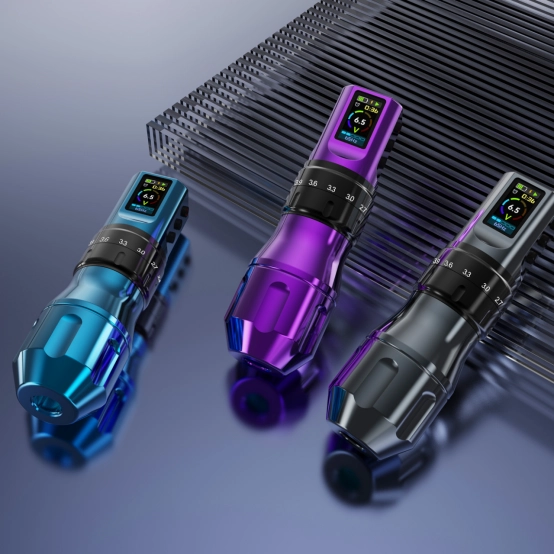
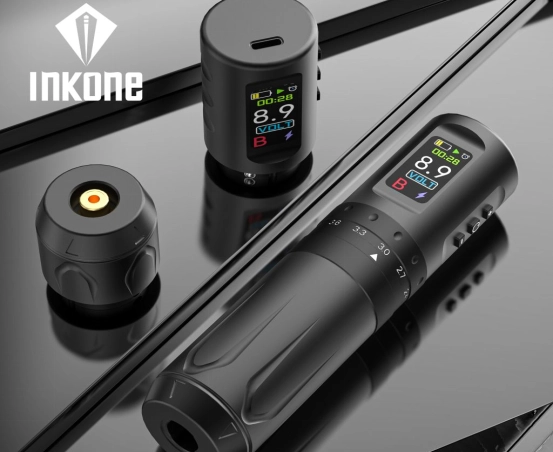
Wireless tattoo pens have become especially relevant. Buyers usually compare stroke length, motor performance, battery capacity, weight, vibration, charging method, and cartridge compatibility. Those details sound technical because they are. A machine that looks good in a product photo can still create returns if the battery drops voltage under load or the grip becomes uncomfortable after a long session.
Distributors should also avoid building a catalog around one price level. Entry-level artists, working professionals, and studios buying backup machines often expect very different things.
Tattoo Needles and Cartridges
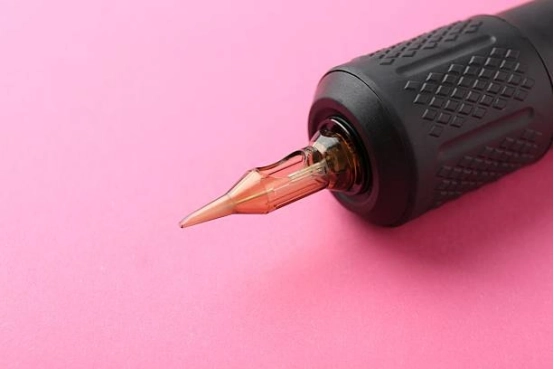
Cartridge needles are less glamorous than machines, but they are often better for repeat business.
What matters here is consistency. Needle movement, membrane tension, housing fit, ink flow, packaging integrity, and batch stability all affect whether customers reorder.
A distributor may test one sample cartridge and find it perfectly acceptable. The more useful test is whether cartons delivered three months later behave the same way.
Popular configurations should stay available. Constantly changing SKUs because a supplier cannot maintain production creates unnecessary friction for both dealers and artists.
Power Supplies, Printers and Studio Consumables
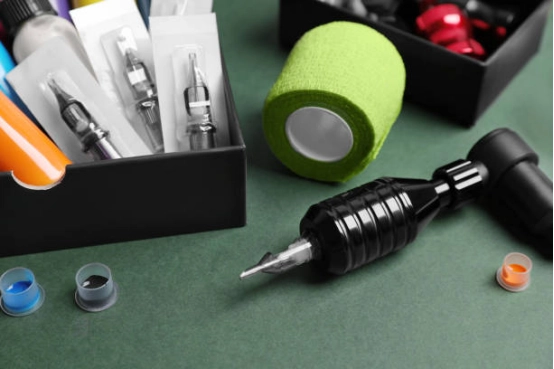
A broader wholesale tattoo supplies program usually includes power supplies, tattoo printers, thermal transfer paper, disposable products, and studio essentials.
These products do not all carry the same margin, but together they make ordering easier. A customer buying a machine may also need cartridges, transfer paper, grip protection, or other daily-use items.
For distributors, that basket matters. It is often more efficient to increase average order value through related products than to keep chasing new customers for a single high-ticket machine.
How to Evaluate a Wholesale Tattoo Supplies Supplier
Supplier evaluation should happen before the large purchase order, not after the first quality complaint arrives. Catalog size is useful, but operational details usually reveal more.
Product Range and Supply Capacity
A distributor needs products that can be reordered.
Ask which models are regular production items, which are made only against purchase orders, and how quickly stock can be replenished. A supplier with dozens of products but unstable production may be less useful than one with a smaller, controlled range.
Production capacity also becomes important during promotions. A product that normally sells 300 units per month may suddenly need 1,000 units. The supplier should be able to explain what happens then.
Manufacturing and Quality Control
Quality control should be specific enough to describe.
For tattoo machines, that may involve motor testing, voltage checks, charging tests, battery performance, noise, vibration, assembly inspection, and final functional testing.
For cartridges, inspection may include needle positioning, membrane function, housing fit, packaging, and visual defects. Statements such as “every product is high quality” do not say much. Test procedures do.
Distributors should also ask how defective units are recorded. A supplier that tracks recurring failures by batch has a better chance of fixing problems before the next order.
Samples Before Bulk Orders
Samples are not optional when evaluating a new tattoo equipment supplier.
A distributor should test products under realistic conditions, not just inspect the packaging on a desk. Run the machine. Check heat after extended use. Test battery runtime. Try different cartridge brands if compatibility is important. Then compare the production order against the approved sample.
That last part is easy to overlook. A perfect pre-production sample has little value if the bulk shipment is built with different components or looser tolerances.
Compare MOQ, Wholesale Pricing and Total Landed Cost
MOQ and unit price are only part of the purchasing equation.
A quote for 500 machines can look attractive until other costs appear:
- custom packaging
- spare batteries
- inland freight
- export handling
- international shipping
- import duties
- replacement units
Total landed cost gives a more useful picture. Request pricing at several quantity levels and identify fixed costs. The cheapest quotation is not always the better commercial option. A machine costing $3 more but producing fewer returns may leave a healthier margin.
MOQ should also match real sales speed. Six months of inventory is not a bargain simply because the unit price is lower.
Check Quality, Safety and Product Consistency
Different products fail in different ways, so quality checks should match the product.
For wireless tattoo machines, pay attention to:
- motor stability
- battery runtime
- charging behavior
- heat and vibration
- voltage delivery
- mechanical fit
For cartridge needles, check:
- smooth needle movement
- membrane performance
- packaging integrity
- lot-to-lot consistency
Distributors often notice problems later than artists do. An artist feels unusual vibration immediately. The distributor sees the same issue weeks later through returns or poor reviews.
Do You Need Private Label, OEM or ODM Tattoo Supplies?
Not every distributor needs a custom product. Some simply need dependable wholesale tattoo supplies. Others eventually reach a point where selling the same model as ten competitors makes margin growth difficult.
That is where private label, OEM, and ODM options become relevant.
Private Label
Private label is usually the fastest route for distributors that want their own brand without developing a product from scratch.
An existing tattoo machine or accessory can be customized with a logo, color, packaging, manual, label, or other brand elements.
It works well when speed matters. The product platform is already mature, so development risk is relatively low.
OEM
OEM makes sense when the buyer wants more control over an existing product.
Changes may involve housing design, grip specifications, battery configuration, accessories, packaging, or selected internal components. The engineering workload is higher than a simple logo change, but the distributor gets a product that is harder to compare directly with generic wholesale listings.
Specifications should be documented carefully. “Make the battery better” is not a specification. Capacity, operating time, charging requirements, dimensions, and performance targets are.
ODM
ODM is the route for buyers who need a more differentiated tattoo product.
That may include a new structure, electronics, industrial design, feature set, prototype, or complete product concept. It also requires more patience. Tooling, engineering changes, testing, pilot production, and revisions take time.
For distributors planning to become actual tattoo equipment brands, though, ODM can create something more valuable than another logo printed on an existing machine.
Consider Logistics and After-Sales Support
International sourcing continues after production.
Wireless machines contain lithium batteries, which can affect:
- shipping documents
- carrier options
- labeling
- export packaging
After-sales support deserves the same attention. Ask about:
- spare parts
- warranty periods
- defective-unit procedures
- replacement terms
- response times
A distributor should know what happens when 12 machines from a shipment of 800 show the same fault. Good suppliers do not claim defects never happen. They have a clear process for handling them.
Why Work With a One-Stop Tattoo Equipment Supplier?
Using separate factories for machines, cartridges, printers, power supplies, packaging, and disposable supplies can work. It can also create a surprising amount of coordination.
Different lead times. Different carton standards. Separate payments. Multiple freight bookings. Packaging colors that almost match—but do not.
A one-stop tattoo equipment supplier reduces some of that friction.
INKONE supplies tattoo machines, cartridge needles, power supplies, printers, transfer products, disposable tattoo supplies, and studio essentials for overseas B2B buyers. OEM/ODM customization is also available for distributors and brands that need more than standard wholesale products.
The practical advantage is not just convenience. It is having fewer moving parts when the business begins to scale.
Conclusion: Build a Reliable Wholesale Tattoo Supply Partnership
A useful wholesale partner should be able to answer detailed questions about products, production, quality control, MOQ, customization, delivery, and after-sales support. Distributors should test samples, compare total landed cost, and look closely at repeat-order consistency before committing to volume.
Looking for a reliable tattoo equipment supplier for your distribution business?
Contact INKONE to discuss wholesale pricing, samples, product selection, and OEM/ODM customization.
FAQ
Q: What tattoo supplies are best to buy wholesale?
Tattoo machines, cartridge needles, thermal transfer products, power supplies, printers, and frequently used disposable supplies are all suitable for wholesale purchasing.
Q: What should I ask a wholesale tattoo supplies supplier before ordering?
Ask about MOQ, quantity-based pricing, sample availability, production lead time, quality-control procedures, customization options, warranty terms, spare parts, shipping experience, and how defective products are handled.
Q: Can wholesale tattoo supplies be private labeled?
Yes. Many tattoo products can be customized with logos, colors, packaging, manuals, labels, and accessories.