Wireless tattoo machine battery compatibility should be treated as a model-specific decision, not assumed from appearance, connector shape, or capacity. Before sharing a battery between machines, confirm the mechanical interface, electrical requirements, charging method, and control compatibility with the supplier. This discipline matters when a studio operates several wireless tattoo machines or a distributor supports multiple models with replacement parts.
The objective is to know which battery belongs to each machine, maintain approved spares, and prevent an incorrect replacement from causing downtime or damage.
What Battery Compatibility Actually Requires
A battery is compatible only when the complete power system works as intended. Verify four conditions.
Mechanical fit: The battery must seat fully without forcing the threads, bayonet, pins, or housing. Similar-looking interfaces may use different dimensions, contact positions, or locking methods.
Electrical behavior: Nominal voltage, operating range, polarity, current delivery, and protection behavior must suit the machine. An mAh figure describes capacity; it does not establish voltage or electrical compatibility.
Charging path: The approved cable, charger, input rating, and battery-management circuit must work together. A USB-C port describes a connector, not a universal charging specification.
Control functions: Some battery modules also contain displays, buttons, timing functions, or control electronics. A pack that physically attaches may still communicate incorrectly or omit functions required by another model.
Ask for written confirmation against exact model and battery part numbers. Without it, treat the pack as model-specific and test a sample before a larger order.
What INKONE’s Published Product Data Shows
INKONE’s public product pages show why buyers should compare models individually. The specifications below describe the named products; they do not state that their batteries are interchangeable.
| Model | Published Battery or Package Detail | Other Published Detail | Procurement Meaning |
| PRICK | 1500mAh; package includes two batteries | Adjustable 2.4-4.2 mm stroke | Record the battery identifier for this model; capacity alone cannot match it to another machine. |
| NOVUM | 1800mAh; package includes two batteries | 4.0 mm stroke; published working time of 6-8 hours | Treat runtime as a model-specific published figure, not a promise for another machine or workload. |
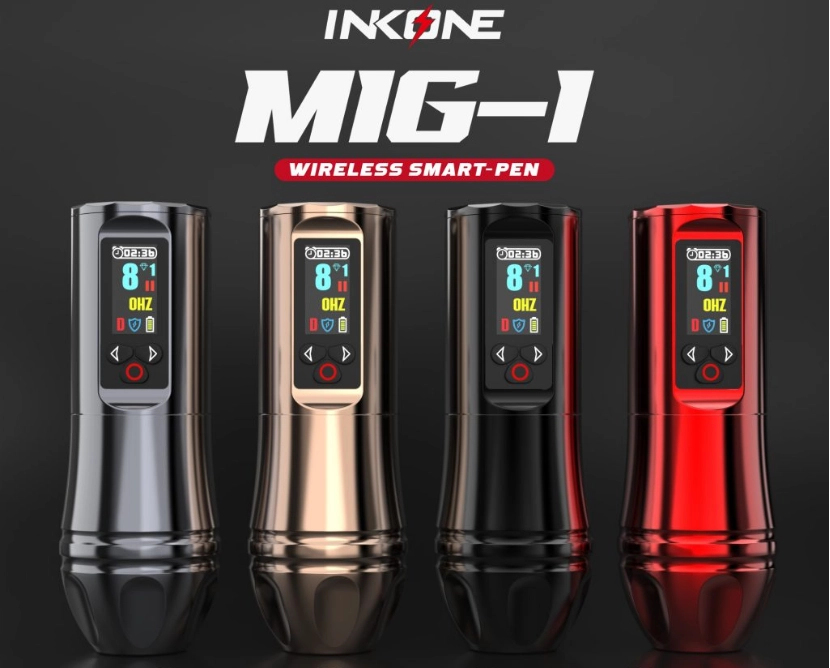
| MIG-1 | Package includes two batteries | 3.5/4.0 mm stroke; 35 mm and 38 mm grips | Two included packs support rotation, but do not establish compatibility with other models. |
The official INKONE PRICK wireless machine pen page identifies its capacity and package contents. Preserve those details with the model name, supplier part number, connector photo, charger rating, and order date for future replacements.
How to Build a Model-by-Model Spare Battery Plan
Start with simultaneous demand, not the total number of machines owned. For each model, record how many units can be in use at once, how long charging takes under the approved method, and how quickly a replacement can arrive. Then set a minimum spare level for that model.
Consider an illustrative studio with six machines: three Model A units, two Model B units, and one Model C unit. If four stations may operate simultaneously, the owner might allocate two charged spares to Model A, one to Model B, and one to Model C. The result is four spares, but they are not a shared pool unless cross-model compatibility is explicitly confirmed.
Adjust the allocation with evidence. A high-use model may need a deeper reserve, while a rarely used backup may need one maintained pack. Long import lead times can justify more stock.
Separate operational spares from service stock held for warranty or distributor support. Track both by model and age. The INKONE MIG-1 product page confirms two batteries in its package without implying compatibility with other models.
Charging Accessories and Reorder Controls
A simple control system prevents most mix-ups. Label each battery and approved charging accessory with the model family. Store incompatible systems in separate locations, and quarantine any pack with an unreadable label, damaged housing, unusual heat, swelling, or uncertain origin. Do not test a questionable pack on a working machine.
Maintain one master record with the machine model, battery part number, capacity, supplier, charger input, purchase batch, and replacement date. When reordering, compare the new sample with the approved record before distributing the batch across the studio or dealer network.
Physical fit is only the first test. Charge and operate the sample as instructed, verify its controls, and confirm normal performance before accepting a bulk replacement.
When a Private-Label Range Needs a Battery Standard
A shared battery platform can simplify training, service stock, and replenishment for a private-label range. It may also reduce the number of chargers and spare SKUs a distributor must manage. However, standardization is useful only when the same platform meets the performance, weight, balance, runtime, and control requirements of every intended machine.
Brands planning several models should raise the battery platform during the early OEM/ODM customization discussion. Define which machines should share packs, how replacements will be identified, and how long compatible spares are expected to remain available. Validate production samples before presenting interchangeability as a customer benefit.
Common Battery Compatibility Buying Mistakes
The most common mistake is matching only the mAh rating. Two packs can have equal capacity and different voltage, electronics, contacts, or dimensions. Another is assuming all USB-C charging paths are equivalent. Buyers also create risk by mixing unverified revisions of a battery module or ordering deep replacement stock before checking a sample against every named machine.
Avoid vague purchase descriptions such as “wireless pen battery.” Use the exact machine model, battery part number, approved charger, and revision where available. That makes receiving inspection and later warranty support far more precise.
FAQ
These answers address the practical questions that arise when a studio or distributor manages more than one wireless platform.
Can Batteries from Two Wireless Tattoo Machines Be Shared?
Only when the supplier confirms mechanical, electrical, charging, and control compatibility for both exact models. A similar housing or equal capacity is not enough evidence.
Does a Higher mAh Rating Guarantee Longer Studio Runtime?
No. Runtime also depends on motor load, operating voltage, duty cycle, settings, battery condition, and how the manufacturer measures runtime. Apply a published figure only to the named model and stated conditions.
Can Any USB-C Charger Charge a Tattoo Machine Battery?
No. USB-C identifies the connector, while supported voltage, current, protocol, cable, and protection requirements may differ. Use the supplied or approved charging equipment unless the manufacturer confirms an alternative in writing.
How Many Spare Batteries Should a Studio Keep?
Base the number on simultaneous stations, charging turnaround, usage intensity, failure history, and replacement lead time. Calculate coverage separately for each model until interchangeability has been verified.
Should a Private-Label Brand Standardize One Battery Platform?
It can reduce service complexity, but it should not compromise machine balance or performance. Define the commercial benefit, confirm technical suitability, and validate samples across every model before committing.
Request a Compatibility Review Before Ordering
Prepare a list of machine models, battery labels or part numbers, charger photos and ratings, intended quantities, usage pattern, and target market. Then contact INKONE for a model-specific compatibility and spare-parts review before ordering replacements or planning a multi-model range.