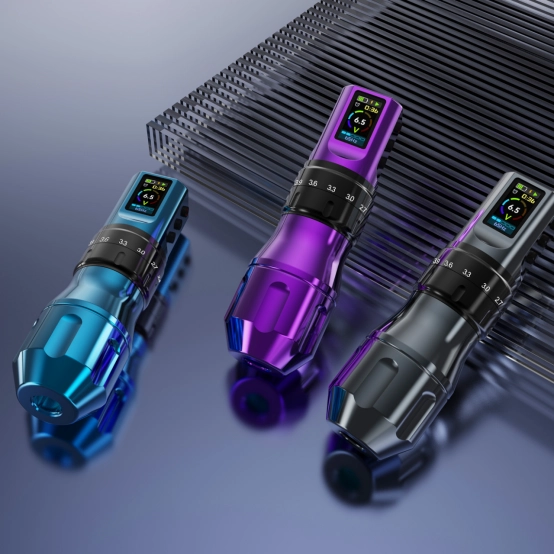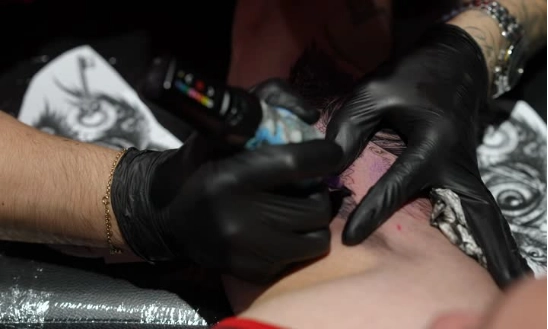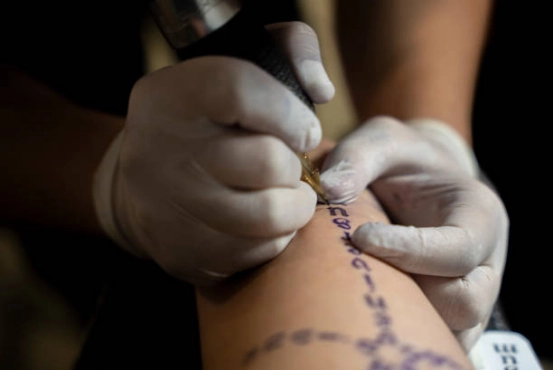
Tattoo transfer paper is a key item in professional tattooing. Artists need a clear stencil before they start. This helps them place lines in the right spots. It shows correct proportions. It also handles spacing and the full look of the design.
The quality of the transfer paper has a direct effect on stencil clarity. It also changes how well the work flows. Poor quality paper can create faint lines. It may leave out details or give uneven results. The right paper lets artists move quicker and stay more exact.
What Are the Main Types of Tattoo Transfer Paper?
Tattoo transfer paper is mainly classified by the way the stencil image is created.
The most common types are thermal tattoo transfer paper and hectograph, or freehand, transfer paper. Some modern tattoo stencil papers are also designed specifically for digital stencil printers.
When comparing different types, buyers should focus on four practical factors. These are transfer method, printer compatibility, stencil clarity, and consistency.
For professional use, reliable performance is usually more important than choosing the lowest priced paper.
1. Thermal Tattoo Transfer Paper
Thermal tattoo transfer paper is very popular in professional tattoo studios. It lets artists copy digital designs fast and in a steady way.
How Thermal Tattoo Transfer Paper Works
Traditional thermal tattoo transfer paper usually consists of several layers. These include a top receiving sheet, a protective layer, a transfer layer, and a backing sheet.
The design is processed through a compatible thermal copier or tattoo stencil printer. The transfer layer copies the image onto the stencil sheet. Artists can then apply it to the skin using a stencil transfer solution.
The main advantage of thermal paper is repeatability. Once the artwork is prepared correctly, artists can produce clear stencils. They need less manual tracing.
Printer compatibility is important. Paper thickness, coating, heat sensitivity, and surface quality can all affect feeding and stencil output.
Who Should Use Thermal Transfer Paper?
Thermal tattoo transfer paper is suitable for:
- Professional tattoo studios
- Artists working mainly with digital artwork
- High volume studios producing multiple stencils daily
- Tattoo supply businesses selling printer compatible consumables
It is especially useful for detailed designs, lettering, geometric work, and fine line tattoos where consistent stencil reproduction is important.
2. Hectograph or Freehand Tattoo Transfer Paper
Hectograph transfer paper is designed for manual stencil preparation.
Instead of using a printer, the artist traces or draws the design by hand. Pressure from a pen or pencil transfers pigment from the coated layer onto the stencil sheet.
This method gives artists more direct control over the design and makes hectograph paper useful when manual adjustments are required.
Best Uses for Hectograph Paper
Hectograph paper is commonly used for:
- Hand drawn tattoo designs
- Custom stencil adjustments
- Freehand concepts
- Studios without a stencil printer
Its main advantages are flexibility and simplicity. No dedicated printer is required, and artists can modify individual lines during tracing.
However, manual preparation is slower than thermal printing, especially for complex artwork. Stencil consistency also depends more heavily on the artist’s drawing pressure and technique.
For studios producing large numbers of stencils, thermal paper is usually more efficient.
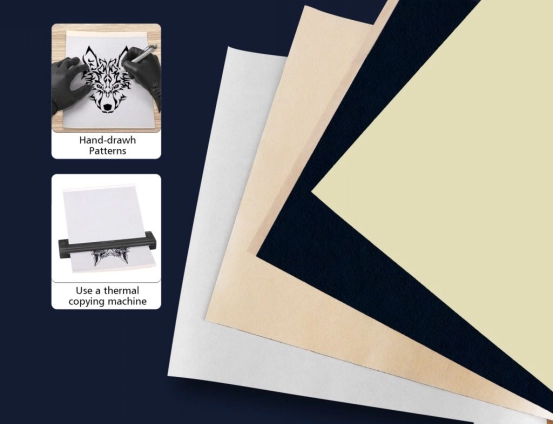
Thermal vs Hectograph Tattoo Transfer Paper: What’s the Difference?
The main difference is how the stencil is produced.
| Feature | Thermal Transfer Paper | Hectograph Paper |
| Transfer Method | Printer or thermal process | Manual tracing |
| Speed | Faster | Slower |
| Best For | Digital designs | Hand drawn designs |
| Consistency | High | Artist dependent |
| Equipment Needed | Compatible printer | Usually none |
Thermal paper is generally better for studios that prioritize speed, repeatability, and digital workflows.
Hectograph paper is better for artists who prefer manual drawing or need greater control over stencil preparation.
The right choice depends on the artist’s workflow rather than one type being better in every situation.
How to Choose the Right Tattoo Transfer Paper
Choosing tattoo transfer paper should involve more than comparing price. Compatibility, stencil quality, and workflow requirements should all be considered.
1. Check Printer Compatibility
If you use a tattoo stencil printer, always check whether the paper is compatible with the device.
Different printers may use different feeding, heating, or printing systems. Variations in paper thickness, coating, and backing material can affect printing performance.
For distributors or private label buyers, sample testing with common printer models is useful before placing a bulk order.
2. Consider Stencil Clarity
Good tattoo stencil paper should produce clear, readable lines. It should avoid excessive smudging or broken details.
This is particularly important for fine line tattoos, lettering, geometric designs, and detailed artwork.
A stencil that loses detail during transfer can slow down preparation. It can make the artist’s job more difficult.
3. Consider Transfer Durability
A stencil should remain visible long enough to support the tattooing process.
Transfer durability depends on several factors. These include the paper, stencil solution, skin preparation, application pressure, and drying time.
The paper should provide consistent pigment transfer. Artists can then achieve predictable results under normal studio conditions.
4. Consider Your Workflow
Different users have different requirements.
A high volume studio may prioritize speed and printer compatibility. An independent artist may value flexibility. A distributor may focus on quality consistency, lead time, packaging, and repeat supply.
Tattoo brands may also need customized packaging, branding, sheet specifications, or OEM services.
The best tattoo transfer paper should fit the existing workflow. It should not create additional steps.
What Should Tattoo Supply Buyers Look for When Purchasing Transfer Paper in Bulk?
Bulk buyers should evaluate tattoo transfer paper differently from individual artists.
Price is important. Inconsistent coating, poor packaging, unstable printing performance, or variable sheet thickness can lead to customer complaints and returns.
Tattoo supply distributors, wholesalers, and private label brands should check:
- Paper quality consistency
- Printer compatibility
- Stencil clarity
- Sheet size and packaging
- Batch to batch stability
- MOQ requirements
- Bulk pricing
- Production capacity
- Quality control
- OEM or private label options
Sample testing is recommended before mass production. Buyers should test the paper with the intended printers and normal studio procedures. They should not rely only on appearance.
For B2B customers, stable quality across large production batches is often more important than the performance of a single sample.
Frequently Asked Questions About Tattoo Transfer Paper
Q: Can You Use Regular Paper Instead of Tattoo Transfer Paper?
No. Regular office paper does not contain the transfer layer needed to create a professional tattoo stencil. Tattoo transfer paper is specifically designed to reproduce artwork for skin transfer.
Q: Can Thermal Tattoo Paper Be Used Without a Printer?
Some transfer papers may support manual tracing. Thermal tattoo paper is mainly designed for use with compatible stencil equipment. Always check the product specifications before use.
Q: What Type of Tattoo Transfer Paper Is Best for Beginners?
Artists working mainly with digital designs may find thermal transfer paper faster and easier once the printer workflow is established. Artists who prefer hand drawing may prefer hectograph paper.
The best choice depends on the working method rather than experience level alone.
Choose the Right Tattoo Transfer Paper for Your Business
There is no single tattoo transfer paper that works best for every artist, studio, or distributor.
Thermal paper offers speed and repeatability for digital stencil production. Hectograph paper provides greater flexibility for manual work. Buyers should compare compatibility, stencil clarity, material consistency, and supplier reliability before making a decision.
For businesses purchasing tattoo transfer paper in bulk, stable production and quality control are especially important.
INKONE supplies professional tattoo equipment and consumables for tattoo studios, distributors, wholesalers, and tattoo brands. For bulk tattoo transfer paper, tattoo stencil supplies, private label packaging, or OEM/ODM sourcing requirements, contact INKONE to discuss your product and purchasing needs.