A private label tattoo brand can look polished and still fail because of the manufacturer. A late shipment delays a launch. Inconsistent motor torque creates complaints. Poor cartridge fit creates returns.
Price plays a role. It is not often the best place to start. The main question is whether a supplier can keep delivering the same results. This must hold true for samples, production batches, and future orders.
What Should You Define Before Contacting a Tattoo Equipment Manufacturer?
A useful quotation starts with a useful brief. “Need tattoo machines with logo” is not enough.
Define the product category, target customer, sales market, expected volume, target price, launch date, and customization level. A premium wireless pen for professional artists needs different engineering from an entry level kit sold through online marketplaces.
The brief should also cover packaging, certifications, shipping terms, and key specifications. Grip diameter or battery runtime can change tooling, testing, and cost.
Should You Choose an OEM or ODM Tattoo Equipment Manufacturer?
The choice depends on how much of the product already exists. Some brands need a proven platform with new branding. Others need an engineering partner to turn a concept into a production model.
When Is OEM the Better Choice?
OEM works well when speed matters most. Lower development risk is also important. These factors count more than full exclusivity. The manufacturer provides an existing product. They then adjust the logo, color, manual, inserts, and packaging.
This is often sensible for a first launch. The brand can test demand without paying for new molds or validating a new circuit board. The trade off is that other buyers may use a similar base product.
When Is ODM the Better Choice?
ODM fits brands that need a distinct structure, feature set, or user experience. That may involve a different motor, battery system, housing, stroke adjustment, display, or cartridge connection.
Good ODM work includes drawings, prototypes, engineering revisions, testing, and production controls. A supplier that accepts every idea without questioning heat, vibration, balance, or tolerance is avoiding the hard part.
Which Manufacturing Capabilities Should You Evaluate?
A broad catalog does not always mean strong manufacturing. You should ask what is made in house. Find out what is assembled from purchased parts. Learn what is outsourced.
Useful capabilities include mechanical design and electronics development. Prototyping, inspection, assembly control, and consistent repeat orders also matter. Capacity only counts when it is real. A factory may claim 20,000 units per month. Production can still stop if one battery supplier is late.
For brands with several product categories, a one-stop supplier helps. It reduces packaging mismatches, split shipments, and arguments over component failures.
How Can You Verify Product Quality and Safety?
Quality claims are easy to print on a website. Process evidence is harder to fake.
Review the Quality Control Process
Ask how materials are checked, where inspections occur, which functions are tested, and how failures are recorded. A workable system covers incoming materials, in process checks, functional testing, appearance inspection, and final verification.
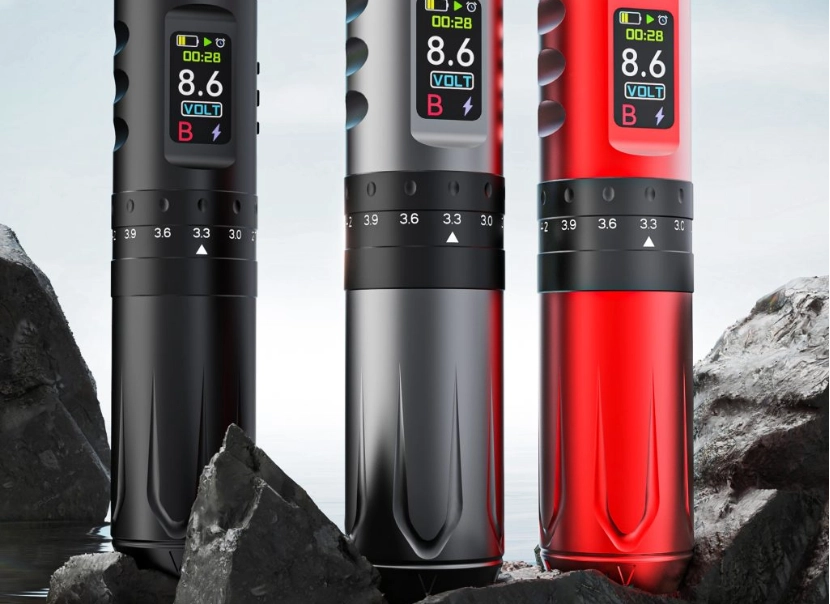
For a wireless tattoo pen, testing may include startup, voltage output, charging, battery runtime, vibration, and heat. For cartridges, fit, membrane behavior, needle movement, and lot consistency matter more than glossy packaging.
Traceability matters. When a defect appears, the supplier should identify the batch, production date, and relevant components.
Test Samples Before Placing a Bulk Order
A sample should be used, not admired.
Run the machine for extended periods. Change voltages. Check balance and heat. Try cartridges from more than one batch. Drop the packed sample from normal handling height and inspect the result.
A common mistake is approving a handmade sample while mass production uses different parts or assembly methods. Confirm the approved sample, specification sheet, packaging layout, and acceptance criteria in writing.
What Private Label Customization Options Should a Manufacturer Provide?
Customization should match the brand’s stage. Early brands may only need logo printing, colors, manuals, and retail packaging. Established brands may want exclusive housings, accessory kits, motor changes, battery updates, firmware, or a new product platform.
Ask who owns the final design. Find out if tooling is exclusive. Learn how many revisions are included and how they handle confidential files.
Packaging needs more attention than it receives. A machine can pass every factory test and still arrive scratched because the insert is loose. That is not merely a shipping problem. It is a packaging engineering problem.
What Should You Ask About MOQ, Samples, Pricing and Lead Times?
MOQ should be discussed together with sample cost, tooling fees, packaging charges, payment terms, and production time.
A practical quotation should show:
- MOQ for standard and customized products
- Sample, mold, printing, and packaging charges
- Unit pricing at several volume levels
- Lead time after sample approval
- Shipping terms and estimated freight cost
Compare total landed cost, not unit price alone. A cheaper supplier may require separate packaging, higher defect allowances, or expensive freight. Low pricing can also hide weaker components or missing inspection.
How Important Are Packaging, Shipping and After Sales Support?
Very. Especially for overseas buyers.
Export packaging, labeling, freight coordination, and customs support affect whether products arrive on time and remain sellable. The supplier should also explain warranty, replacement rules, and spare part availability.
Watch how small sampling problems are handled. Slow replies and vague answers usually get worse after payment. A fast, specific response is often more valuable than a polished factory presentation.
How Do You Compare and Shortlist Tattoo Equipment Manufacturers?
Use the same criteria for every supplier. Otherwise, the cheapest quotation tends to win by default.
Compare product capability and quality control. Look at customization depth, MOQ, total cost, lead time, communication, warranty, and replacement handling. Request comparable samples; mismatched sample levels prove little.
Shortlist two or three candidates. Review the factory by video or third party inspection, then place a controlled initial order. That first batch tests production discipline, documentation, packing, and communication under pressure.
Why Consider INKONE for Your Private Label Tattoo Equipment Brand?
INKONE supplies tattoo machines, cartridge needles, power supplies, printers, transfer products, disposable supplies, and studio accessories. This range suits brands that want a coordinated product line. They avoid managing several unrelated suppliers.
INKONE also supports OEM branding and packaging, plus ODM design, prototyping, engineering, and production. The practical value is having development, supply, packaging, and export support connected through one team.
Conclusion: Choose a Manufacturing Partner, Not Just a Supplier
A strong tattoo equipment manufacturer asks about unclear details. They document changes and control production. They respond quickly when problems occur. Samples and quotations reveal part of that. A controlled first order reveals much more.
Contact INKONE to discuss your product concept, target market, customization requirements and expected order volume.
FAQ
Q: What is the typical MOQ for private label tattoo equipment?
MOQ depends on the product, packaging, and customization level. Logo and color changes usually require less commitment than custom housings, electronics, or molds.
Q: How long does private label tattoo equipment development take?
Simple OEM projects may reach production within several weeks. ODM projects often take months because design, prototyping, testing, tooling, and revisions are involved.
Q: Should a tattoo brand choose one supplier for all products?
Not always. A one stop supplier reduces coordination and shipping complexity, but a specialist may be better for certain high risk components.
Q: What should be included in a sample approval document?
Include specifications, materials, dimensions, color, logo position, packaging, accessories, test methods, and acceptable defect limits. Photos help. Signed samples help more.